Ray
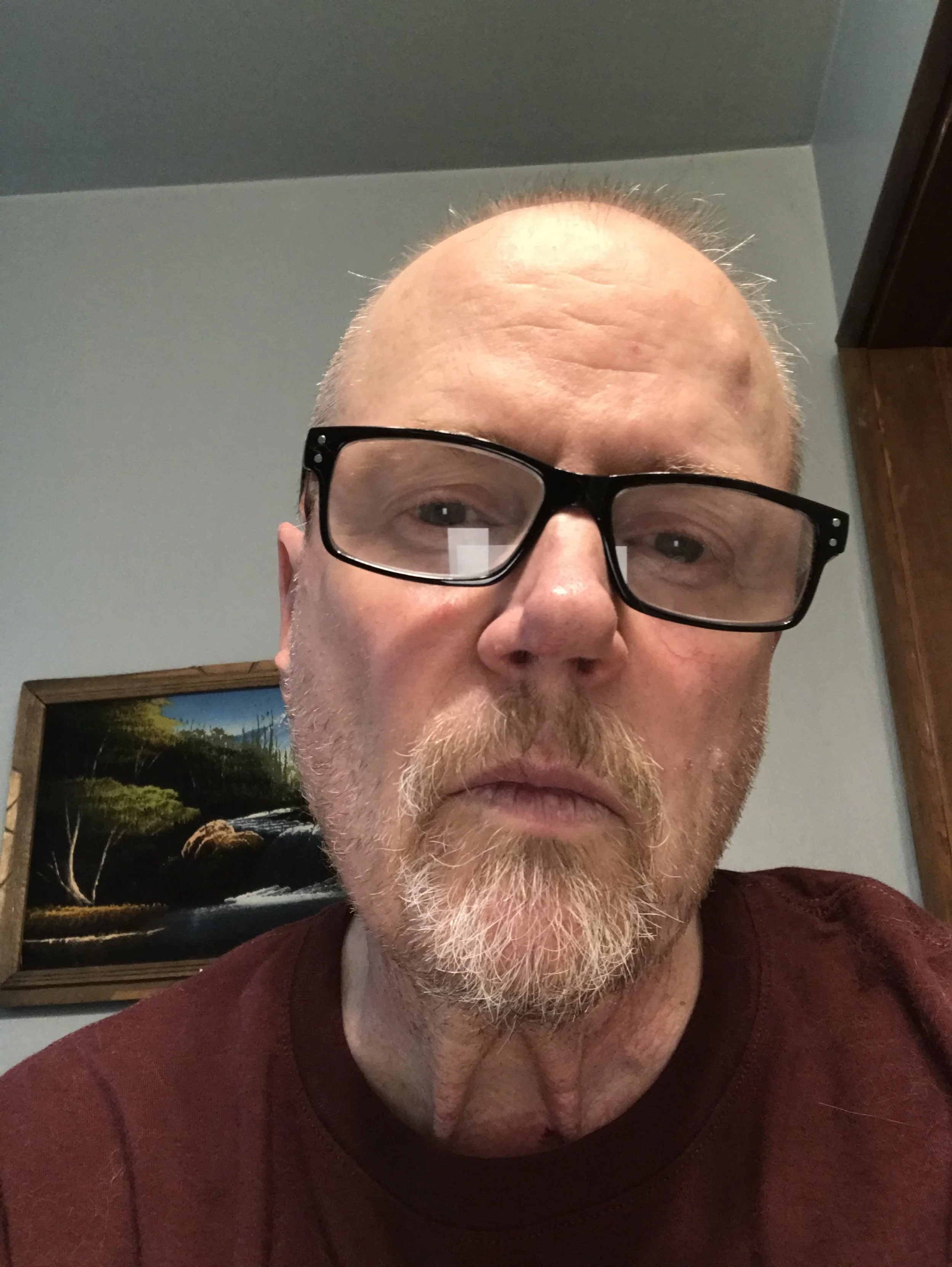
Raymond Rea is a filmmaker and writer. Ray's work often challenges assumptions, hints at theatricality, and uses a raw LoFi aesthetic to address complexities. He is distributed through Canyon Cinema and Frameline Distribution https://raymondrea.com

Ray Non Member
Jackal: [00:00:00] Hello everyone. Welcome to our new season of Stealth a Transmasculine podcast. I'm Jackal. I'm
Kai: Kai. We're your hosts for the Trans Masculine Podcast. The new season means new questions, and this season focuses on staying connected during these difficult times.
Jackal: Our show focuses on the stories of people who identify as transmasculine and who transitioned either socially or medically before or around the year 2005.
The name of our show highlights two important facts that one, for our generation. We were often told to hide our past and live in underground existence. And due to that, our stories are often overlooked.
Kai: We want our audience to know that we ourselves are part of this generation of trans masculine identified people, and that we value the [00:01:00] experiences inside our trans masculine community.
We want people to know that throughout our lives, each of us has had to navigate issues of disclosure, which have impacted us In many ways,
Jackal: the bond we share as persons of trans experience is precious and lifesaving. These are trying times. Throughout the world, there are groups removing protections in place for our trans and non-binary communities, safety is a real concern for us, particularly our trans and non-binary bipoc siblings.
Kai: We offer links to health and safety resources on our website, trans masculine podcast.com. We also have an incredible mentor mentee buddy program that has connected 88 trans men. If you're interested in becoming a mentor, please reach out to our awesome volunteer Clark. Via the mentoring tab on our website.
Please hold each other dear and stay in touch with us. If you're new to our show, welcome and if you're a follower from a previous season, thank you for your continued support. [00:02:00]
Jackal: As humans, we are always changing and transitioning. As elder trans men, we assume many roles. We get married and divorced. We are caretakers, we are parents.
We are professionals, academics, and advocates. We push for human rights and systemic change.
Kai: We invite our listeners to remember that we are a living community. We are healthy, we are contributing, we have experienced loss and success. We are loved, and we welcome you to our stories.
Yay. Oh gosh. What was it like for me? this was my second year going, and so I had some idea of, the setting and the experience and the, um, just the environment itself. And then it was different with the different group of guys, but I also knew so many people [00:03:00] there, and I felt a lot more comfortable and less concerned about little details, ?
What I liked about it is just being together and being around so many trans men, men of trans experience. There were over 180 of us.
Jackal: Yeah.
Kai: And it just felt so nice to be outdoors and,, have good food
Jackal: Mm-hmm.
Kai: and be taken care of, ? So how about you? What was, what was it like for you?
It's your first time.
Jackal: yeah, it was my first time, um, so I was really stressed, right? Like I had, uh, had this horrible flight experience. The. Month before, 'cause I had to go to Texas to visit my brother for shoulder surgery, blah, blah, blah. So I had so much anxiety getting onto the plane, you know, getting there the layovers, like I was just 100% stressed out.
I did not wanna go. I, just started literally a PhD program the day before my first class, you know, it [00:04:00] was like you got out at like nine 30, went home, went to bed, you know, blah, blah, blah. Right. The flight was so smooth. All of that anxiety was just that, it was just my anxiety.
But because it just went completely smooth, there was no delays, there was no cancellations. I made it perfectly on time. And actually the longest wait was the guy picking me up from the airport. Um, just this real sweetheart. He, he had been, um. Volunteered to go drive back people back and forth from the airport or wherever they needed to the camp.
So I spent, a good two, two and a half hours waiting for him to pick me up. Um, but that was fine. , Because I had landed in Portland, you know, it was literal, literally the flight that stressed me out. Right. Once I had landed in Portland, I'm like, meh,
Kai: You did your job.
Jackal: You know, like I can wait two and a half hours for this [00:05:00] to, to get there.
So that was getting there, right? Like, so that was getting there. And then getting there, arriving there. Ki man, I, you know, almost forgot to take a COVID test, you know, like I did not bring a sleeping bag. Like I was so fucking unprepared for all of this. I was just not in this frame of mind, like at all.
So let me tell you about actually being there,
Kai: Can I, can I interrupt just for one second? I, I do wanna say Camp Lost Boys is very good at sending emails that say, don't forget shit.
Jackal: Remember when Rocco said like, there's three people who didn't open their email. I'm one of those
Kai: Oh,
Jackal: I'm one of those people, I'm one of three of 200 people that they sent that email to that I did not open it. Like I don't check that fucking email. When I went got home, I probably had like. 400 emails in my inbox, like I do not check my email.
If you wanna text me, great. [00:06:00] I'm great at texting, but I am not great at email. Anyway,
Kai: no. I think like fundamentals of like what to bring and stuff like they, I just wanna
Jackal: Kai, I didn't bring a towel.
Kai: Yeah.
Jackal: I didn't bring, I, I literally, this is not
Kai: What did you bring? Like
Jackal: this stupid
Kai: PJS or like swimsuit
or?
Jackal: Um, showered and drew dry, dried off with paper towels. Okay. Like I just drew dried off with the paper towels like
Kai: you should have cut. Let me know. I had a beach towel and a towel I would've shared.
Jackal: Yeah. I got somebody who loaned me, you know, a sleeping bag.
I used my little head pillow, you know, my
Kai: Mm-hmm.
Jackal: for the flight as my pillow. It, it all worked out fine and it was really great to be there. Like I said, there was this one guy. Who, the opening night when we did the big round, uh, circle, um, came up to me afterwards, like at, when we were in the small groups and he was like, are you jackal? [00:07:00] Kind of thing. And he pulled me aside and he's like, do. Is your birthday or when's your birthday? He said, and so I told him and he is like, so's mine. And it was so cute. Like, he's like literally this really cute fanboy and we have the same birthday. And he was like, he was like, he was telling me that he was trying to like.
Figure out the date because like in the years that we've done this, you know, like I've said, oh, my birthday was last week, last Wednesday, or something like that, and he's like trying to make the calculations. And so anyways, it was super cute and uh, and he was adorable. And I, you know, so that, that was really fun.
And,
Kai: Can I, can I jump in there again? Just, okay. So. What
Jackal: told me that, that that's, that was what your experience was last year.
Kai: Yeah, yeah. What was it like for you? Because, okay, so for people who listen to the show, Jackal and I do not. Have people approach us on the street and say, are you so and so? We're not that person. Clearly people [00:08:00] don't know who we are. And then, and then you have a very distinctive name, and my name kind of stands out too.
And then if you're a trans guy and you listen to the show, you might have a clue who we are. But what was it like to go there and have people comment about the show?
Jackal: It was really affirming. It was really sweet. This has been, it, it's, what was funny was because this is a podcast, right? So like, I see you right now 'cause we're on Zoom doing video chat, but nobody knows. I mean, maybe they know what we look like 'cause they look at our website, but if they're just listening to us on, you know, like.
Apple or, or, or Spotify or something like, you know, they just hear my voice and literally somebody said, I recognized your voice. I was like, wow. You know, like,
Kai: Mm-hmm.
Jackal: Um, but yeah, I think, you know, we really do this. For ourselves and like kind of a co contribution to our, our community.
Um, but I don't really [00:09:00] expect anything back. And so when that affirmation comes, you know, from all these really sweet people that, were at the camp, it was really, it was really nice. It was
Kai: Mm-hmm. Mm-hmm. Yeah, I agree. One of the things that I thought about while we were there, particularly at the Elders gathering, I, I was counting the number of people who were at camp who had been on our show.
Jackal: Wow.
Kai: There were a lot of guys there that had been on our show, I'd say like 15
Jackal: Mm-hmm.
Kai: at least.
And just how lucky we are. To, to know so many great people. And I, I just can't talk about how wonderful our guests are,
Jackal: Yeah,
Kai: know, and how lucky we are to have to have folks. So, so I don't know if guests listen, but if you, if you're out there, thank you, thank you for, I mean, we don't wanna have a show without you.
Of course.
Jackal: we sure wouldn't. Yeah. And, and I think, like just getting con some renewed energy, like for myself and then there's a couple people who [00:10:00] like said that they wanted to do volunteer work or like how could they get involved and things like that. And, and it makes me hopeful, you know, I know we talk about hope a lot, but it makes me hopeful, not just for.
Our podcast, but for our community in general, like if, you know, God forbid one of us got sick or like injured or something and we couldn't keep doing this, like maybe we should make more of a community effort out of this so that people are, able to take over the interviews if one of us, couldn't do it anymore or something like that.
, It'd be nice, it'd be nice to have a, a kind of a contingency. For people to continue this. I don't know, it just, it makes me hopeful. It makes me, um, appreciative. I do wanna say though, this isn't about our podcast and us, this is about Camp Lost Boys and the, you, you're right.
Like the, the food was amazing. Um. The care that went into putting this together, the, the workshops. [00:11:00] Um, and I just wanna give a shout out to Rocco and the team that the grace they offer people like they are so bombarded with people wanting their attention like all the time, and they just have so much space and so much grace and are so, um.
Open and loving and welcoming. Um, it's, it's a truly magical place and experience and I would definitely do it again, not the day after I have a PhD class,
Kai: Mm-hmm. Mm-hmm.
Jackal: but uh, definitely it's, it will be on my agenda.
Kai: I, I am a hundred percent with you. I think you said there were over 400 people on the wait list. That's so many. There's such demand. So there's room for people to do things like Elijah, who just, we just interviewed who you know, is, putting on retreats, local retreats, and there's another one happening in the Seattle area.
So I just think, it's so important for us to [00:12:00] connect and be together and wanna thank Rocco and Jay and Luke and, Brian and all, Justin and all the folks who helped organize,
Jackal: And if we forget anybody's names, please know that you are so appreciated and, loved because we, I sincerely love you and, and really, really wanna give a shout out to you and, and all the work that you did to, to make this happen seamlessly. That it looks so seamless from the outside and we know that it takes a lot of stuff to do.
To put something like this on.
Kai: Jackal and I wanna remind our listeners that we have a member section. And thanks to everyone who has subscribed, our member section offers bonus questions and personal stories by our volunteers, Adam, and our newest edition Lina. A Bipoc Trans Mask sibling Exploring Adventures in Transition.
Subscribing to our
Jackal: podcast [00:13:00] helps keep us up and running. Or if you just wanna support us by giving a donation, we sincerely appreciate it. It's only $4 a month to become a member, so go to transmasculine podcast.com and sign up. We don't wanna be gatekeepers. So if you feel that you can't afford $4 per month, please reach out to us via email, transmasculine podcast@gmail.com considering buying a T-shirt while you're there.
Or if you wanna be cool, like Mic Alina and Adam, we especially need a volunteer to handle our social media.
Shawn Aaron: Hey, this is Sean Aaron. He, him, his. And I'm here to tell you about them. Boys podcast. I'm the host of them boys podcast, and as a black queer trans man, the podcast amplifies the voices of other trans men of color [00:14:00] as we share our transition stories. The podcast not only amplifies the voices of trans men of color, but it raises awareness and conversations around our lived experiences.
You can listen to the podcast by going to them boys.org/podcast. That's D-E-M-B-O-I s.org/podcast. I hope to have you join us on the next episode.
Adam: Raymond is a filmmaker and writer. Ray's work often challenges assumptions and hints at theatricality while while utilizing a raw lo-fi aesthetic. To address complexities, he's distributed through Canyon Cinema and Frameline distribution, and you can find his work@raymondraya.com.
That's R-A-Y-M-O-N-D-R-E a.com. Ray's medical transition is [00:15:00] 1997, the same as Cooper, Adrian, and River. So go check out our website and see what momentous events happened in that year.
Jackal: So welcome back to Stealth. We're here with Ray. How are you doing today, Ray?
Ray: I'm doing okay. All things considered in the country right now. Yeah.
Jackal: yeah, for sure. So our first question is always like, how do you know us? How did you get to be on the podcast? I think you might know Kai or Adjacently. know, Kai.
Ray: Yes, adjacently at least. And I think Adjacently, I've met you Kai at some point, but I worked with, with Kai's sister.
Kai: Mm-hmm. Mm-hmm.
Jackal: Awesome.
Ray: I don't think tackle Your face is familiar. I don't believe we've actually ever met, but
Jackal: I don't know. I'm so old now, my memory from back in the day [00:16:00] is like, I, I vaguely remember people, if at all.
Kai: Did you ever go up to any conferences up in Seattle, like the F to M
Ray: I went to the Forward Motion Conference in Burbank,
Kai: I went there. Yeah,
Ray: 19 98,
Kai: yeah, yeah.
Ray: then I, no, I never went to the, what was that? Gender Odyssey?
Kai: Mm-hmm. Yeah.
Ray: I actually never went to those conferences, even though I knew like a whole bunch of people who were going, I just didn't go to those.
Kai: Well, it's nice to see you. All right, here we go. Back in the day how did you learn about trans-masculine identities?
Ray: Probably I mean, it's interesting. I think, originally I read books and you know, probably like so many of us, I read Leslie Feinberg Stone Butch Blues and identified that [00:17:00] as a trans narrative. And and then I was also being a filmmaker in San Francisco. I was, i, Christopher Lee became a very close friend of mine,
Kai: Oh.
Ray: but like before 1997, like in 19 96, 19 95.
And we had like, social group in common. So I saw him a lot. And, just him. I think he was really like the one person in my life who I met, who I started to think, okay, this is like genuinely possible. And then, you know, through him, got into FTMI meetings, still pretty small circle and so started to go to FTM on, but yeah, even like before 1997, like I spent, time. In [00:18:00] 1996, I made a film called Third that had what, what I was then calling a third sex character in it. Somebody who was trans-masculine. At this point in time, that person would've been called gender non-binary,
Kai: mm-hmm.
Ray: at the time it, the title of the film was Third. So. And then Christopher picked up that film.
So even before I started any version of Hormones, which was in 1997, that film third screened in like the very first tranny Fest when, you know Christopher, co-founder of trannyfest. So I always forget, like, I think that was 1996. I'd have been nine, like 96, 97. So, but anyway, that, that film screened in Tra Fest, the first one,
Kai: there's gonna be a lot of [00:19:00] listeners from all over the country and then abroad. And would you mind just sharing a little bit about the geography is important. You're in San Francisco, right? And there's FTMI. Can you talk a little bit about what FTMI is and then also Tranny Fest?
Ray: Sure, sure. Yeah. So FTMI was an organization started founded by Lou Sullivan. Of trans men known. We knew each other back then as fms, of course. So, and they had like, I wanna say monthly meetings. I don't co clearly remember if they were monthly or, but I, whatever. But they had in-person meetings and then.
There was also a newsletter which was like a paper newsletter that went out that was incredible. So, so FTMI was when I started. I started going to meetings even before [00:20:00] I started hormones. So, you know, at the time the people in the room were, James Green and Stephen Thorn, and a whole grouping of other people who are not as well known as the.
Kai: Mm-hmm.
Ray: Who were like equally pioneers of being trans men in San Francisco. So then Tranny Fest was a film festival co-founded by Christopher Lee, and it was, very, very DIY at first. I mean, I remember the screenings being in, I'm trying to remember exactly what space it was, but it was south of market.
It was a incredibly small space at first and. Just fun filming film festival and one of the first, so back then, I think there were three trans film festivals [00:21:00] that I knew of worldwide. There was tra. In San Francisco, there was counting past two run by Mele Ross in Toronto, and then there was the London Trans Film Festival.
And to my knowledge, that was it, and then, now of course there's like a full fledged transgender film circuit out there. So anyway, does that.
Kai: Yeah. Thank you so much. I, and I also think, Christopher Lee was such an important person in our community and many people don't know. Or of his history and, how did you get connected Through him? Just through film.
Ray: no. Also yeah, I can't, the way I got connected to Christopher, I cannot really talk about,
Kai: problem.
Ray: but we
Kai: We respect disclosure stories like lack of disclosure.
Ray: Anyway, we had, we saw each other a [00:22:00] lot. So, so yeah, and Christopher was just amazing. I mean, I think when I met him. He had probably only been on TV for like two years, but I just revered him and he was so, so funny and so kind. Loved to flame and just, also his films were amazing.
I mean, I I think a lot of people have heard of Christopher Lee, but haven't seen his films and I wish, I really wish his films were better distributed at this point.
Kai: Mm-hmm.
Ray: It's hard to see them at this point. And there is like, I mean I've been in touch with a whole bunch of, not a whole bunch, several people who are younger and trans filmmaker who find out about Christopher and are like, how can I see his [00:23:00] films?
It's always hard to say, oh, that's gonna be a little bit difficult.
Jackal: Yeah.
Ray: But anyway,
Jackal: in our season three, in season four one of our volunteers did a trans history, transmasculine history section in one of the episodes featured Chris, Christopher Lee. Chris Lee. So, yeah. Yeah. Meant a lot of stuff. He meant a lot to the community for sure.
Ray: yeah. He ended up, being such a good friend, I mean, as a film. But also, I mean, I do have to say if I had any version of like a mentor in the trans community, it was him,
Kai: Aw.
Ray: So, yeah.
Kai: Aw, that's really sweet. So walk us through us, right? Like walk you. You are definitely connected to and surrounded by trans masculine people and queers in San Francisco in the nineties. You know about trans masculine folks? You're friends with Christopher Lee, what about you? How did your process go?
Ray: Yeah, [00:24:00] so I mean, interesting questions, right? Because. It's, it's a while ago, so hardly like to remember how things started. I mean, I, I think, yeah, how things start. Like, as soon as I met Christopher, I, and as soon as I'd found out that, that, that F to m transition was possible, I knew I was ready to do it.
And, but I think there's like signposts along the way, like right around those years, like 96, 97, 98. And one of the signposts, and I think I was trying like to remember dates, I think this was the Frameline Festival in 1996. Screened, screened the film. "You don't know Dick". And like in the theater it was [00:25:00] premiering.
And and I saw that. And you know, of course that's like got Stephen Thorn max Valerio, who is now like a very close friend, like, like. Have become over the years close friends. And sorry, I feel like that sounds like I'm name dropping,
Kai: You are doing great. No, you're
Ray: it actually, actually are genuinely close friends,
Kai: Yeah.
Ray: so, and anyway, I went to, you don't know Dick, with my then girlfriend who I had been in a relationship with for about two or three years. And so she also saw the film and I had been talking with her about wanting to transition, being about transition, and, she saw the phone, we went out to like Muddy Waters on Church Street afterwards, and [00:26:00] she was irate.
You
Kai: Oh,
Ray: she was like, oh, you said you wanna transition, but I didn't realize you were gonna be that.
Kai: What was, what do you think that was?
Ray: I think that was actually male,
Kai: hmm.
Ray: On some level she didn't perceive transition as making someone aligned outside as male.
Kai: mm-hmm. Mm-hmm.
Ray: know if that makes any sense. I,
Kai: So it's like really, it's becoming real,
Ray: yeah.
Kai: like, yeah. Yeah.
Ray: So she stormed out of muddy waters and yeah, I still re and we hung together for a little while after that, but it, that was like a signpost along the way I think.
Jackal: Wow.
Kai: Mm-hmm. Thank you. Thank you very much for walking us through that. Wow.
Jackal: How do you think your [00:27:00] social standings race class abilities impacted your ability to transition, your desire to transition?
Ray: I feel like, so I grew up middle class but I also had, did have this large disabling incident in my twenties. Which just to back that up a little bit, was largely around the fact that. I had just been stomping on not only my gender identity, but also my sexual orientation for like years. So, so I ended up with a pretty bad substance use problem and I hit like a very, very low bottom about that in San Francisco.
And. 1984 originally. And it was like a very low bottom. I mean, I literally had like a mental break at some point. [00:28:00] So, so after that, it. It took me a long time to like dig myself out of that form of disability. And, you know, I was involved with the, at that time there was a very political disability community called the.
Patient peer support movement or the psychiatric survivors, which has now kind of morphed into the madness side of the disability community. But so I was very political about it, so, but I. Also, was having an extremely hard time. So, and a lot of people back then were like, you know, you should apply for SSDI, you wouldn't get it.
But I went back to work. I had to go back to work. So, so for those reasons, I think, I just want just to talk about that [00:29:00] intersection of like class and disability. I do think it's interesting the way those two things work in my life because, you know, I was frankly had some advantage as far as growing up middle class and especially I grew up in a family.
I was frankly, overeducated, like more than one person in my family of origin has an advanced degree. So, so I grew up with that advantage, but also because of this disabling incident I was. Basically kind of like kicked out of having those advantages, and I was literally told when I was 25, I was.
Living in basically like a state run group home. And this social worker told me that that's what I should expect, like for the rest of my life, that I did not [00:30:00] have a good, I basically had no future, bad prognosis. So,
Kai: things not to say as a social worker, like, and all the list of things not to tell someone is you don't tell them that,
Jackal: yeah, pretty much.
Ray: But this, yeah, I don't know. I don't know what she was thinking, but anyway. Yeah. So, so as far as transition, I, and also my family, rejected me at some point for being queer or at least my grandparents' side. Then my parents were miserable about it. So, and. In 1984, I first came out as queer.
I came out as attracted to woman and then spent about 12 years in the lesbian community before I transitioned in 19 86, 96, 97. So, [00:31:00] but that whole time, I mean, I, oh, I should mention, 'cause this is key. I also, in 1984 at the same time that I, like my mind broke but it also broke open in a lot of ways.
So, I came out as my true sexual orientation and I also got clean and sober that year. So, so I've been clean and sober for like. This is very superstitious. I almost don't wanna say this, but if I make it to the end of this month, it'll be forty years. So forty years.
Kai: Wow.
Jackal: 40 years.
Ray: yeah.
Kai: Wow.
Jackal: Congratulations. That's amazing. That's great. Hey.
Ray: transition. Yeah. I didn't, so, so little was expected of me, honestly. I mean, people really [00:32:00] directly told me that I didn't have a chance like at anything. So I.
Jackal: And look at you now. You're amazing.
Kai: Well, can I, can I just jump in because I, I think that's such an important. Milestone and, a point in your life. And, and you mentioned the political climate in the world today, right? And there's so many people who are younger than us who don't, who haven't experienced adversity, in the, to the same degree and are feeling really hopeless about the future.
And we have some experience, overcoming things and living through things. And, and, you, you mentioned like. There was actually some amazing bright spots that came outta that hardship, and can you talk to us a little bit about how you, what helped you get through that period? Ray?
Ray: I mean, it's interesting what helped me, I think, because the first thing that [00:33:00] helped me in a big way is that, before 19 four, like back in 81, 82 when I was, I don't wanna mention exact age 'cause
Kai: Mm-hmm. No problem.
Ray: I was very early twenties and so I. But I was like in, somewhat in the origins of the punk new Wave community in San Francisco.
So I bar tended at like this little dive bar called The Sound of Music which was dive Punk Bar. Became somewhat legendary but only after that period. But anyway, I had like absorbed like enough of a punk attitude that like when people like that social worker said stuff to me like, you'll never amount to anything.
I have a little bit of spark of like, screw you. [00:34:00] Like I'm gonna say screw, I'm using the word screw,
Kai: can drop F-bombs
Jackal: We're an explicit podcast. You can say,
Ray: but.
Jackal: we'll say fuck too. There you go.
Ray: Yeah, I wasn't gonna let anybody keep me down. So that, that did help me get through that. And then also, frankly just like a huge amount of help from the sober community, just yeah, an immense amount of fellowship and, you know, feeling like I wasn't alone. So.
Jackal: Yeah.
Kai: Thank you very much and, and we talk about connection to community and connection to whatever that means to someone of being vital and lifesaving and I really appreciate you sharing that. Thank you. And as far as punk scenes go in San Francisco, that was quite a thing. And you happen to be sitting like talking to a couple people who come from that community, so Yes.
So.
Jackal: Right. Riot Girl 1 0 1. I think people used to tell me that I look like Tank Girl.[00:35:00]
Ray: He looked like who?.
Jackal: Tank Girl.
Ray: Tank girl. Yes. I appreciate that reference. Yeah. Yeah.
Jackal: And for anybody who's interested in knowing who Tank Girl is, Amazon Prime is having Tank Girl movie on these days. So shout out to Amazon Prime anyways. So our show is called Stealth, so we always have to ask people 'cause it's a loaded word.
What does stealth mean to you?
Ray: I saw, I saw that question on your list of questions and I thought like, this is like genuinely an interesting question because it's so different for different people and so for me personally. When I hear the word stealth, I think of like a pretty extreme version of stealth. Like people who transition and basically erase all of their past life and are not disclosing to like [00:36:00] anybody in their life.
Potentially even not disclosing to partners, although I know, I mean, I did meet a lot of people who were in that definition of stealth, who the one person they disclosed to was a partner. But you know, every. Anybody else in their life didn't know. So, so that's my version of stealth. I mean, it's not, it's not something that I live by.
I think now, these days, I'm, I'm in touch with a whole bunch of younger trans kids, by the way. First of all, partly by becoming a professor for 20 years which by the way, screw that social worker who said,
Jackal: Yeah.
Kai: No kidding.
Jackal: Screw that social
Ray: So, and all.
Jackal: Fuck you,
Ray: Fuck you.
Jackal: wherever you are
Ray: Exactly. And also, yeah, I'm volunteering now so I know that [00:37:00] younger trans people, can Define stealth as just like passing,
Jackal: right.
Ray: it's just like you walk down the street and people don't guess that you're trans.
So, but that's not my definition of stealth at all.
Jackal: Thank you. That's, that's I mean, it is our generational thing, right? Like stealth is very loaded for our, for especially I think for our commun our generation. But yeah. So anyways, I appreciate your answer. Were you ever told to live a stealth lifestyle? I mean, gi given the timeframe you came out, I assume you had to go to the, through the Benjamin, what's his name, standards of care and things like that, and had to like, da, da, da.
Were you told to leave your past behind?
Ray: Yeah, no, not. Particularly
Jackal: that's because you were in San Francisco or
Ray: I do,
Jackal: the story there? Uhhuh.
Ray: I hundred percent believe that that's because I was in San Francisco [00:38:00] and like had been in San Francisco for a long time, so
Jackal: Yep.
Kai: I do think that you were in a place that was advanced in terms of care and knowing about that. And I'll move on. You've moved around a bit. You've shared that, and you've lived in different parts of the country and you've done lots of different things professionally.
Have there been times, Ray, where you've lived a less disclosing lifestyle or a lower disclosing lifestyle, or talk to us about how you manage that.
Ray: Yeah. Yes, there's, there's definitely been times more so than there's been times there's been communities where I've been less Stealth in, or ways that I've been less stealth at times when I. I should say more stealth I'm sorry. I am mixing up terms. There's been, so for instance I even when I was in [00:39:00] San Francisco I was trying to be an actor at one point.
And I joined I was part of really no budget theater troop. And when I joined, the director and producer knew I was trans, but a whole bunch of the other actors as they joined did not know I was trans. And, and that was fine with me. Like I really thought that was great. But this was at the same time where in other parts of San Francisco I was very, I was being trans.
For instance, I was in. An MFA program. That's where I did grad school in San Francisco, 95 to 99. So, and I transitioned like in during that time, so I transitioned in grad school. So
Kai: Wow. That's another couple of fuck yous.[00:40:00]
Ray: yes, that is like another couple of fuck yous to that social worker. Yes, indeed. Yes.
Jackal: I bet you she didn't go to grad school.
Ray: No, she, she, I don't know what she was. I mean, yeah, people size people up and give them all sorts of like terrible prognosis,
Kai: Yeah.
Jackal: Yeah.
Kai: One of the things that can happen as we move on with our lives and we establish ourselves like you move back home in a way. Like how, how do you manage? Are you in contact with people from before you transitioned or how do you manage things now?
Ray: So in my hometown where I came back to interestingly, I, like a lot of the people who I knew here in my twenties have moved away, so I am not. I'm not at a point where I'm [00:41:00] having to like connect with people who I knew like 30 or 40 years ago here, and most everybody knows in San Francisco.
I went, I don't know. I mean, I went through like a period of having to do that, having to reconnect to people and now I am what, 28 years post this started
Kai: Mm-hmm.
Ray: transition. So, so I'm doing that a lot less.
Kai: Mm-hmm. Yeah. It's, it's a, it's always a strange thing. I I just wrote a letter to my high school coach.
Ray: Oh, nice.
Kai: Yeah. And I haven't talked to him since, like, probably 85. And he doesn't know that I'm Kai, but I just wanted to tell him how awesome he was. At this point in my life, we're like three quarters way in maybe, I'm just saying thank you, expressing gratitude to people , and part of that involves disclosure, and so now if it sounds like you're doing volunteerism, right? Which is really good [00:42:00] for your health. Really good for our mental health. Really good to connect with people.
Oh, well, I mean, I am completely disclosed there. Completely, completely disclosed. Yeah. I mean, I was the advisor who they used to have a trans group, and that was when I went down there.
It's
Jackal: . Hey, so, as men of trans experience, we really share a bond that feeds some of us. I know it feeds me and nourishes us. How connected are you to other men of trans experience, especially of your generation?
Ray: I actually feel pretty well connected. You know, I mean, especially just like. Ye olde social media connections.
I've stayed in touch with like a whole bunch of people from my era, from my generation in San [00:43:00] Francisco. And have met more since then. So, so I actually feel like on some level my connection to trans men from my era is actually expanding, not contract, so,
Jackal: Yeah. And do, do you like that? I mean, do you look forward to that and appreciate that in your life?
Ray: yeah, completely . I was just gonna say, so since moving back here,
Jackal: Mm-hmm.
Ray: It's been a little bit challenging to meet local trans guys my own age, but I am. Starting to do that. There's been one, one other guy like older trans guy who is pulling together trans men in my home state. So, have been doing that.
But yeah, I mean, my communities really overlap to a certain extent too. Like, the. Artistic community and the trans [00:44:00] community, and also the academic community and the trans community, all. So those, the filmmaking community, especially the. Experimental, more on the experimental nonfiction side.
Community is pretty small nationwide. So, so I'm involved with that. And there are also trans men and women in that community. And also the same with academia, especially. When COVID happened you know, I was teaching film production. So when COVID happened, a whole bunch of us nationwide who had been film production found each other very quickly to just say,
Kai: how did you find each other?
Ray: oh, on social media largely,
Kai: mm.
Ray: and then email lists and everything.
But I mean, it was, yeah, [00:45:00] it was a time where. We had to connect, right? Like all of a sudden
Jackal: Yeah.
Ray: we were just like, how the heck are.
Jackal: Right, right. Yeah, it's amazing. You know, part of our show is we talk about the era where. Internet didn't exist. A OL,, trying to get online. And then,, what happened after that? And the communities that were developed. For a younger generation, starting around 2000, 2010, but then COVID hit and a whole other type of community building around digital, online internet happened again, or kind of a resurgent or something.
So it's interesting how things have evolved with that. So you talk about like being in your hometown or in your home state. And, slowly making new connections. Are you partnered or do you date? How do you how do you do that? Or do you do that?
Ray: Not right now. No, I am [00:46:00] not partnered and frankly not seeking partnership right now. Like.
Jackal: can relate to that.
Ray: I've just been so, I'm over dating. Apps have like, been there, done that. It's ridiculous. So just won't do that. So, I'm just not like active actively out there looking. I mean, if something happens, that's great.
But yeah.
Jackal: yeah. I hear you. I was partnered for eight years and then moved and then kind of went on those dating apps, and then it was like. It's just for, I don't know about you, but for me, like it's just redundant. It's boring. I can't, I feel like I can't connect with anybody like we just talked about, like how we needed to find community during COVID through the internet.
But like for me, somehow, the disconnect with dating apps, in. Relation to who I am [00:47:00] just does not sync with me. Like I just can't get it to work. So, so, and I stay home more too, so it's really hard to make connections out in the, in the physical world when I don't go out into the physical world.
Ray: Right. Yes.
Kai: I just am thinking about back in the day, people would connect when the internet was first around, we had like the little meeting rooms and the chat rooms and the online forums. And then we started emailing and having like email relationships and how things have sort of changed.
Now it seems much more visual and swipe right, and it's just really different. But there has been technology is. Played into how we build relationships and, and start relationships.
Ray: It's true, it's true. And actually, I should say I, I do have this one, like extremely undefined relationship. So, officially we're not [00:48:00] partners. But I have an ex in my life who, we dated. So long ago, we dated like around 2000, 2010, and have like stayed in touch, have become friends over the years and have stayed friends with each other even when the other one ended up being with somebody else for a while.
So we have this incredibly strong friendship. And then for like, I wanna say the past. Seven years. Like nobody, we have not, neither one of us is dating anybody else. And about five years ago she adopted a daughter. So, and I've been in that kid's life, like since day one, and have gone down there and visited her.
I regularly make like audio recordings for the kids. [00:49:00] Send her kids books. So, so for some reason, I mean, officially I'm not a father, I'm an uncle, but I've ended up like being the male presence in this kid's life and loved her.
Jackal: I appreciate that as well.
Kai: I am a sucker for that stuff.
Jackal: Yeah, totally. So, hey, so who in your world actually supports you now? Like who do you turn to for care and support,
Ray: well, so I'm still probably more so than ever involved in, know, the 12 step recovery community. So, so I have like a lot of support there. I'm also supporting a bunch of people there. So, really feels like a chain. And then. Aside from that, just have some very close friends from across the country and some in San Francisco,
but yeah, [00:50:00] the. It's always been this way for me, but certainly as I've gotten older, I am somebody who friendship like matters almost more than love and sexual relationships, I really, really value my friends and, am pickier about my friends than I was about who I would sleep with, frankly.
Kai: Mm-hmm.
Jackal: right, right. Yeah, totally. I hear that. I hear that.
Kai: Sometimes people we sleep with become really good friends.
Ray: yes. This one woman has done that. Yes.
Kai: Yeah, that's fantastic. I am a hundred percent with you there. My friendships are everybody's family, like, and I am very selective about who I let in, and I treasure, especially the long, long-term historical, friendship.
People know warts and all, and it partnership can be defined in so many ways, so, yeah, I, I really value meeting newer people too. And I think your connection as in the work that you do and the volunteerism you do and [00:51:00] connecting across generations is really key too. And this is off script, but just what do you find, like, how do you find common ground with these folks?
Like, 'cause there's definitely, there's a difference in the generations for sure. So what are some of the key points or common points that you share with folks?
Ray: Especially. So I feel like I can say this. So some of, some of the people that I'm volunteering around are much like Gen Z and Gen Alpha,
Kai: mm-hmm. Mm-hmm.
Ray: quite young. So, so, and those people in general have such a curiosity about older people, you know? So, that I really love. I mean, I feel like having done and doing that type of volunteerism, I feel like the thing that can really connect us intergenerationally is curiosity, just this level of [00:52:00] like curiosity, like, Hey, what was your life like? What were queer spaces like when you were growing up? And I'm like, well, we were in bars and like we were in bars and
Kai: Mm-hmm.
Ray: So
Kai: sneaking into bars and.
Ray: yeah. So. But yeah, it's just, that sort of like mutual curiosity I feel like is something that connects people intergenerationally when they allow themselves to be connected.
I mean, I feel like sadly, like a lot of people, my generation and older, like especially older, are very, very siloed,
Kai: mm-hmm.
Ray: only talk to people their age or so I find that sad, but
Kai: Yeah, I feel like so much energy coming from younger people in different ways of just their experience is so different, but it [00:53:00] fuels something in me, and the fact that some of us who are older don't express that curiosity in exchange. That's a bummer. I think we're missing out.
Some of us are really missing out, and I think I'm always concerned about like trans explaining, like being the person that just like goes on and on to, like I back in my day, to people as a, or you don't know how good you have it, compared to back in, and I, I think there's, I hear some of that sometimes, and I, I'm sure I do it sometimes,
Ray: yeah, I mean I've every time, and it happens a lot, I think sometimes young people mean well, when they meet an older trans person when they say, oh, you must have had it so much tougher than we have it. And my answer these days is, it's the reverse. Right? Like you guys have it. So much tougher than my generation, but it is,
Jackal: we almost have to say sorry for so much visibility that we created back in our day that [00:54:00] now you guys are suffering the consequences of, right?
Ray: Pretty much. Yeah. It feels,
Jackal: Yeah.
Ray: but you know, it is interesting also being around youth, because I have sat in on trans groups with younger trans people. And like within a broader L-G-B-T-Q setting and have heard younger trans people say things like, you know what's really sad is that there are just no older trans people out there,
Jackal: right, which is one of the. Kind. I started this show, right, because I heard that back when, like the whole pronoun thing started being a real big thing. People were saying like there's no, we're doing this all on our own. We have no role models. There's no one to like stand on the shoulders. And it's like, we are here and we have always been here and do a Google search for Christ's sake.
All right. But now that we have a podcast, like, like, yeah. So yeah, I hear that. Hey, we're nearing the end of this [00:55:00] part of our show. So I just wanted to ask what tips do you have for allies and people who love us?
Ray: Oh gosh. Like I think the largest tip I have is like, we're not a monolith. Right? Get to know other stuff about us, aside from the fact that we're trans. I mean, because honestly, I, I as a person feel like there's so much, especially being a filmmaker, being an artist working with youth, and like all of those things at this point in my life feel so much bigger than my being trans, on a certain level.
So that would be, that would be my larger advice is just find out who we are, like beyond us being trans. I know. It's like you're smiling. It's like how simple is that? But also not something [00:56:00] that happens, not something.
Jackal: So true. I think that's what stealth means to me, right? Like the privilege of having people not, focus on my trans identity and get to know me as a person rather than just like, oh, you're a trans person kind of thing. So anyways, but is there anything that you think we should have asked that we didn't?
Any famous last words of wisdom?
Ray: Oh God. I'm sure I'll come up with 20 things as soon as I get off this call, but not, not that I can think of. Yeah, not that I can think of right now.
Jackal: All right. Well, it's been such a joy to have you on our show. Do not hang up because we're gonna have the bonus questions here shortly, but you're, you're amazing.
Ray: Thanks guys.
Jackal: So here we are in our bonus section with Ray. So Kai, you're gonna start us off.
Kai: Ray, tell us your [00:57:00] naming story.
Ray: Oh, I'm sorry. I laugh. I forgot. Yeah, so this is, uh, quite a story for me. So, um, I. Long, like seven years before I transitioned in 1991, I was living in Vermont, actually, and I was at a party that was all woman. Uh, and, uh. There was another woman there, I say another woman, uh, who had my original birth name.
Uh, and my original birth name was fairly rare. So, so that was unusual. So the host just said, um, that name never suited you. We're gonna call you Ray.
So then after that I did a usage name change, uh, where I just basically went to everybody in my life and said, my name's Ray now.,
Kai: Mm-hmm.
Ray: [00:58:00] That's how I moved back to San Francisco, so then when I transitioned in 1997 and went to the court, did a legal name change in 1998
You know, it became Raymond, legally, right? Because my last name is also one syllable. Uh, so, and I started pronouncing my last name using the Italian pronunciation. Since that's where it came from. My dad is first generation Italian American, so, uh, so I basically gave myself two extra syllables,
And also Raymond is, uh, not the name my parents would've given me if, uh, I had, you know, been born male.
But it is. A pretty well used, uh, Italian American first name. So, uh, I felt like, okay, I'm like [00:59:00] being like true to my heritage. The other side of my heritage is English, so it's also an English name. So all that mattered to me at some point.
Kai: Thank you very much. Um, you talked about having roots in the punk community and film community, and recovery community, so many different connections that you have.
Who are some of your role models for masculinity?
Ray: Oh God. Um. Well, so both, people in the music community for sure. Um,
Kai: Anybody come to mind?
Ray: Uh. Yeah, this has not been how my life has turned out, so I don't wanna say I'm comparing myself to these people, but like Iggy Pop or
Kai: that was one of the persons that just came to mind.
Ray: Uh, loved Iggy Pop, uh, loved, um, God, who else Can't remember, I mean, the [01:00:00] Talking Heads,
Kai: I just saw Agy pop, um, last month with my sister and he is rocking it. I mean, like.
Ray: He is amazing. He is like preserved, so yes.
Kai: Yeah. And um,
Jackal: I just have a question. So what about Iggy Pop for example's, masculinity appeal to you?
Ray: Oh, just subversiveness, you know, like subversive masculinity, uh, transgressive masculinity, um, sort of. I mean, Iggy Pop was, is like incredibly male. Incredibly masculine, but there's like a big part of Iggy Pop that doesn't care what you think about him gender-wise, you know? I mean the whole, like of course I've had it in the ear before line, you know, uh, you know, it's just like that type of like subversive, sort of [01:01:00] like in your face, like think whatever you wanna think of me, you know?
Uh,
Jackal: yeah, yeah. I think about the relationship that, uh, Iggy Pop and David Bowie had
Ray: yes,
Jackal: gender subversity there.
Ray: Yes, yes. David.
Jackal: even, even defying like gay male. You know, identity kind of thing. Like they were just so subversive. Sexuality and gender wise. I love them both. Yeah.
Kai: I think the, the theme for our show today is, fuck you.
Jackal: fuck yes
Kai: They all fuck you with gender.
Ray: Yeah. And of course David Bowie, I mean.
Jackal: Wow.
Ray: David Bowie, like even in high school, you know, and, uh, Jeff Beck, who, like, all of those people who were, even if they were like the straightest of straight, were like influenced by the glam movement, you know?
Jackal: Totally. Yeah, completely.
Ray: very influenced. So yeah. David Bowie Iggy pop
Kai: [01:02:00] okay, so if you, I, I'm not sure how much you think about this, but if you had to describe how you express your own masculinity, how would you do that?
Ray: Uh, interesting, uh, because visually I think. Sadly, I've kind of morphed into like norm core, you know, like I'm very much like T-shirts and jeans, t-shirts and shorts. So ideally I would be more of a dandy than I actually am, just because I appreciate people who are, um, but no, I am like very norm core at this point as far as dress, but I do feel like the way that.
I express my masculinity that is not. That is through my films, you know, and literally like not just the subject and content of my films, but [01:03:00] also the form and like the, 'cause there is some transgression there and some subversion there. And you know, there is a whole community of people who are making films that are not mainstream at all.
Kai: Tell us more about your filmmaking.
Ray: So I, started first of all, 16 millimeter, right? Like I started shooting 16 millimeter in the early eighties and have had my own camera have shot 16 millimeter since then. Um, so that's part of it. But also, um, God, it's so, like, it's hard. It's hard to talk about my films as a monolith too, because they're all very different.
Um, I'm actually, um, about to have a solo show, uh, at the Brattle [01:04:00] Theater in Harvard Square. Because a lot of my films are screened together. I think it's interesting and the people that I've worked with to kind of say, should I show this group of films or this group of films, um, have all said, you know, it's interesting to like see your films back to back because they're different, but there's this through line, uh, and.
To a large extent, a lot of the through line is either queerness or transgressive experimental form, or both of those two things combined. So.
Kai: Thank you.
Jackal: Hey. So, uh, going back to the other question, was it Gigi Allen that you were thinking of? I'm not a real big Gigi Allen fan, but I know that he was transgressive, so I was wondering if he was in that egg of
Ray: No, no, it wasn't. Although that's like, that's a really good thought [01:05:00] as well. Yeah. Uh,
Jackal: uh,
Kai: Even Elton John and then the eighties Prince, you know, just all
Ray: Prince, that's, that's, yes.
Jackal: it was. Prince. Yeah.
Prince was transgressive for sure. Definitely. Um, hey, so what are your relationships with cisgendered people like cisgendered men, cisgendered women?
Ray: Oh fine. You know, I mean, I've always felt, um, really at, really at home, uh, in the cisgender community. You know, I, um, yeah, I've just never. I never not had friends who were cisgendered male as well as female, you know, uh, even when I was like deeply or seemed to be deeply in the lesbian community and was like around a whole bunch of separatists, like I
Jackal: Hmm.
Ray: was never separatist.
I [01:06:00] always had male friends who were not trans, blah, blah. And, uh. And still, yeah. I don't, I don't wanna sound judgmental, but I don't understand how people cannot have good relationships with cisgender people. I mean, they're just people. Right. You know, they're people just like trans people are. So it,
Kai: of the people.
Jackal: Yeah. And there there's a lot of 'em. Yeah. So, yeah.
Ray: And a broad variety. Right. You know, like I, I do wanna say that I know I don't get along with like every single cisgender person, just way that I don't get along with every trans person, just because trans, you know.
Jackal: Yeah. Yeah, totally. Hey, you mentioned, um, getting clean and sober kind of early on, um, and then [01:07:00] finding this community where you could transition into what has transitioning meant for you in your life.
Ray: Uh, it's just meant, uh. Liberation, like, I wanna say that boldface, like, which I think goes with the transgressive rockers, uh, appreciation is that that sense of, uh, gender expression is being liberatory, you know?
Jackal: Mm-hmm. Yeah.
Ray: And, uh, you know, and also, I mean, the other thing I wanna say, which is kind of legitimately the opposite of that, which is like this big jailbreak liberation idea, is that for me, when I started hormones and did surgery, it honestly just felt like a little [01:08:00] click, you know?
Like it didn't feel like a big thing on some level. It just felt like, okay, that's right. Now, uh, of course, you know, and this goes back to like younger people saying like, oh, you had it so much harder. Then we do me saying, no, it's the opposite. Um, because that was like back in 97, 98, that it felt like a little click, you know?
And I think now for so many younger people who wanna transition, it's like climbing a four mile high mountain, you know, to be able to, to do that, like without being condemned without. Being thrown. You know, it's just, there's been like so much of, uh, worsening of [01:09:00] circumstances, uh, for younger people. I think so.
Jackal: So, um, we're getting up there in the, in age, you know, and, uh. How do you envision your future? How do you envision your life unfolding for the upcoming years? What are your hopes?
Ray: Uh, interesting. Yeah. Well, I am still making movies, so, so I am not seeing that stopping to be honest. Uh, so, um, so. Yeah. So in that way my life is just continuing. Um,
Jackal: Creativity.
Ray: great. Yeah. Creativity. Um, I do, um, I just, you know, did like a huge cross country move, so I think, uh. That's different in me getting older.
A [01:10:00] lot of people when they get older, sort of settle in place and, you know, settle down and become a different person, but in the same place. And for me, I think that move across country, which was not easy, was not easy to make that happen. Uh, but. It sent sort of like an electric shock through my life that was needed and has helped me, like electric start, like a whole bunch of other new things in my life.
So, so I.
Jackal: Yeah.
Ray: Somebody said, uh, you know, somebody I know, um, said that in Spain they call old age, which basically means the third age. So, uh, so that this is like not the American version of like, oh, then you go out pasture, we [01:11:00] just forget about you, and you're meaningless, you know?
Jackal: Yeah.
Ray: But no, it's like, you know, now you get like a whole new chapter, you know?
Uh, so that's what I'm going with.
Jackal: Nice. I like, I love it. Well, again, I really have appreciated you being on the show. I love talking about punk stuff anyway, so, uh, it's always, uh, fun to have a, a fellow punker in that, that era to, uh, join our show.
Kai: Yeah, and I just, I just wanna say, Ray, you're such a charmer and I'm coming away from our talk, just feeling really hopeful. You are like. constantly on a trajectory of like, moving forward in this Ray, you're like a ray of sunshine right? You
Jackal: Ray of sunshine. Woo.
Kai: Jackal and I have both completed moves across country a couple of times, and most recently in the last few years, both of us. And, you know, reinventing yourself and exploring and continue to expand on your creativity and [01:12:00] your fuck Youedness. I mean, that's awesome. So here's to not being stuck.
Jackal: Yeah.
Ray: Yeah.
Kai: for being a part of our show and sharing your story with us.
Ray: Thank you so much you guys. Yeah, I feel so grateful to be asked. I feel like, you know, and also just great to spend time with you both. I mean, I've never spent really any time with either of you and you're amazing.
Kai: Aw,
Jackal: Thank you.
Kai: All right, jackal. So we just talked to Ray and talk to me about some of the things that stood out for you during the interview today with our lovely conversation with Ray.
Jackal: Um, well, punk for sure. I love talking punk era. One of the things that's true for me. Is that as a young punk girl, right girl, you know, um, transitioning calmed me down. Like I felt like I was normal for the first time in my life. Like I could finally, [01:13:00] I could finally fit into that box of normality kind of thing. Which is weird, right? Because everybody, I mean, not everybody, but like people would consider transness a not normal, you know, thing, right? Like you're, you're choosing to be out of a, out of a normal box. So his story about how, you know, being in this self-destructive, kind of drinking drugging, uh, way, um, and then transitioning and then going and getting a, you know, a, a a a master's or a doctorate degree.
I don't know if it was just grad school. He went to grad school. I don't know which degree he got actually. Um. Having these great jobs, being this, you know, really productive filmmaker. I just wanna say like the theme of his today's show, like you said, is Fuck you. Like, you know, fuck you.
To those of you who say that, we are, you know, just women, you know, frustrated women or whatever, frustrated [01:14:00] men who transition to be women kind of thing. It's like, no, this is life changing. This is essential. This is essential. And this makes us who we truly are. And I, I just really, I guess that's, I'm feeling kind of passionate today.
Kai: Mm-hmm.
Jackal: What about you? What about you?
Kai: I said it as we were wrapping up with him, but I just feel really inspired by him. I think, the things that stood out for me were the importance of connecting with different communities. And he has a very broad sense of that. He's connected to filmmakers and artists, and not just within film, but within a certain genre of film filmmaking.
And then his gender is very much influenced by the masculinity of David Bowie and David Byrne and, Iggy Pop and, his connection to, trans, masculine, and queer communities it seems like that's been a constant since the eighties, and, that's very relatable to me.
But he also understands and appreciates the bigger [01:15:00] world, you know,
Jackal: Yeah, yeah, yeah. Completely.
Kai: I think the one thing that I really appreciate, in addition to our shared love of music and certain genres of music, is that he seems to thrive and love young people.
Jackal: Mm-hmm.
Kai: And I think you do. You do too. Yeah, we all do that.
We all are working with youth in some way, you know, and his is through volunteerism and through filmmaking, and through mentoring and through recovery and all those things of providing support, but that exchange of support, you know, and
Jackal: Because it does feed us, right? Like I know it feeds you.
Kai: How does it, I mean, what does it do for you? Because you work with young people, you work with transitional age youth.
Jackal: Yeah, yeah, yeah. I mean, it was always my, yeah, I mean, it's. It feeds me for sure. And I don't want this to be about me, so I'm gonna just leave it
Kai: Mm-hmm. Yeah.
Jackal: I love working with youth. I've done it for a long time. Foster parent, not my job,
Kai: Mm-hmm. [01:16:00] Mm-hmm.
Jackal: he was a great guy. I really appreciate him, you know.
Talking about his, you know, bouts with disability and things like that, both physically and mentally, and,
Kai: Mm-hmm.
Jackal: um, and how that has shaped him as well. And not wanting the first thing that people. To know about us or to think about us, or to ask about is us being trans. You know, it's like we are super whole people and he obviously is a representative of that as you know, this volunteer and filmmaker and mentor
Kai: Mm-hmm.
Jackal: know, he's just, he's just got so many communities that he is more than just x, right?
Kai: That, that click where it seemed like almost like an easy light switch, when he transitioned, I think his theme also in addition to the fuck Youness, is that sense of liberation that he described when he talked about his transition. Just how that transgression is.
Something that I really cherish within our community and that [01:17:00] we're existing and just by, by existing and persisting and getting up every day, that's a transgressive act , in this world. And that brings me a lot of hope, and that sort of edge and that, that fire in my belly keeps me going and I really appreciate that from him.
Jackal: I have to tell you this funny story real quick before I jump off, and that is. When I was female bodied, I had a girlfriend who every time we would have sex, she would jump up on the bed after coming and say, fuck you government, or whoever was president at that time or whatever. She would just, she was a little bit nuts, but, but that's, that's the transgression that comes.
Kai: like a good time.
Jackal: She was pretty weird. She was
Kai: That's funny. That's
Jackal: Anyways, yeah, so.
Kai: And, his, I really appreciate his longstanding relationships, that he has. One thing I think we've heard from most of our guests is how we, most of us have a connection. They have, have really supportive relationships, [01:18:00] whether that's with each other or, or with other people.
But how, how lifesaving that can be and vital, um. That we are not living in isolation for the most part. And that is in contrast to how we're presented, you know? And some of the things that we were told to do was to, to lie and to just recreate our past. And so anyway, I just, there were so many things that came outta today.
Jackal: yeah. Thank you. Kai
Kai: Thank you.
Jackal: And now it's time for adventures and disclosure with Kai and Jackal.
Kai: Jackal, I understand you have a disclosure story. , What do you got for us?
Jackal: Well, you know, um, so it's hard for me to think about disclosure stories 'cause I feel like I'm not hidden by any means. But, um, we did do. So my job is, uh, part of the Promise programs, and if people look it up, they're, they're all over [01:19:00] the, the nation.
Summer statewide. Ours is very localized to our college. Um, but we. Just had a law pass here where, it's now a publicly funded first dollar promise program, which is amazing, you know, if people wanna understand that, they can look it up Anyways, um, so we do these welcome orientations for the incoming students.
We did a bunch of them. We did like seven of them, right. And part of it is we go through like, you know, the different clubs and the different activities that we're doing, workshops that students can do, da, da, da. And so two of my colleagues do two of them. And then I have two different clubs that I run.
One is called Arm Ana, which is for Spanish speaking students. The other one is called Spectrum, which is a nod to our group that we had way
Kai: Mm.
Jackal: Uh, that is for gender diverse students.
Kai: Mm-hmm.
Jackal: Obviously, I'm not a native Spanish speaker and [01:20:00] I'm the person of the club, right?
I'm the, advisor of the club. Um, and so maybe with Spectrum people don't assume. That I am non-binary or trans or anything like that. But I say I'm the advisor of this club, right? And I talk about the club, and I talk about who's welcome. So that's kind of a soft disclosing kind of thing, like people, I don't know who's assuming and who's not because of, of course, the way I look and the way I quote unquote, pass.
Kai: Mm-hmm.
Jackal: Um, but within this, it's, it was a big media affair, right? And so the president of the college came and spoke and there was all the media there, blah, blah, blah. Anyways, afterwards we're talking, he and I, and we're talking about various things, poetry and whatever, and I told him that I had a podcast and he said, oh, I love podcasts.
Send me an episode. And I'm [01:21:00] like. Okay.
Kai: Wow.
Jackal: Yeah, so I didn't disclose to him either, but I did send him the James Green's, book release episode that we just did, our 75th episode. Uh, and I sent it to him. I was just like, here you go. Here's our podcast, and here's an episode that you might be interested in.
Kai: Wow.
Jackal: we'll see, uh, we'll see how, how, uh, how interesting that that is.
Kai: That's wild. It, it's really interesting. Um, one, even if you had, while you're talking about that group had said, we, we as a community or something, while you're talking about the spectrum group for gender nonconforming folks, sometimes people miss those nuances or those statements where you're trying to drop hints, without hitting people over the head with it.
I'm a trans man, right. People don't quite pick up on it. They hear what they hear. Yeah.
Jackal: And they see what they see. You know, so it's [01:22:00] like, I can use we as Spanish speakers too, but people still don't assume that I'm a native Spanish speaker, which is true. You know, and I can use we as a, as a community of, trans gender non-conforming people and people will still see, uh, you know what they wanna see a cisgendered white guy kind of thing or whatever.
Kai: Yeah, exactly. And it's weird in a professional setting, I don't work for a queer school, right? I work for public public education and I disclosed to one of the vice principals who was, and somehow the podcast came up because I really, I commented on his voice. It was really distinctive and low and kind of booming voice and said, you should think about doing a podcast. He said, oh, you know, I've been told that before and I just mentioned that it's a really great thing to do or something. And then he said, well, what do you do? And so of course I was like, well, and I just said this is the podcast and this is the name and as a trans person, blah, blah, blah, you [01:23:00] know?
And um, he comes from several marginalized identities himself. And, um, I was like, well, there you go. You know, and I think he knew what it meant, you know, and it didn't really, it didn't really, it change his behavior reaction to me, , but it's just such a weird thing. 'cause you're like, do they know what I, that I'm part of that or what that means?
Jackal: Or what that means to my history, my identity, my, I have a friend, a really good friend, uh, who lives in Canada, and he, um, constantly says he forgets. I'm trans, right? Like, we go to gay bars and we go to whatever, and we hang out and dah, dah, dah, you know?
And he's talking to me and I'm like, you know something? That's not my experience. And he is like, oh yeah, I, I always forget you're a trans guy, kind of thing. And it's like, so even people who know and love me, they just, you know, PI don't, it's really interesting. This would be a really interesting kind of sociological, [01:24:00] project, but like.
How people read other people, right? See other people and then they just, even though they know information, it just gets lost in what their overall perspective of the world is kind of thing. And you become that again and again and again until you have to like disclose to them again and again and again.
Kai: Have you, have you encountered people that have said something like, oh, I forget, or You passed so well that no one would know. Like that's a compliment in some ways, like,
Jackal: Yeah, of course. Like, yeah, like the compliment thing is, is uh, a double-edged sword, right? I don't want you to forget that I'm trans if you're my best friend, you know, like
Kai: Yeah.
Jackal: not, that's not a compliment kind of
Kai: It's like it's not a hierarchical thing. Our existence is not we're not better than someone else if we quote unquote pass or not pass ? But I think people say that a lot or think that,
Jackal: well, not [01:25:00] only that, Kai, but I think that they're thinking that being a cisgendered man is hierarchical still, and so they're, they're still like. You are one of us, so you are part of the great privileged white man realm, and it's like, why
Kai: reminds me of colorblindness,
Jackal: Yeah, exactly right.
Kai: know what I mean? It really does. Yeah. I'm not going to a work event, so there's a conference that's being held in Florida.
Jackal: Mm-hmm.
Kai: December and there's no way I am gonna travel and spend time in Florida. I'm just really, it's unsafe for trans people,?
Equality now in Florida says, has a travel advisory it's just not a safe place for us to be. And um, so I'm not going. Someone said to me, well, you don't really need to worry about it. I was like, what do you mean?
I said, of course I need to worry about it. I can't if I, I could get arrested if I pee in a men's restroom. And they said, you passed so well. You don't have to worry about, no one would [01:26:00] ever know. And I'm like, that's not really the point. You know, it, it is like it helps me, you know, I get privileged because of it, but it doesn't change the fact that would ostensibly be in a state that wants me dead, ? But anyway, it's interesting. I wonder if , the person who you shared the episode with,, will listen to it or look at it.
Jackal: I think that they'll listen to it. I don't know if they'll ever comment back to me on it. I have no idea, but we'll see. Um, I just wanted to comment on what you said though, because one of the things that I think comes up for me around that quote unquote passing privilege is that what people don't realize is that we still have.
Fear and trepidation, right? Like it doesn't matter that no one knows. I'm still hyper aware that I, that something could happen, right? Like that's, that's the point. So you denying me my trans [01:27:00] identity because I quote unquote pass so well, um, and that I quote unquote, don't have to worry about it. Well, guess what?
I do worry about it.
Kai: Yeah. It's very well intentioned, right? It's that kind of thing. It is hard to describe the stress involved, bathrooms. Like they say, don't even get a connection in a city like Texas, like Houston, like your flight would've been rerouted to Houston.
And they're like, you need to lo know the state laws. That's a great, that's a great disclosure story and
Jackal: Oh, thank you. I, I was like thinking it was kind of milky water, but uh, whatever. Yeah.
Kai: it just, it's very complex,
Jackal: Very complex.
Good job today, jackal. Good job to you, Kai. We want to thank our listeners and especially our guests. This show would be nothing without our guests who share their insight, expertise, and heartfelt stories. We absolutely adore you and are forever grateful to you.
Kai: Stealth captures the living history of men of trans [01:28:00] experience.
We recognize that language has its limitations. The words we use to describe ourselves and our community evolve over time and will not represent everyone's experience. We also want you to know that the health and wellbeing of our community is our number one priority.
Jackal: We want to give a shout out to parents who are supporting their gender non-conforming kids.
We support you and love you for supporting your kids. We want to put our podcast in the spotlight. Thanks for not trolling us, but really is this just another form of trans mask and visibility?
Kai: We offer links to health and safety resources on our website. We monitor our social media platforms. We respond to feedback from our audience, and we will be accountable when we screw up.
Jackal: We want you to know that we are just two guys doing this in our spare time and two old farts to boot. The opinions expressed are our own and those of our guests. We do not represent any entity outside of this podcast.
Kai: Remember, if you're interested [01:29:00] in sharing your story, we would love to hear from you.
Also, if you're interested in volunteering, please let us know. Your feedback and support are essential to our show's success. Help us get the word out about our podcast. Tell your friends, share on social media, and rate us on your favorite streaming platform. Be sure to check out our website, transmasculine podcast.com.
Jackal: Thank you for joining us Until next time.