Patrick
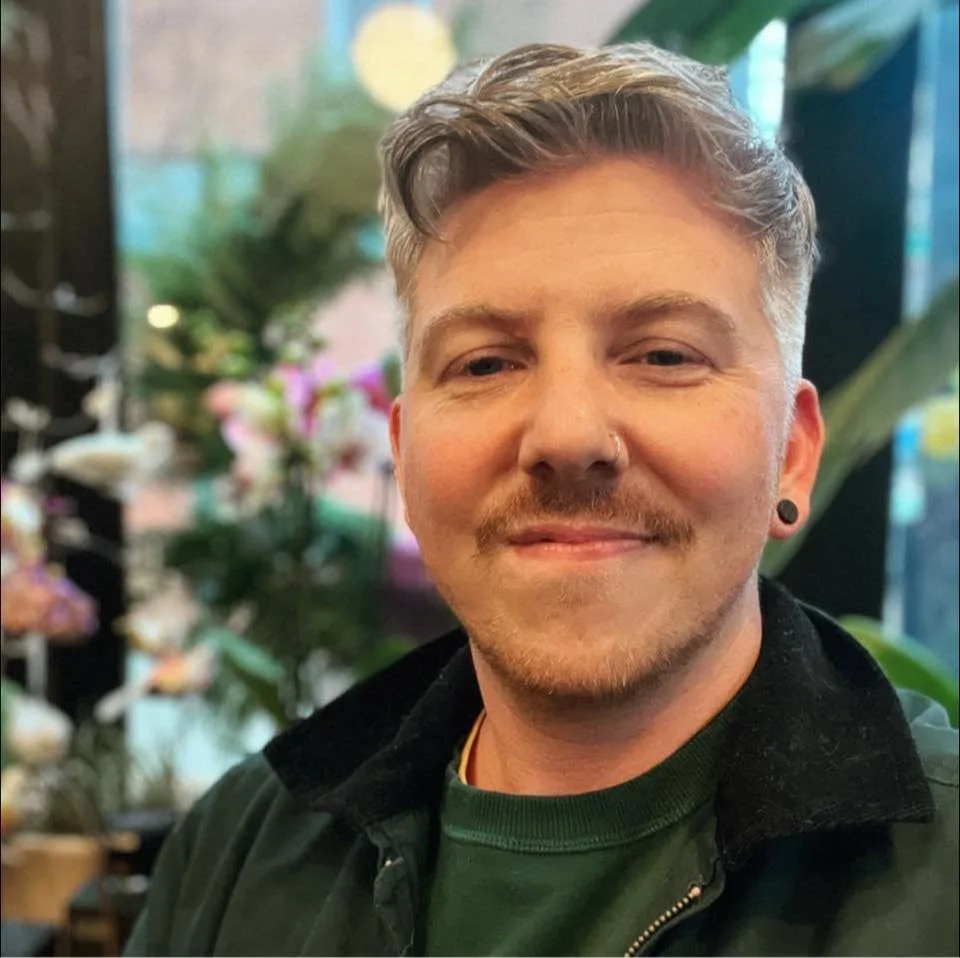
Patrick lives in a tiny house in Philadelphia with his wife, toddler, and elderly beagle mix. Patrick is a seasoned psychotherapist who specializes in helping his clients heal from PTSD and Complex trauma. As a trauma survivor himself, this is Patrick's life's work. As the founder of Philadelphia EMDR, Patrick provides trauma-informed care and Eye Movement Desensitization and Reprocessing (EMDR) therapy for clients across the country through secure virtual sessions. His work blends deep clinical expertise with a grounded, relational presence—and a belief that healing is both courageous and profoundly human. You can find him on Facebook at Philadelphia EMDR, on instagram @FeelingsDaddy and on the web at PhiladelphiaEMDR.com
S6E7 Patrick
Jackal: [00:00:00] Hello everyone. Welcome to our new season of Stealth a Transmasculine podcast. I'm Jackal. I'm
Kai: Kai. We're your hosts for the Trans Masculine Podcast. The new season means new questions, and this season focuses on staying connected during these difficult times.
Jackal: Our show focuses on the stories of people who identify as transmasculine and who transitioned either socially or medically before or around the year 2005.
The name of our show highlights two important facts that one, for our generation. We were often told to hide our past and live in underground existence. And due to that, our stories are often overlooked.
Kai: We want our audience to know that we ourselves are part of this generation of trans masculine identified people, and that we value the [00:01:00] experiences inside our trans masculine community.
We want people to know that throughout our lives, each of us has had to navigate issues of disclosure, which have impacted us In many ways,
Jackal: the bond we share as persons of trans experience is precious and lifesaving. These are trying times. Throughout the world, there are groups removing protections in place for our trans and non-binary communities, safety is a real concern for us, particularly our trans and non-binary bipoc siblings.
Kai: We offer links to health and safety resources on our website, trans masculine podcast.com. We also have an incredible mentor mentee buddy program that has connected 88 trans men. If you're interested in becoming a mentor, please reach out to our awesome volunteer Clark. Via the mentoring tab on our website.
Please hold each other dear and stay in touch with us. If you're new to our show, welcome and if you're a follower from a previous season, thank you for your continued support. [00:02:00]
Jackal: As humans, we are always changing and transitioning. As elder trans men, we assume many roles. We get married and divorced. We are caretakers, we are parents.
We are professionals, academics, and advocates. We push for human rights and systemic change.
Kai: We invite our listeners to remember that we are a living community. We are healthy, we are contributing, we have experienced loss and success. We are loved, and we welcome you to our stories.
Jackal, tell us about the quarterly mentor mentee meetup that you had with Clark.
Jackal: Yeah. First of all, thank you. You really were the spearhead of the whole mentoring group. And, you did the first one like a while ago. And yeah, you've taken on a new project, right? With the, where are they now? Which is gonna be featured on our members section.
So for the members out there, don't forget to check that out. Something new. But [00:03:00] yeah so the mentor mentee group is going strong. We do have about 88 people who have been. Paired up, so about 44 pairs. And we had a small but mighty meetup in April for our quarterly meeting and it was really fun.
Really some good guys. There's a guy in there, I think he lives in your area, but he's just a guy's guy. He's just a real guy's guy. So stealth. You would never know, right? Never know. He does not have to come out, but he makes it a point to be a mentor. He's inspiring to me.
He was really inspiring and I really loved what he had to say. Just a really thoughtful person and wanting to stay connected and I really appreciated that.
Kai: So we have almost 90 people, that's 45 pairs of. Trans guys, men of trans experience together, trans masc folks. That's pretty darn cool. I have to just say [00:04:00] my mentee and I have dropped off communication. We do text and we haven't been talking as much. Definitely thinking about him for sure.
Jackal: Me too. In fact, I asked my mentee, I have a couple of them. I invited him to go to the quarterly meeting, but neither of them showed up. Just a shout out to them. I hope they're doing well.
Kai: So how it's going or what was the meeting like?
Jackal: Yeah, it was great. Like I said, it was a small group, but it was mighty. And we talked about a lot of different things, like how things are going now pressing things that people wanted to talk about how to survive in, in the political climate how to break out of isolation if you're feeling isolated and things like that.
So just really good tips and things to talk about. The one thing we have still quite a few people on the waiting list who wanna mentor. And one demographic that we're really trying to find are older Asian trans men, trans men of Asian heritage [00:05:00] who have transitioned, back in the day because we have a lot of younger Asian trans men who really would like peer support both gender wise and culturally so if there are any older Asian trans men out there listening please, we really need you. There's so many mentees that need you and need that support.
So I wanted to say that. And I just wanna say thank you to Clark
Kai: Oh, yeah.
Jackal: Who's our volunteer, who's been doing a smashing job of getting these done. Who's a very thoughtful person and who actually created a newsletter. So we have a new newsletter, a quarterly newsletter.
It's for anybody. We're gonna have it on our webpage. And please check it out like it's only gonna be quarterly, but, if you have any feedback, there's a trans joy section in there. If you guys have any trans joy that you wanna share with us make sure that we get it well in advance 'cause it's quarterly.
And just really appreciate everybody who's listening and really [00:06:00] appreciate, you know how much this has blossomed over the last four years.
Kai: Oh yeah. And I can't say enough about Clark. Clark. You're absolutely fantastic and your support and flexibility and creativity and just showing up has been priceless. Thank you.
Jackal: Yeah. Yeah. Thank you.
Sean: Hey, this is Sean Aaron. He, him, his. And I'm here to tell you about them. Boys podcast. I'm the host of them boys podcast, and as a black queer trans man, the podcast amplifies the voices of other trans men of color as we share our transition stories. The podcast not only amplifies the voices of trans men of color, but it raises awareness and conversations around our lived experiences.
You can listen to the podcast by going to them boys.org/podcast. That's D-E-M-B-O-I-S dot [00:07:00] org forward slash podcast. I hope to have you join us on the next episode.
Adam: Today's interview is with Patrick. Patrick is a trauma therapist with 20 years of experience supporting adults, specifically focusing on queer and trans individuals and adult survivors of complex childhood trauma. His practice is rooted in EMDR therapy and narrative therapy. For any of our listeners unfamiliar with those two forms of practice, I highly suggest giving them a Google. Patrick blends nervous system healing with meaning making to help his patients reclaim their stories and their lives.
Above all, he strives to ground his care in a deep respect for each individual's lived experience reflecting his belief that true healing happens when we feel safe, seen and supported. Patrick's social tranniversary is 2006, the same as Rej, Cam, Finn and [00:08:00] Lucas. He started his medical transition in 2010, the same as Lauren and Gaines.
So go check out our website to see what momentous events happened in those years.
Jackal: So welcome back to Stealth a Transmasculine podcast. We're here with Patrick. How are you doing today, Patrick?
Patrick: I'm doing good. As I mentioned, when we just first said hello I have a little bit of a pain flare up right now, so I'm a little bit brain fogged and feeling it. But other than that really happy to spend Sunday afternoon here with you guys.
Jackal: We're happy that you're here too, and especially having a pain flare up that is uncomfortable to say the least. And we really appreciate you taking time out of your day to be here. Our first question is always, how did you come to be on our show?
Patrick: So I love podcasts and they're like my best friends these days. I live in Philadelphia and often on a walking commute, to the gym or to work or wherever, and. I think I was just in need of trans [00:09:00] voices or trans community one day and did like search term, and I found your podcast.
So I've listened to several episodes and just found such like communion through listening.
Jackal: Wow. That's awesome. Thank you so much for being a listener too.
Patrick: Thanks for doing what you do and bringing the community together.
Kai: We're really happy to have you, we would love to hear how you first learned about trans masculine identities, Patrick.
Patrick: Okay I was born in 1983 and. Was a kid in the eighties and nineties and I call up the story backwards because growing up around that time we didn't really, have the language for, I didn't have the language for transgender identities at all, let alone trans-masculine identities.
I think like a lot of trans mask people, I grew up as a tomboy and remember being a [00:10:00] kid, especially when puberty hit, right? I remember being in my backyard and had friends and things like that, but I was looking for people like me. I remember saying like a wish or a prayer or something that I would meet another girl like me or person like me, and I didn't know what that meant. So it's the, again, the story backwards, looking back on all these moments and now having a fuller understanding about what was going on for me. So it was a pretty lonely time. And the first time that I got to college finally came out. For the first time as a lesbian and joined BILAGA, I just feel like that sets a year or a time in history when queer clubs were called BILAGA. But yeah, I came out for the first time, which was incredibly difficult to do. I remember the days [00:11:00] that, like the internet came when I was in middle school and like seeing the AOL chat rooms and there was the gay and lesbian chat rooms and I would dip in and out of those throughout like middle school and high school. But something else that I did during high school, which at the time I was like this is the weirdest thing ever, and you're going to never tell anyone and die with this secret. So I made my own profile on AOL that was. At the time for me, but I called myself Brian and so I crafted like this entire identity via this, text profile on America online. And went into regular teen chats and just chatted with like mostly girls, as far as I, know. Given my story. And then, whatever, got [00:12:00] to college and I think that kept me alive right during high school. Having an opportunity to truly be my authentic self.
While at the same time I started, in real life like. Self-medicating a bit, around depression. I remember pictures of like me and all my friends at a party and I'm just like in a chair in the background by myself looking very sad and alone, so just collecting these moments, looking back again with a fully understanding, getting to college, coming out as a lesbian and being like, ah, wait.
Damnit, this doesn't quite feel like the whole story either. What the fuck? What do I have to do here? Because it was still earlier on in, in history and I don't know. During at that time, there wasn't a great deal of acceptance, or maybe people thought me being a lesbian was a phase or something of that nature.
And I just remember being in college, continuing to self-medicate, going to parties, binge drinking, things like that, and just wearing [00:13:00] oversized, like baggy clothes, like sweats and just really feeling uncomfortable in myself and in my body, how I found out about trans masculine identity, I had a crush on somebody who later became my first like big love and she was doing a trans 1 0 1 for BILAGA. And I was working as like a babysitter at the time, just trying to like hustle, get some money for college and everything. And all I knew was my crush was doing a trans workshop and I wanted to see my crush give a workshop.
So I raced to it. I was a few minutes late, sat down, she explained it to everyone and I just was like, oh shit.
Jackal: Wow.
Patrick: And the next thought I had was like, this is gonna be really hard.
Kai: Wow.
Thank you. One thing you mentioned was that you were born in 1983, which is the year that we [00:14:00] graduated high school, by the way.
Patrick: No way. You guys are looking great.
Kai: Thank you. Anyway, so we graduated high school and I remember the eighties and we were around eighties and nineties and you said that coming out was difficult. So how did it actually play out? It was challenging what was going on?
Patrick: I think coming out as a lesbian, people were like, oh, okay. And maybe just hoping that it would pass. And yeah, it's still like when I went to high school, there was not a gay straight alliance. I went to high school in Connecticut in the nineties and graduated in 2001. There wasn't a gay straight alliance. There were kids that I could identify as maybe being gay or a lesbian or maybe closeted trans, which I had no idea about at the time, but there wasn't any way for us to communicate with each other or connect with each other that didn't feel like social suicide or [00:15:00] like the scariest thing in the world.
I think just knowing that there was this club in college, there was a whole year, my whole freshman year where like I in earnest gave it the old college try and tried to be with a cisgender man and was, and all intents and purposes, I was the blonde girl and he was the cute boy.
And it was like, this is it, right? Like we're gonna have kids and, I ended up breaking his heart because I thought I was like breaking up with him to become a lesbian. And I did. But I just have a memory of being a childhood friend's wedding with my mother and, just started like getting really teary and emotional at them dancing together and ended up coming out to my mother as a lesbian and saying, part of what's upsetting is I don't think I'm ever gonna have this. And I live in a family sort of culture where things don't really stay secrets even though that's, maybe what people ask [00:16:00] happen.
And I think that information was shared. But again, I don't think taken very seriously. Coming out as trans was pretty awful with my family particularly my mom who I think had me. So I have an older half-sister and half-brother. With my dad's previous marriage, although my family system is my older brother who's three years older than me and me, and I think my mom had me to be like her best friend and really saw me as a continuation of herself. And that included like my emotional landscape as well as my physical body. And so me coming out as trans to my mom . She was really awful to me about it. We struggled in a lot of ways and I did a lot of work to make my own way, I would say. And I thought I at least had unconditional love. And that was a really difficult thing for me in my early twenties to realize that I didn't [00:17:00] have, And a really dark period during my life.
Jackal: Were you transitioning? Were you transitioning at this point, in your twenties?
Patrick: Yes. Socially I started to, during like my early to mid twenties the woman I met in college who I had a crush on, who did the trans 1 0 1, we got together and. She did this trans 1 0 1 because she had dated a trans guy in high school, and I guess BILAGA needed the training. I can't tell you like what was going on, but looking back, I, I assume we did.
And
Kai: For those of us who don't know what BILAGA means what is that?
What does it stand for?
Patrick: I think bisexual, lesbian and Gay Alliance. There it is. Yeah.
yeah,
Kai: yeah. One of the things that's really fantastic about us is that we're really good at finding each other and finding support when we don't have family, support.
That can be incredibly painful and we [00:18:00] usually find it outside. Talk us through your transition. How did it go? Who did you connect with?
Patrick: So the first person that I really tried to like deeply connect with was an Ex who did the training I was mentioning and had dated a trans man in high school. I was like, this is it. Someone's gonna love me unconditionally. Here we go. That did not work out as I had hoped. She and I would have sex and I would muster up all the courage in my tiny heart and be like, Hey, so you know, when you touch my chest it doesn't feel good because I don't really identify like with that part of my body. And her response was to say things like, don't say that. My ex used to say that he was trans and you're not trans,
Jackal: Oh wow.
Patrick: Right. So zip like back. I go and then we continued to date. I think you [00:19:00] learn in every relationship. No way. No fucking, how would I be with anybody now who did not? Fully accept me for who I
am, right?
But back then, when that was the bare minimum that I was not achieving
in my biggest relationships, I was really willing to accept less.
And I tried a few more times and that relationship ended disastrously by way of her cheating on me with a cis man. Right after saying things like, don't say that you're a lesbian or we're lesbians. So that was brutal. But it reminds me a little bit of an AA journey or like a getting sober journey because I remember seeing Michelle T like a few years later when I was in another relationship and she spoke at like a college in Western Mass, and she was like, all you little trans boys out there?
I was like, yeah. And she was like, she, is sober and went through that journey and she said to all of us, basically, I felt what she [00:20:00] was saying it directly to me like, you guys need to do this alone. This is not something you need to like, drag people through. I think she was a little bit getting stuff out maybe that she had dealt with and like I said, I was with another partner at the time, but I had this period of time after that first relationship ended. I was basically told by my mom, I was told by my first big love who broke my fucking heart, right? That I wasn't trans. I didn't know who I was, and also I wasn't going to be loved for that.
Jackal: So what was your transition itself like? Like when did you start? You look great. You are living your authentic self. Like when did you start taking testosterone? Talk us through the actual process of the transition?
Patrick: Yeah, so after that breakup, I went and got that haircut, the haircut that I had been wanting to actually get, and I went to Walmart and got every [00:21:00] flannel shirt that I could afford and started that sort of social transition. Completed grad school. Got my first job out of grad school, working as a therapist in a community mental health agency, and I was like, okay, it's time.
I sent my dad a letter in the mail. I was so scared about telling my dad, who I know, my secret had already been leaked to a little bit, but surprisingly enough I thought I was gonna struggle more with him. He called me. And I was like, shit, I better answer. He has gotten the letter by now. He had moved down south and so wasn't immediately close to me and he was like, Hey, I read your letter. I don't fully understand all of this. He mentioned Chaz Bono who had come out recently. And he said that must have been very hard for you. And I'm sorry. And he said, I love you no matter what. And that like, all my boxes were [00:22:00] checked. That's all I needed.
Jackal: Yeah.
Kai: Great job dad.
Patrick: Yeah. Yeah.
Jackal: Good job, dad.
Patrick: So that's when I started met with an endocrinologist and started hormones.
And that was around 2008.
Jackal: Thank you so much. So our show is called Stealth. So we always ask guests, what does stealth mean to you?
Patrick: This question right now is like heavy. Honestly, I thought about canceling on you guys again.
Jackal: Wow.
Patrick: I really have struggled with. Whether or not to tell people that I'm trans and I've been on podcasts before that,
I have then said, Hey, can you please delete the episode with me on it? I've been on podcasts more recently where I haven't said that as we are all sitting in this moment in time.
I really miss the days of before trans awareness I missed the days where people didn't understand everything [00:23:00] about us and who we are. Trans people are being attacked right now. We wake up every day wondering how bad it's gonna be in the news cycle and. I had an experience recently, so I'm like a therapist and I'm trying to get my name out there and I'm trying to develop this training institute and like a social media following and all these things. And I go back and forth with that. Because I'm trans period . I've gone into a therapy session and come out for those 10 minutes in between clients and had, who I think is a closeted trans man lesbian from the south looking person. Go through each one of my pictures and tell me like how much I look like a woman and how small my hands are. And things of that nature.
Back before I passed, I, have had things thrown at me and, recently, last week I was like, oh, let me like connect with this dating expert advice guy. Let me just from my therapy page do a little comment. [00:24:00] Because his question was all about a listener calling in who is a straight woman who's attracted to bi men but wants to be monogamous. So asking for advice on that. And I said consider trans men. In essence maybe
we
Jackal: I've done that. People have said to me, what's one thing we can do to support trans people? And I said, include us in your dating pool.
Patrick: right immediately,
Jackal: don't see us as attractive and potential partners, then you still have transphobia that you need to address.
Patrick: a hundred percent. A hundred percent. Immediately I got a comment back from a trans person saying really terrible things to me and about trans people which I don't think would've happened before. I see it all over the internet now, and so I immediately blocked that person and deleted my comment. I'm back to that zipped up feeling that I used to [00:25:00] feel when I was starting to come out as trans and not feeling unconditionally loved. Yet it's happening with our whole culture and society.
Jackal: True.
Patrick: it's a really shitty way to move through life for all of us in it's exhausting.
Jackal: It reminds me, like Trump's first or he, who shall not be named first term was all about racism and white supremacy and white supremacy is good kind of thing. Like those are nice people too. Remember all of those statements and so it really empowered, white racism and white supremacist to say things that they couldn't previously say under a politically correct atmosphere. And that's exactly the second term is about us. It's about trans people. And so people feel more empowered to say the bullshit things that they might have said decades ago.
And they're like. Able to say them now. So it's sick, it's crazy. So what happens for you if the, now, [00:26:00] like you said, you're getting more zipped up again if the conversation leans towards trans topics. What do you do now?
Patrick: I'm just like letting go and letting God a little bit,
like if people want to find out, if Patrick is
trans, it's, they're gonna find out about him
trans, you know what I mean? My hope too with being on this podcast is helping people heal from trauma and complex trauma, which is exactly all the stuff that I've talked about so far. I wanna help people. That's what I do in the world. And so I would rather risk myself and sign a surgery letter, right? I would rather risk myself and be here with you guys and reach a wider audience of like other trans men who need therapy. Then, be found out because like ultimately if keep things, keep going the way that they're going to be going yeah, I'm gonna have more moments where people are discriminatory towards me. [00:27:00] It's a big reason, guys, why I haven't written a book
Or I don't know, been more successful in ways that I know that I could be.
And I'm at this moment of do I just say fuck it? And forge ahead anyway and go
Jackal: Kai and
I do,
Patrick: Yeah.
Jackal: Kai, and I say, fuck it. We're not
being,
Kai: it's a really Patrick, you're just talking about how complicated it is.
And every day we encounter these. Decisions, these opportunities, this I, this is an opportunity for me to share something personal about myself or make a connection with someone who otherwise wouldn't know, or to seal up, to protect myself, and it's such a. Complicated way of being in the world. And I think, you're right, Jackal, like anti-immigrant, anti-trans, anti-women, all the things that are happening right now it's a really it just highlights how important it's for us to stay together. To stay connected.
And we do share that special bond and we're focusing on that this season. It's just like, how do we stay [00:28:00] connected even in the face of this hardship Yeah. And these challenges that we're experiencing. Yeah, exactly. And as men of trans experience, that bond can fuel us, and keep us going.
And how connected are you to other trans guys and men of trans experience? Patrick?
Patrick: Not very it used to be something that was more present in my life. So as I mentioned, i'm a therapist. I'm developing a training institute. I am a. Father, I'm a husband and that's a pretty full day and life. And so my friends these days actually look like other parents from daycare who mostly don't know that I'm trans. Is so interesting. I was talking to this other dad and they did IVF too. And he was chatting with me about it, it's so weird, huh? Just like spanking into a bottle and like bringing it up to the, desk. And I
just like,
Kai: That's an opportunity,
right? Some of us spunk, some of us don't.
Yeah.
Jackal: Spunk [00:29:00] wasn't spunky. Yeah,
Kai: Our spunk is different. So you have a very full life. You're focused on your family and your career and training and growing yourself professionally and personally how much or how little do you stay in touch with folks that you knew pre-transition and really briefly, how's your family stuff going Now
Patrick: Family stuff is still complicated.
Kai: that's fine. Okay. We don't need to go there. I just was checking in
Patrick: I was just laughing because that is not a brief thing.
Kai: No, I know,
we don't need to go into detail.
Jackal: Do you wanna talk about your family a bit? Because you mentioned off air that was a big place where you got community. Now, do you want to talk about that or is that private?
Patrick: I'm happy to brush on that.
Jackal: So let's just ask about that.
So you talk about the parent community, but you mentioned off air that it was a really unique parent community. You wanna talk about that a little bit, please?
Patrick: Oh yeah. So also another part of the community that I happen to be focusing on right now, which is a parent moment oh, it's not all about me anymore, it's a really [00:30:00] lovely thing in a lot of ways, especially given the current anti-trans climate. I'm sick of my story.
Like what else is out there guys? And I have an almost 2-year-old who was born with dwarfism, so she's a little person and, the medical community really botched that one up in terms of the way that they treated my wife through her pregnancy and delivery and me and the way that they gave us that information. Although the first day of my daughter's life, we were hooked up with a really amazing nurse who happens to be a little person who just really gave us connection and support and community. And so one of the most important communities in my family's life right now is little people of America.
Honestly, really cool place for me to be a trans man too.
Are you out there then with some people at least?
With some people, yes. With some people, no. So some people we're friends on Facebook and I've meant, made some posts just like around the passport thing or this and that, and people who maybe didn't [00:31:00] know I still don't know if people know if I'm trans or not. And I've stopped, tried to stop. Mostly caring. And like being a dad too, or maybe people think I'm gay but I would rather walk down the street having a fucking great time with my daughter than giving a shit whether someone or not thinks I'm gay or trans. You know what I mean? But so some people, yes, some people no.
And so there are certain men who have dwarfism that I like I'm tight with who you know, first of all, let me sit at the table. You've gotta earn your seat. And second of all, who've just been like, we have a lot in common, which we do. And and then, no sort of culture or group is a monolith.
So there are certain people in that community that I would absolutely never tell that I'm trans.
Kai: Thank you. And so if you had to provide a suggestion about how someone can support you and be a good ally, how, what would you suggest to other people to help you [00:32:00] and us?
Patrick: Around being trans.
Kai: Yeah.
Patrick: Don't out me without my consent. Love when people don't out me without my consent. It's hard, like I think like when I come out to like cisgender or straight people, when I have come out to cisgender or straight people who didn't already know that I'm trans, the tune just changes in, in, in ways that I like regret, coming out to them.
Like all of a sudden, like men pick me up when they hug me or ask me about my genitals or something which is a fucking weird thing to do,
and.
Kai: so, don't do that. Don't pat us on the head. Pick us up. Ask us how big or whatever it is, or yeah. Okay. Yeah. So what can they do? What do you have some really supportive people in your life, like whether it's, as a parent, as somebody who's involved in different communities how do people support you?
You've got loved ones, you have a [00:33:00] sweetheart,
Patrick: yeah, support, I think these days looks like at least a weekly. How are you doing?
I would say minimum once a week.
How are you doing with all of the anti trans, legislation and like air your breathing, like how's that all going would be a good thing? I had a really good friend who's a cis man.
I would say one of my best friends like. And people do this right? When people are elected or inaugurated or something big happens in the news he did this, which has reached out and he called me, awesome,
how are you doing? Blah, blah, blah. And then the phone call took a turn.
'cause he was like, for my own mental health, I'm just tuning the news out right now.
And I thought, do I say it out loud? Do I say it out loud? And I said, yeah, you do. This is this is how we do it. We talk to our friends, we talk to the people who care about us as people.
And I said, that's a really privileged thing for you to say right now as[00:34:00]
Kai: Talk to us about that.
Patrick: a cisgender, straight white man,
For your ability or your decision. To both call me and check in on me, your trans friend, but also make the decision to tune out all the things that are harming and affecting me
is a really privileged take. And I don't
Kai: how'd that go?
Patrick: He heard me I followed up with a text and I sent a video of a trans woman at an airport who was really distressed because she may or may not be able to get a passport or something of that nature. Pretty fucked up. If my cisgender straight friends were to wake up one day and not be able to get a passport
People would fill the streets, right?
And so I followed up with that video and I said. Please don't tune it out.
You called me, right? You called me to check on me, and I'm gonna be a full human who's experiencing the things that you [00:35:00] called me to check up on me, and he responded with Will do, and I have not heard from him since.
Kai: Yeah I think it's a really complicated thing. Like I sometimes don't know how to describe how to support us, because I think checking in on us is great and I'm surprised that people aren't checking in, I think there's so much negativity and misinformation out there, and we're so inundated with these sound bites and chaos
it's like. People do tune out and numb out to it. It's like I can't look at it, I mean for me, I make decisions about how much media I consume, and I think our community does,
Patrick: we have to. Yeah.
Kai: Yeah. And I really like how you're talking about this decision that you're making about how much folks to give. I've gotten to the point over a lot of time where I think I'm gonna tell someone it's outta my hands. And. Maybe they're gonna be changed their behavior around me. Maybe not. I don't [00:36:00] care. But I want them to know and it's on them. If they have to adjust something, they're gonna do it.
I'm gonna keep showing up and be me, and that's taken so much because my history was, I was stealth for a really long time and it was absolutely terrible for me. It's a great place for others. And I realized where I sit, how I have the privilege to be that out, in this situation, which I am.
So anyway, I just wanted to say that 'cause we do contend with this all the time and I'm so glad you have supportive people in your life and that you have, established a really loving circle and a really loving family for your daughter. I'm so happy for you.
Patrick: That's it. I think that's how I'm getting by right now. As humans, we're not actually designed to have these fucking horror jump scares all around the world, including the things that affect us directly, indirectly. And yet there it is when you open Instagram, and you're just supposed to like it.
It's insurmountable. [00:37:00] And yes, I'm with you, Kai, in terms of we've gotta be measured about how much we take in. And the way that I think I'm coping is, yeah, my biggest two goals in the world right now are to be the best husband I can be to my wife and the best dad I can be to my daughter and create this safe environment for us to be in. We actually literally live in a tiny house in Philadelphia, and so it's I'm gonna draw a circle around this
And this is in my control and I'm gonna do a damn good job at it,
Kai: right on.
Jackal: Awesome. Hey we're at the end of this half of our podcast, so we wanna ask, is there anything that we should have asked that we didn't? Any. Last words of wisdoms.
Patrick: Gosh, no, I would just say we've gotta take good care of ourselves right now. One thing as I'm telling my own story now, one of the things that I've realized is I don't always open up [00:38:00] either as much as I want people to come in and hold the little me inside the door's close
sometimes.
Jackal: is closed. Yeah.
Patrick: And so how can we take care of ourselves? What does that mean? We can't hold it all ourselves
either, right? In terms of what's coming our way. So like when is it safe for us to open that door and have other people help hold us right now? And when, honestly, sometimes I love to just put the kid to bed, take a gummy and go to bed like a kid with my
iPad and just have a snack, and that's okay too.
Kai: yeah. I play Scrabble
Patrick: Gorgeous.
Kai: my friends. You're absolutely right. You're making me really feel things right now because I think I operate a lot in my, analytical place
Jackal: Capricorn brain is what
Kai: Yeah, exactly. We're doers and as a helping person, allowing myself to accept that from others is a thing, and so
Patrick: It is.
Kai: Jackal and I [00:39:00] talk off on about thank you for letting us in. You're letting us in Patrick, to your story, to your history. And it's been such a pleasure to talk with you today. We really appreciate your time and your story. Thank you.
Patrick: Thank you.
Jackal: Kai, what did you think about Patrick?
Kai: It was really nice to meet Patrick. I hadn't known him. I am also a therapist, so it was really interesting to from him today, and for him to take the time out of his schedule to talk with us, especially as he is experiencing pain. one of the things that really stuck out was as helpers, you're a helper.
I'm a helper. We're providing service for folks and sometimes that can be at the expense of our own mental health or our own wellbeing because we don't often open up or we don't share or disclose things about ourselves. And that can be a safety behavior, and it's definitely something I've really pushed myself to no longer do in relationships and friendships. And so I think, hearing how he is, challenging himself to be more [00:40:00] forthcoming and to share, and then how he is so unsure about how much to be out, because of everything that's going on.
And just that ambivalence, that is why we have a show, that fear and fuck it. It's like fear on one end. Fuck it on the other end.
Yeah. Yeah. What about you, jackal?
Jackal: Yeah. He just really seemed like such a tenderhearted guy. And. Yeah, one of the things that gets me and always gets me is the difficult relationships we can have with family. That is really painful, we've talked about it, right?
We're going through our own thing. We're going through our own transition he mentioned understanding it was gonna be hard for him, but that was even before he came out to his mom or anybody. And so we're going through our own thing and then we have to have grace with people that we're bringing along with [00:41:00] us.
And that's really hard and it's really traumatizing when other people are just really not cooperating and taking the grace that we are actually offering them. so that was a big thing for me today, I think.
Kai: Yeah so much of my twenties and thirties, was uncomfortable, as I came to terms with lots of different things about myself and then including relationships with people and you're right I feel that pain and I think about the hardship during that time, and when we transitioned in the mid nineties, we were lucky to find each other and what we shared together as a community was lifesaving for me. And I also know that there was a big void in some places, and some of the folks weren't able to provide the support that would've helped us,
Jackal: yeah, I didn't even come out to my family. Actually. My mom, I wasn't close to my stepdad. My dad had already passed at that point. But my mom, [00:42:00] so I was raising my nieces and before that didn't come out to my mom. I wasn't even talking to my mom. Actually, it was only because my nieces were part of the picture that they talked to their grandma and I didn't prevent that, but I didn't want to talk to her and so, I did not tell my nieces, Hey, you have to keep this quiet. I didn't wanna put any kind of barrier around that for them. I just felt that was not, healthy. It wasn't, fair. So they were the ones that came out to my mom, but I didn't even do that.
It's painful. It's hard. It's like we all do it in our own stages and we all, want acceptance from our mom and our dad. That's just something that's true. I think,
Kai: yeah. That
Jackal: Whether we get it or not, what.
Kai: yeah, that unconditional love that he was talking about. And I definitely know, from what he said that it's a hard place for him,
Jackal: I'm glad that he found [00:43:00] unconditional love with his wife and his daughter. So I think that, when we don't have it as children, yes, that trauma continues, but it's amazing that we don't continue the pattern because so many people do, and that we actually heal through our next relationship, which is that, becoming a parent, becoming a husband, becoming a father,
Kai: Yeah. Last thing, I liked how he talked about masculinity and role models for masculinity. And as a rule, I think our guests, men of trans experience are just we're so awesome. Like the way that we each express ourselves and our own masculinity. I just, it think about all the guests that we've had and what a spectrum that is.
How beautiful that is. I really liked hearing, who his role models were growing up and thinking about my own, role models I really appreciated that discussion,
Jackal: Yeah. I appreciated him having the little boy in
'Cause I think that most of the role models that people have mentioned have been adults, right? That's the man I want to grow into. But it [00:44:00] starts when you're little, right? That's the boy I wanted to be, yeah.
Kai: do you remember that as a kid?
Jackal: Man I was such a tomboy. I don't really feel like I had that, I grew up in a really rural environment. My grandparents were farmers, so being in the dirt, I didn't have the, you need to keep yourself pristine kind of environment. I was also super skinny, so I couldn't wear girl pants.
Like my mom always bought me the boy pants because they were the only ones that fit me. So yeah, I don't feel like I had that as much. Like I definitely had boys that I played with, but I felt like one of the boys kind of thing.
Kai: Yeah I remember distinctly, I had to wear a shirt as a kid before my chest developed as a kid, and I remember, the seven, eight, 9-year-old boys always going out without a shirt. And it was no big deal. And I also remember, when it came time to go to church, I had to wear a dress.
And that was degrading to me at the [00:45:00] time. I really didn't want to do that. That was such a difference between, myself and the boys. And even they wouldn't let us wear pants until I was in middle school and we couldn't wear jeans. And I think my mom bought me like one pair of pants, and remember Johnny Otto was talking about how they couldn't wear pants at all, when he was in school. And it's just an interesting thing like generationally, how we're going. So I really appreciate the freshness that Patrick offered today. And yeah.
So thank you, Patrick, for being on our show.
Jackal: Yeah. Episode 76.
Kai: Yeah.
Jackal: And now it's time for adventures and disclosure with Kai and Jackal.
Kai: Jackal, I understand you have a disclosure story. What do you got for us?
Jackal: So it's hard for me to think about disclosure stories 'cause I feel like I'm, out or, I'm not hidden by any [00:46:00] means. So my job is part of the Promise programs, and they're all over the, the nation.
Some are statewide. Ours is very localized to our college. But we just had a law pass here in Colorado Springs where, it's now a publicly funded first dollar promise program, which is amazing, you know, if people wanna understand that, they can look it up. Anyways, so we do these welcome orientations for the incoming students.
We did a bunch of them. We did like seven of them, right. And part of it is we go through the different clubs and the different activities that we're doing, workshops that students can do, da, da, da. And so two of my colleagues do two of them. And then I have two different clubs that I run.
One is called Armonía Hispana, which is for Spanish speaking students. The other one is called Spectrum, which is a nod to our group that we had way
Kai: Mm.
Jackal: That is for gender diverse [00:47:00] students.
Kai: Mm-hmm.
Jackal: Obviously, I'm not a native Spanish speaker and I'm the, advisor of the club. And so maybe with Spectrum, people don't assume that I am bi non-binary or trans or anything like that. But I say I'm the advisor of this club, right? And I talk about the club, and I talk about who's welcome. So that's kind of a soft disclosing kind of thing.
Like I don't know who's assuming and who's not because of course, the way I look and the way I quote unquote, pass.
Kai: Mm-hmm.
Jackal: But within this, it was a big media affair, right? And so the president of the college came and spoke and there was all the media there, blah, blah, blah. Anyways, afterwards we're talking, he and I, and we're talking about various things, poetry and whatever, and I told him that I had a podcast and he said, oh, I love podcasts.
Send me an episode. And I'm like. [00:48:00] Okay.
Kai: Wow.
Jackal: Yeah, so I didn't disclose to him either, but I did send him the James Green's, book release episode that we just did, our 75th episode. And I sent it to him. I was just like, here you go. Here's our podcast, and here's an episode that you might be interested in.
Kai: Wow.
Jackal: We'll see how, interesting that is.
Kai: That's wild. It's really interesting. One, I think, even if you had, while you're talking about that group had said, we, you know, we as a community or something, while you're talking about the spectrum group for gender nonconforming folks, sometimes people miss those nuances or those statements where you're trying to drop hints, you know, without hitting people over the head with it.
I'm a trans man, right. People don't quite pick up on it. They hear what they hear. Yeah.
Jackal: And they see what they see. You know, I can use we as Spanish speakers too, but people still don't [00:49:00] assume that I'm a native Spanish speaker, which is true. You know, and I can use we as a community of, trans gender non-conforming people and people will still see, what they wanna see a cisgendered white guy .
Kai: Yeah, exactly. And it's weird in a professional setting, like I don't work for a queer school, right? I work for public education and I disclosed to one of the vice principals somehow the podcast came up because I commented on his voice. It was really distinctive and low and kind of booming voice and said, you should think about doing a podcast. He said, oh, you know, I've been told that before and I just mentioned that it's a really great thing to do or something. And then he said, well, what do you do? And so of course I was like, well, and I just said, you know, this is the podcast and this is the name and as a trans person, blah, blah, blah, you know?
He comes from several marginalized identities himself. And, I was like, well, there you go. I think he knew what it meant, and it didn't [00:50:00] really, change his behavior to me, you know? But it's just such a weird thing. 'cause you're like, do they know what that means?
Jackal: Or what that means to my history, my identity, I mean, I have a friend, a really good friend, who lives in Canada, and he, constantly says he forgets. I'm trans, right? Like, we go to gay bars and we hang out and dah, dah, dah, you know? And he's talking to me and I'm like, you know something? That's not my experience. And he is like, oh yeah, I always forget you're a trans guy, kind of thing. So even people who know and love me, they just , it's really interesting. This would be a really interesting sociological, project,
how people read other people, right? See other people and even though they know information, it just gets lost in what their overall perspective of the world is. And you become that again and again and again until you have to like disclose to them again and again and [00:51:00] again.
Kai: Have you encountered people that have said something like, oh, I forget, or You passed so well that no one would know. Like that's a compliment in some ways,
Jackal: Yeah, of course. Yeah, the compliment thing is, a double-edged sword, right? Like, I don't want you to forget that I'm trans if you're my best friend,
Kai: Yeah.
Jackal: That's not a compliment
Kai: It's not a hierarchical thing. Our existence we're not better than someone else if we quote unquote pass or not pass but I think people say that a lot or think that,
Jackal: well, not only that, Kai, but I think that they're thinking that being a cisgendered man is hierarchical still, and so they're still like. You are one of us, so you are part of the great privileged white man realm, and it's like, why
Kai: reminds me of colorblindness,
Jackal: Yeah, exactly right.
Kai: know what I mean? It really does. Yeah. So there's a conference that's being held in Florida.
Jackal: Mm-hmm.
Kai: [00:52:00] December and there's no way I am gonna travel and spend time in Florida. It's unsafe for trans people, you know?
And Equality now in Florida has a travel advisory it's just not a safe place for us to be. So I'm not going. Someone said to me, well, you don't really need to worry about it. I was like, what do you mean?
I said, of course I need to worry about it. I could get arrested if I pee in a men's restroom. And they said, well, you passed so well. So, you don't have to worry about, no one would ever know. And I'm like, that's not really the point. I would ostensibly be in a state that wants me dead, you know? But anyway, it's interesting. I wonder if the person who you shared the episode with, will listen to it or look at it.
Jackal: I think that they'll listen to it. I don't know if they'll ever comment back to me on it. I have no idea, but we'll see. I just wanted to comment on what you said though, because one of the things that comes up for me around that quote unquote passing privilege is that what people don't realize is that we still have [00:53:00] fear and trepidation, right? Like it doesn't matter that no one knows. I'm still hyper aware that something could happen, right? That's the point. So you denying me my trans identity because I quote unquote pass so well, and that I quote unquote, don't have to worry about it. Well, guess what?
I do worry about it.
Kai: It is hard to describe the stress involved, bathrooms. Don't even get a connection in a city like Houston, you need to lo know the state laws. So anyway, a great, that's a great disclosure story
Jackal: Oh, thank you. I was like thinking it was kind of milky water, but yeah.
Kai: it just, it's very complex,
Jackal: Very complex.
Kai: Good job today, jackal.
Jackal: Good job to you, Kai. We want to thank our listeners and especially our guests. This show would be nothing without our guests who share their insight, [00:54:00] expertise, and heartfelt stories. We absolutely adore you and are forever grateful to you.
Kai: Stealth captures the living history of men of trans experience.
We recognize that language has its limitations. The words we use to describe ourselves and our community evolve over time and will not represent everyone's experience. We also want you to know that the health and wellbeing of our community is our number one priority.
Jackal: We want to give a shout out to parents who are supporting their gender non-conforming kids.
We support you and love you for supporting your kids. We want to put our podcast in the spotlight. Thanks for not trolling us, but really is this just another form of trans mask invisibility?
Kai: We offer links to health and safety resources on our website. We monitor our social media platforms. We respond to feedback from our audience, and we will be accountable when we screw up.
Jackal: We want you to know that we are just two guys doing this in our spare time and two old farts to boot. The opinions [00:55:00] expressed are our own and those of our guests. We do not represent any entity outside of this podcast.
Kai: Remember, if you're interested in sharing your story, we would love to hear from you.
Also, if you're interested in volunteering, please let us know. Your feedback and support are essential to our show's success. Help us get the word out about our podcast. Tell your friends, share on social media, and rate us on your favorite streaming platform. Be sure to check out our website, transmasculine podcast.com.
Thank you for joining us Until next time.
Speaker 2: And now it's time for adventures and disclosure with Kai and Jackal.