Where Are They Now? Reid
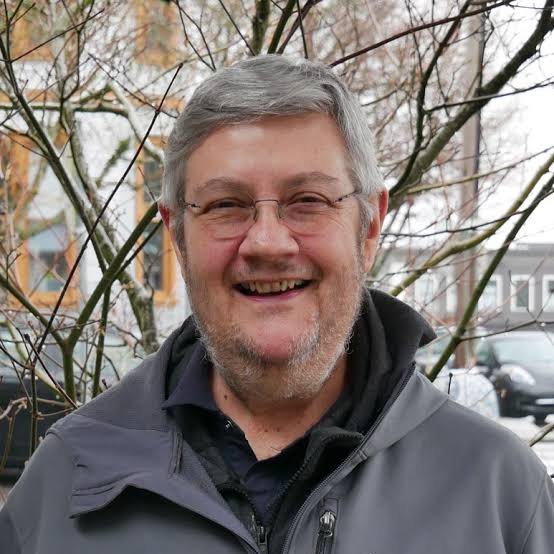
Reid Vanderburgh started his social transition in 1995, and began taking hormones in 1997. He is a retired therapist who worked with nearly 500 trans clients during the course of his career, helping them answer the question, “how do I want to live my life?” In the realm of gender identity. Reid is the author of two books, two journal articles, and numerous book chapters. He is on the board of the Portland chapter of PFLAG, a support organization for families of those who come out. In his spare time, Reid sings baritone in the Portland Gay Men’s Chorus.
Reid is one of STP's most popular guests who returns to the pod. He discusses another form of transition during his life: aging. Reid is a wonderful storyteller whose good humor and insight will make you fall in love with him, just as we did.
Where Are They Now? Reid [00:00:00]
Kai: Hey everyone. Welcome to Stealth, a trans masculine podcast, STP for short. The theme of our show is disclosure, an issue we make decisions about throughout our lives. My name's Kai, one of the STP hosts. I'll be joined by Reid. A friend and former STP guest from Seasons one and two. Jackal and I started our show in 2021, and we decided that it was high time to check back in with former guests and ask them where are they now?
We're pleased to share this bonus content and catch up with former guest. Thanks for joining us. Now. Sit back and enjoy the ride.
Reid. It's really nice to see you today. I want to thank you for being a part of the segment. Where are they now? You're our first guest. And I [00:01:00] thought since some folks may not be familiar with who you are, even though you've been on our show a couple of times, let's give you the opportunity to introduce yourself.
Reid: All right. Well, my name is Reid Vanderberg, and I'm a 69 year old trans man. Um, I started transition in the mid 1990s. In fact, Kai and I started about the same time. So we think of each other as littermates. That's true. We knew each other before that in the context of singing in women's choruses. Now I sing in the Portland Gay Men's Chorus, so it's been quite a journey.
Kai: Yeah, and we're going to be sure to reference Reid's episodes in the show notes because you want to be sure to go and listen to Reid's interviews. They've been fantastic and we're really happy to have you here.
How have you been doing Reid since we last met?
Reid: Well, I don't even remember when we last met, but it's been quite a time emerging out of quarantine emerging out of not exactly out of COVID, but out of an constant awareness and wearing masks everywhere you go and whatnot.[00:02:00]
How's it been going? I'm retired, but I really resonate with something I heard somebody say once who said that now that he was retired, he didn't know how he found time to work. What I've discovered about being retired is that what it really means is you have control over your schedule and what you sign up for and the things that you do with your time makes life more enjoyable than if you have a job or somebody is telling you something to do and you don't like it.
So I am on the board of William Temple house I sing in the Portland gay men's chorus. What else do I do.
Kai: What is William Temple House?
Reid: William Temple House is a local social service agency that I really, I appreciate what the work they do because not only do they have a food bank, they also have a counseling department.
Kai: And
Reid: I have been doing presentations for their counseling students since like 2001 or 2002, something like that. Every year I would come in and talk about working with trans clients. And then five years ago or so, the [00:03:00] executive director at the time invited me to be on the board. This is, this is perfect.
I love this agency. They've been around a long time and they really good work in the community.
Kai: That's great. So working for yourself, even when you're retired, it sounds like a pretty great deal. Yeah, that's cool. You're really keeping busy. Since we last met Reid as you think about being a guest on the podcast, has your experience being on the show, has that impacted , your thoughts about disclosure in any way?
Reid: No, I've always been very big on disclosure in part because I didn't realize who I was until I was nearly nearly 40 years old. I thought I was a maladjusted lesbian, basically, and I had all this anxiety and depression, and I didn't know what it stemmed from.
And
A partner of mine found an article about a trans man, and neither one of us had ever known you could transition in that direction, and that, that disclosed my identity to me.[00:04:00]
But one of the reasons it took me so long to realize is because there was absolutely no visible presence of trans anybody in that article. In media, I had no chance to see myself reflected back to me in movies or on TV shows or anything like that. So I've been very big on disclosure because walking down the street, who's going to know I'm a trans man if I don't say something.
So I've ever since I realized who I was, I've been very big on being open about who I am.
Kai: Yeah. And I really appreciate that. I think you've always exhibited an air of confidence about who you are being unabashedly who you are and all the fabulousness that you are and who you are. And I also know, you're really invested in being a very out and involved person in multiple communities and being doing advocacy for our communities over the decades.
You're in a position where you can do that. What enables you to do that Reid? How are you able to live as such an out and [00:05:00] about life?
Reid: Well, I've been blessed to be, my occupation was therapist, which meant I was self employed. I wasn't answerable to a boss or a corporation.
There was nobody telling me you're not supposed to say who you are. There was nobody telling me how to do my business literally Self as a therapist and as a result, I was in a position to be able to do education for other therapists For example, how am I going to teach other therapists what it looks like to effectively work with trans clients If I don't come out to them why would they have any reason to believe I would know any differently than they?
Versus gender and they assumed I was too. Why would they listen to me?
Kai: So
Reid: disclosing my identity was a big part of that, but that was part of part of that was the privilege of being able to there's a lot of people who transition who then go off and get another job because they don't want anyone to know that they transitioned and I do understand that [00:06:00] attitude.
That's not the same thing as being in the closet, which it would be for a gay man or a lesbian who let people assume they're straight. But every time somebody uses the right name and pronoun for a trans person, it affirms their identity. So they're really for decades, there wasn't a lot of incentive to come out.
And that's one reason why there was so little social visibility of my identity. But I wanted to help reverse that. And I know I'm not alone in that because I, you and I, we both came of age at a time when the internet was available to us as a source of support. And so we didn't I know I didn't feel as isolated in my transition as previous generations of trans men would have.
Kai: Yeah.
Reid: So that also bolstered me into feeling like, okay, I have the beginnings of community here to support me and turn to for guidance if I needed it.
Kai: Yeah. And one of the things that I, I also appreciated about you is that you have such a large circle of friends and community and you have a life full of [00:07:00] different chosen family, logical family folks around you.
And you've maintained contact with them, which is counter to what a lot of us were told we had to do at that time.
Reid: That's one. One thing I appreciate about being in Portland, Oregon, is that this is a place where be who you are, be your authentic self, is very much an accepted value. I transitioned out of lesbian community here, and there were a couple of people, I think, that kind of were a little hesitant about, supporting that.
This was the mid 90s. They really didn't know anything about it here. I've been considering myself one of them for 20 years. And all of a sudden, I'm saying I feel like a guy inside and they're looking at me sideways, like, well, who have you been all along, then? Why should we trust you? But that was a very small minority.
And those folks have come around. I'm Facebook friends with some of those people that I think held that attitude back in the mid 90s. They've come around.
Kai: Yeah, I'm really glad that happened. And sometimes [00:08:00] when I think back on the folks that I used to see at , the Wild Rose, the lesbian bar in Seattle, I stopped going there, but it was a small town in Seattle, even though it's in a city, I would run into folks and almost feel a sense of shame and embarrassment because I was ostracized in a way.
And, I felt so awkward because I was in an in between place and that wasn't a comfortable place for me, although there are many folks that live in that in between world which I, I find so wonderful. I'm so impressed by your maintaining connections, Reid, and not compromising on who you are.
Reid: Well, and many of them are renewed connections, is how I would put it, because Like not long into transition, I went off for three years to the Bay Area to go to graduate school, for example, and I came back and started establishing myself as a therapist. So I wasn't part of the same community any longer.
I wasn't hanging out in the lesbian community anymore. And really, it's been through Facebook that I've renewed many of those [00:09:00] connections. I've had suggested Facebook friends, for example, of someone that I know, met back in 1979, doesn't even live here anymore, lives in Florida now, but we've renewed our friendship.
It's been delightful because we reminisce about the same things that happened to us in the 70s and 80s. We live really different lives now, both of us than we did then.
Kai: Was it painful for you to exit from the lesbian community when you came back?
Reid: I wouldn't say exactly painful because once I'd realized who I was That wasn't my circle any longer.
I didn't feel at home there any longer mean that I lost my individual lesbian friends, but I wasn't part of the community anymore in the same way at all, but it wasn't causing me. I wouldn't say it was causing me pain because once I realized who I was, it also helped me alleviate the anxiety and depression that I felt my whole life.
So living true to myself. [00:10:00] Your deal and give that community. As time went on, I developed a larger circle, a different circle that became community to me in a new way. Because initially, yes, I did feel isolated because I had left behind this community that was The center of my world.
Kai: Yeah,
Reid: and I and that was very deliberate on my part.
I didn't realize that at the time, but I took refuge in the lesbian community to avoid actually living my life in the world. What that meant when I left that community was I had no world to step into not immediately. So that took some time to develop graduate school helped tremendously with that, because I wasn't here in Portland I was off in another city, and I didn't have community there anyway.
Right. So it was okay. Yeah. To feel isolation and that loneliness and being in graduate school to become a therapist was a really good place to have those feelings. Yeah. I could talk about them with a lot of different [00:11:00] people.
Kai: Yeah. Yeah. That's fantastic. Thank you for sharing that. One of the things as we sort of wrestle with transition, whatever that means to us, is that, it may
mean that you experience a sense of loss as you move from one place to another, if you do, . And I find the experience of bonding with other trans guys, that bond is the place. And I haven't had that before. And as hard as it was to, to do this, because transition's no joke.
I really can't, can't knock our community.
Reid: Well, and here's an example of that just happened to me yesterday at Gay Men's Chorus rehearsal. Yesterday was the 27th anniversary of my chest surgery.
Kai: Happy happy chest surgeryversary. I do not say that.
Reid: There are several trans people in the chorus.
So I went up to each of them individually and I said, I know you will understand the significance of what I'm about to tell you. Today is 27 years and every single one of them gave me a big hug [00:12:00] because they completely understood the significance of what I was telling them in a way that the other people in the room would not and they're not all cisgender gay men in my chorus by any means but most of them are cisgender in one way shape or form and they wouldn't have understood exactly how deep a significance that surgery is.
But those folks did,
Kai: yeah, no kidding. That's wonderful. Thank you for sharing that. Did you have any friends that listened to the episodes? Did you get any feedback about your interviews at all?
Reid: Interestingly enough, not so much. Many of them said, Oh, I loved it. I enjoyed it a lot. But the most significant feedback I got was an email that I think I forwarded to you from some trans guy, I believe in Norway or Iceland or one of those countries who really so much appreciated it and felt less isolated and alone after hearing it.
And that had a huge impact on me because I didn't realize how far a [00:13:00] field that It would go and I don't think you did either because I remember wow, this is so great to hear. Yeah. So that affected me more because I know my friends. They all know what I would have said. They all have heard it before.
And so for them, it wouldn't have had a lot of significance in terms of, um, Being eye opening or anything like that. So to hear that from somebody who felt really isolated and alone and this helped him so much That was the most significant response. I got
Kai: that's
fantastic.
Thank you to the listeners that chime in and talk to us about our episodes and the fabulous guests we have because I I'm so touched by that. okay. Current news. . So we're post pandemic almost, things have moved on a bit. Talk to me about what significant changes or developments have happened in your world since our last conversation.
Reid: Well, I published my memoir. And that's the deal. That was one of the things that I did to get me through quarantine was to sit down every day at the computer with a purpose.
Kai: [00:14:00] I'm so impressed by that. I cannot tell you.
Reid: Well, it'll be your turn one day. Oh, if you want to. I mean, I'm a writer. So it comes naturally to me to do that.
But having that to focus on during quarantine was hugely beneficial because I'm an extrovert. So quarantine. Really affected me negatively, but having that purpose of sitting down at the computer every day to write something or reread what I wrote and rewrite it and look things up and things like that was hugely beneficial.
Kai: Tell me what your memoir is called.
Reid: Oh, it's called Work in Progress. Because I think we always are works in progress. Somebody said you're never done until they screw down the coffin lid. That's a little macabre, but it's true. I mean, you're isn't done.
Kai: And then depending on how you think about done there, you may never be done.
Reid: That's right. Your memory lives on. So you really are never done. Yeah. Yeah. But the [00:15:00] other significant thing that's happened fairly recently is the GALA Choral Festival. So I've been singing that stands for Gay and Lesbian Association of Choruses, although now that the acronym is just the name because there's so many more identities these days in the choruses than just gay or lesbian.
But the last one happened in 2016. There was supposed to be one in 2020, and we all know what happened to that. So we hadn't had one in eight years, and we had one this last July in Minneapolis, and we blew the roof off Minneapolis. Seventyfive hundred of us singing for each other when we hadn't seen each other in eight years.
Wow, that must have been crazy. It was fabulous energy.
Kai: Yeah.
Reid: Incredible energy.
Kai: So tell me a little bit more about that. What was it like for you to be around that many people at post pandemic and also just all of your mates?
Reid: Well, I sing in a very large chorus. We have almost 200 singers.
So going to rehearsal every week, I'm around a lot of [00:16:00] people and around gala choral singers. It's no hardship to me to watch concerts every single day, multiple concerts a day, being around a lot of people who understand the significance of what we do is it's huge. Singing for community is just huge.
Kai: What do you enjoy about it?
Reid: Well, to me, it's a spiritual experience. Uh, I don't think it's an accident that choral singing originated in spiritual traditions, because there's something about sharing the air and song, especially if you converge on a note of unison. It really thins the barriers between people, and it makes our interconnection really palpable.
There's within a gala chorus, if you're doing that, you are singing for your people, you're singing for yourselves and each other. And The audience gets the same experience of being uplifted and feeling a sense of energy and connection that they did not necessarily feel when they walk [00:17:00] through the door is so powerful.
I I stumbled into gala choruses back in 1986. And never been without one since.
Kai: I'm just imagining like all of the different voices coming together and like how that sounds to become so melodic, so many different people coming together and the voice is beautiful, particularly post COVID.
So many of us were masked and we were unable to really let it out.
Reid: Yeah. Yeah. COVID. I discovered zoom because of COVID. There's only one aspect of my life that had absolutely no positive benefit to it through COVID.
And that was chorus because you cannot You don't get that sharing the air and song and converging on you in unison when you're on zoom. Can't do it. We did do a couple of videos where we would record our parts in our own homes. We did rehearsals, everybody on mute, and we would all [00:18:00] sing our part sing along with a recording.
One time The baritones were having a section rehearsal and we discovered that it was somebody's birthday. We're about 20 of us on this zoom call and we unmuted and we all sang happy birthday to Tom in unison. Yeah. And it was so funny because by the end it was cacophony because everybody's internet connection is slightly different speeds and you cannot sing in unison.
But by the end of it, I said, we better not let anyone ever hear this or they'll never buy it again. But Tom also said it was the best birthday present he could possibly have had because the chorus family was singing happy birthday to him. That's really sweet. Yeah. Chorus had no benefit from COVID
Kai: whatsoever or zoom.
I can just feel, I really getting the chills when you're talking about like the unison of the voices and your love for it, it comes out so much and I know that about you because I know you,
so [00:19:00] speaking about disclosure, how have your thoughts on discloser shifted since the podcast episode, if they have?
Reid: Not at all . That didn't change anything for me about who would know. Yeah, who wouldn't know. Um, but again, that's a place of privilege. I live in this middle class neighborhood in the middle of Portland, and I don't think most of my neighbors have a clue who I am.
I walk the dog, I say hi to them every morning, we're on speaking terms and first name basis with our neighbors, but I am invisible as a trans man, and I know that. I have no problem flying a trans flag or something like that at pride time, but a lot of people do that in Portland, and they're not necessarily trans, they're allies.
Kai: Yeah.
Reid: So, I'm not sure how I would feel about it if I knew I was visible, but I know I'm not. I'd have to wear a neon sign around my neck for people to really know I was trans if I didn't tell them.
Kai: Yeah. For folks who can't see Reid, Reid is like, are you six feet tall?
Reid: 5'11.
Kai: [00:20:00] 5'11. So you're close to six foot tall. You've got a big beard and you're just a very towering big presence. And, your walk, the way you carry yourself you're very, Confident and I think no one would know. And I don't think the concept of passing is a goal or should be for anyone, but I think it can invisiblize us.
Now, and then we also live in an area of the Pacific Northwest where it's safe to be relatively safe, extraordinarily safe compared to some places in this country and elsewhere to live a disclosing lifestyle. So post interview, but also like now that we have this new administration have you thought a little bit more about it? I know I have Um about how much or how little I I want to be a presence,
Reid: I did for about 30 seconds And then I thought you know, i'm 69 years old I've done a lot of things with my life if anything happens to me Which I seriously doubt it will because frankly, I don't go that many places.
I am 69. My [00:21:00] mobility is not what it used to be Um But if something does happen to me, Okay. I hope somebody would be brought to justice over it, but I'm not going to let that stop me from doing the work I do in the world. And that involves educating people, especially in groups. That's what I do best.
That's what I love to do. I love to have chat backs and talk backs and Q and A's and be on panels. Anywhere anyone wants me to do that, because how else are we going to make a difference? Um, and I always keep in mind a quote that's attributed to Gandhi. He actually paraphrased somebody else, but he said First they ignore you then they ridicule you then they fight you then you win Always have to keep that in the back of my mind that we are on the right side of history
eventually we will win and right now we are being fought Give into that [00:22:00] because if we do give into that, how do we win?
Kai: Yeah, I'm so concerned about , our siblings in places in the world, in our country where isn't safe to be, to disclose at all, , who are living a stealth, low to non disclosing lifestyle, which I think makes a lot of sense. And so you're highlighting the differences in geography and all of the intersectionality of who you are, , I just got an
Reid: email today from somebody who's trying to form an organization, local to me, local to us, to help people escape from areas where they're not safe.
If they want to relocate here to try to an organization to help make that happen. I just got that email today. So I'm going to have a zoom call with that person later this week.
Kai: I
Reid: thought, well, yeah, that's a brilliant idea because Portland, the Portland area, that's one of the safe places. I've always felt like I live in an oasis, but now I feel it even more strongly than I did before.
Kai: Yeah, I know I do too. It really [00:23:00] concerns me the level of fear and dread people experience that are, , really afraid, they're so concerned about where they go, , where can they go and they have limited means and there isn't an extrication plan, and I think, grassroots. Movements and providing shelter to folks, which you have done several times in your life. I think that's front of mine right now, the political climate , and, we shall see. And like you, I thought maybe it's safer to like, Hey, we should pull our website down.
Maybe we should hide everybody's photos. Right. And then I thought, well, what better time than now to be present because the folks that contact us read, who message us, who tell us that it's lifesaving, who tell us that, I didn't know we were out there and I need to hear our voices and hear our stories so much.
That's why we have to be out here. And I'm so glad you're here today.
Reid: Now more than ever, we really a visible if we can, because there really are people whose lives will be in danger. But the other piece of it, not just visibility, but [00:24:00] also access to services for various states that are going to or have already made that extremely difficult.
Kai: I know any any sort of health care and then gender affirming care and autonomy of our bodies. You're absolutely right. They're trying to govern that, , really take rights away. So I'm thankful to Chase Strangio testifying before the Supreme Court to all the folks who are engaged in activism and work throughout the country and elsewhere.
Okay, the one thing that I will say is that I. As we consider the bond that we share and the connection that we share, I think that this is going to bring us even closer together, through the adversity and through trial, we're here for each other.
I just want to say that.
Reid: I agree. I agree because we have to stay together. Who else is going to be in our corner? We do have a lot of allies, but they need education too, because how do they know how to best be an ally?
Kai: Yeah.
Reid: We bring about understanding for them.
Kai: Yeah.
Reid: And you can't do that [00:25:00] if you don't come out.
Kai: Yeah. Okay, Reid. Winding up, let's see are there any new projects you're currently working on that you would like to talk about? You talked about your book, Work in Progress. Are there other things? What do you have up your sleeve?
Reid: Um, doing an audio book of my memoir. Really? Yeah. Yeah. Yeah. I've recorded it and now I have to stitch it all together and make it available. And it's not something that enough people do because I've gotten a lot of feedback from people saying, well, I listened to books when I'm in my car.
I drive a lot. Um. It's just easier for me to do it that way than to read a paper book or even a version or something like that. So I'm working on that.
Kai: That's amazing. I was fortunate to attend a book reading that you did, and I can tell you that the experience of me reading in print, the print version of your book and hearing you read it aloud was markedly different. The way it felt to experience both I resonated with the written word and I really related so much of your [00:26:00] story to my growing up and things like that, but hearing you read that it's your voice. It completely is your voice and that is going to be awesome. I'm so glad you're doing
Reid: that. I think that people who write memoirs in particular, if they have the capacity and capability to do what they really should read their own rather than. Hearing a professional person because you're right. It's my story
so it should be my voice. Mm hmm.
Kai: Any final words read before we sign off for now.
Reid: Just if you're questioning transition, if you're questioning whether you should or could do it, don't question that because then you're questioning yourself.
Be true to yourself and wherever that leads you, that's your path.
Kai: That's wonderful. Thank you. Thank you so much for being on the show again, Reid. Thank you for your words of wisdom and your insight. And thank you for your service over the decades. Really appreciated my brother..