Jevon
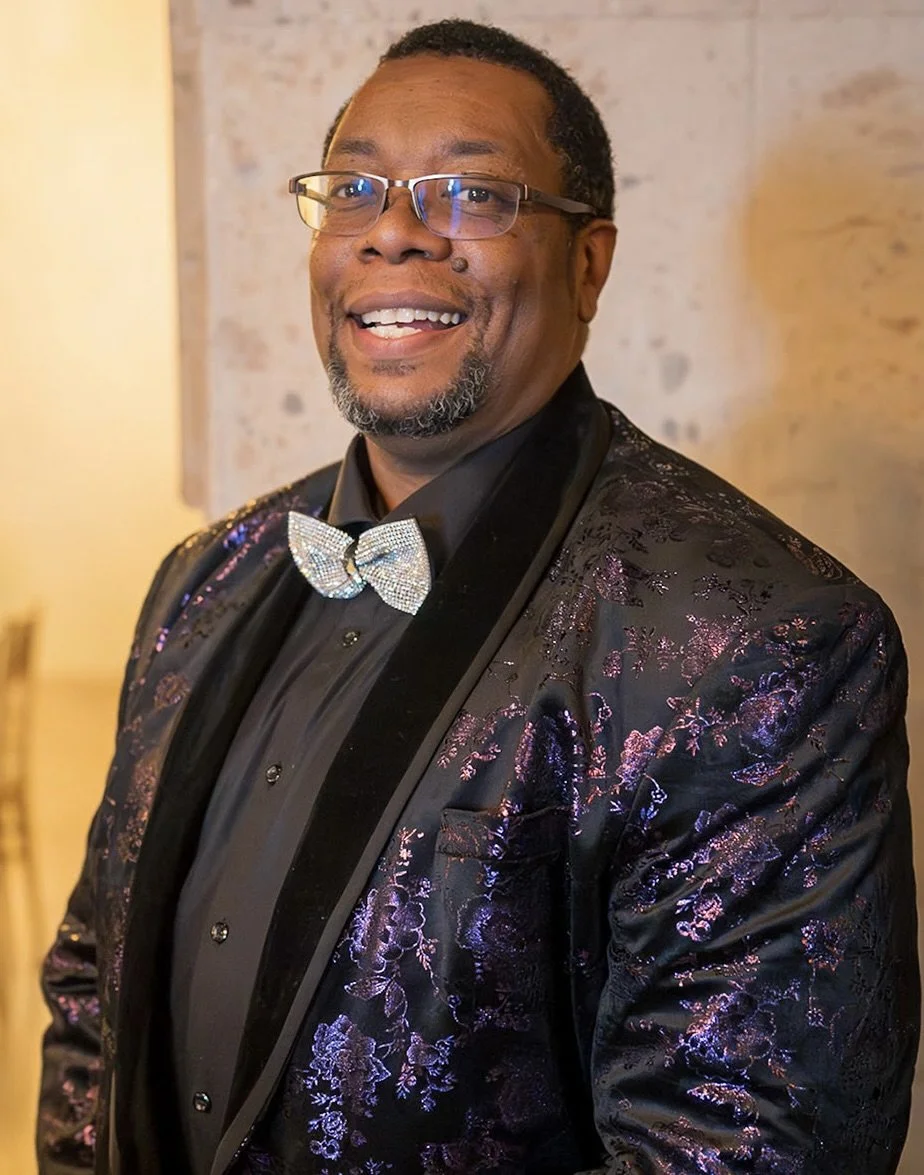
Jevon is an educator, chaplain, counselor, mentor, activist, advocate, grandfather, husband, friend, parent and brother. Standing unapologetically as he speaks out on issues that affect the TLGBQI+ community with emphasis on the Transgender population. Jevon is the founder of Princess Janae Place a national grassroots housing nonprofit and The Monica Roberts Resource Center in Houston TX. Jevon is an ICON in the house and ballroom community, and has received countless awards and citations for his activism and advocacy from homelessness to HIV and TLGBQIA+ awareness. His motto is, If not now then when, If not me then who? Jevon uses he, him, and KING pronouns.
S7E1 Jevon
Jackal: [00:00:00] Everyone, welcome to our new season of Stealth: A Transmasculine Podcast. I'm Jackal.
Kai: And I'm Kai. We're your hosts for the Transmasculine Podcast. A new season means new questions, and this season focuses on staying connected during these difficult times.
Jackal: Our show focuses on the stories of people who identify as transmasculine and who transitioned either socially or medically before or around the year 2005.
The name of our show highlights two important facts, that one, for our generation, we were often told to hide our past and live an underground existence, and due to that, our stories are often overlooked.
Kai: We want our audience to know that we ourselves are part of this generation of transmasculine-identified people, and that we value the [00:01:00] experiences inside our transmasculine community.
We want people to know that throughout our lives, each of us has had to navigate issues of disclosure, which have impacted us in many ways.
Jackal: The bond we share as persons of trans experience is precious and life-saving. These are trying times. Throughout the world, there are groups removing protections in place for our trans and nonbinary communities.
Safety is a real concern for us, particularly our trans and nonbinary BIPOC siblings.
Kai: We offer links to health and safety resources on our website, transmasculinepodcast.com. We also have an incredible mentor-mentee-buddy program that has connected 88 trans men. If you are interested in becoming a mentor, please reach out to our awesome volunteer Clark via the mentoring tab on our website.
Please hold each other dear and stay in touch with us. If you're new to our show, welcome, and if you're a follower from a previous season, thank you for your continued support. [00:02:00]
Jackal: As humans, we are always changing and transitioning. As elder trans men, we assume many roles. We get married and divorced. We are caretakers.
We are parents. We are professionals, academics, and advocates. We push for human rights and systemic change.
Kai: We invite our listeners to remember that we are a living community. We are healthy. We are contributing. We have experienced loss and success. We are loved, and we welcome you to our stories
Jackal and I wanna remind our listeners that we have a members section, and thanks to everyone who has subscribed. Our members section offers bonus questions and personal stories by our volunteers Adam, and our newest addition, Mikelina, a BIPOC transmasc sibling exploring adventures in transition.
Jackal: Subscribing to our podcast helps keep us up [00:03:00] and running. Or if you just wanna support us by giving a donation, we sincerely appreciate it. It's only $4 a month to become a member, so go to transmasculinepodcast.com and sign up now. We don't wanna be gatekeepers, so if you feel that you can't afford $4 per month, please reach out to us via email, transmasculinepodcast@gmail.com.
Consider buying a T-shirt while you're there, or if you wanna be cool like Mikelina and Adam, we especially need a volunteer to handle our social media
So welcome back to Stealth, the trans-masculine podcast. We're here with Jevon. How are you doing today, Jevon?
Jevon: I'm doing great. Thanks for having me
Jackal: Thank you for being here. So Jevan, how did we meet? Do you have a story about how we met?
Jevon: [00:04:00] Sure, yeah. Camp Lost Boys
is our yearly gathering go-to camp and just bond with trans guys of all ages, all backgrounds, all ethnicities,
and it's an amazing space that's needed for us fellas
Jackal: it was really wonderful to meet you there actually
Kai: Agreed. And you've been to every camp?
Jevon: I believe six or seven I think so. I stopped counting. It was because like I I remember going to California, then we went to Atlanta and Colorado, and I'm like, "Wait, did we go, did I go to..." And then I have to go back in my pictures and I'm like, "Yeah, I went to that one."
It's just beautiful.
It's just so beautiful the way we get to bond and just [00:05:00] talk with each other about our experiences, and this space is needed. It's definitely needed
Kai: I agree, and that's why we wanna have you on here. We want people to hear your story who haven't had the chance to hear your story. And we'll start back in the way back machine. So if we think about you identify as male. When did you first start identifying as male, Jevon?
Jevon: So I first started identifying as male on an accident. This was, I w- didn't even start transitioning. It was in in the '90s, and every time I went to the female bathroom, I would get looks, you're in the wrong bathroom." And I'm like, "No, I'm not in the wrong bathroom.
I am just me." And oh, my goodness it got to the point where I was just saying, "Okay, let me just give in to this because maybe [00:06:00] they see something I don't." And I started going to the men's room. It was mid-'90s, and how I remember specifically is because I had a baby in 1991.
Jackal: Wow! Wow
Jevon: yeah. So it was around '95,
Definitely around that age when she was around four or five was when I started becoming more masculine-looking, aggressive-looking. I shaved my hair. Yeah. And I was more in tuned with who I wanted to be, how I wanted to represent, what I wanted to look like, and it was definitely more masculine than feminine
Kai: we know that the language that's currently in use now, like transmasculine, those words didn't exist back then. What language did you use to describe yourself back then?
Jevon: I was [00:07:00] an AG. Aggressive girl is the terminology that was used. AG at times it was said I was a dyke, at times. And yeah, I just feel like some of the words that we used to use are no longer accepted, although some people are still embracing words that we use that we claim to be derogatory, right? Like the word tranny.
If you say it around certain people, it's "Ouch."
"Don't say that around me. I don't identify as that." But some people are like, "Yes, power to the word. Power to the transition." Transsexual, right? That's another word that people get misconstrued, and they don't really understand that [00:08:00] a person identifies how they are. They don't have to transition medically. They don't have to have any surgeries. And so how are they a transsexual if they haven't had any of these procedures, medication, or this stuff? So a lot of the terminology has changed. Yeah, you're right
Kai: Definitely. Did you ever call yourself F to M?
Jevon: Yes. Yes. Yes I did identify as F to M because we didn't have too many different definitions, terminology of who we were. Speaking of F to M, for those that are not able to see, but on my right shoulder I do have FTM pride, and I had the colors up underneath there.
So originally the tattoo was two female symbols with the pride [00:09:00] and the rainbow colors because I identified as a lesbian because I didn't know that trans men existed.
I knew trans women existed, or should I say transgender people, right? Because we didn't call them trans women. They were trannies. Yeah.
And this is, You're taking me back. You guys are
Kai: Yeah, we're going way back
Yeah.
Jackal: go way back
Kai: And
Jevon: Yeah, and
Kai: Regionally there's differences in the different communities and cultures, there's differences in language and how we show up and how we refer to each other. And, I think that's an important thing to bring in. Like, where were you and who were some of the first trans men that you may have heard about or met?
Jevon: Wow. Wow, that's a big one. Let me see. Who did I know about? None. I didn't know about any. Once I started researching who I was, [00:10:00] that was more 2003, '04 Like I, 'cause I had no words for it. Trans women made me who I am.
Let me be specific with that, because I didn't know that I could transition. And so any trans woman that I saw, I was like, "Wow I would like to do what you did, but from my perspective."
Jackal: Mhm.
Jevon: And they would all say, "Oh honey, we got you.
Here, go. Here, rub this on you." And it was gel. So because we're in the '90s, right? Let me give you a little more information on the '80s and the '90s was HIV era.
Jackal: Right
Jevon: also crack era. In my journey, I have witnessed [00:11:00] hundreds of people dying from AIDS, HIV.
From HIV, right? Also crack cocaine.
It was very big where I lived, where I was raised, where I frequent in the Village, and it was very heavily drug infested. So my work that I did, I volunteered to do HIV work. I volunteered to hand out condoms and lube in the clubs, on the street.
I was a part of several street teams. I went to bath houses and gave out condoms and lube all over Harlem, the Bronx New York City.
It was a really bad time for our community. And so in doing this is how I met so many trans women, right? And this is how I became an activist, an [00:12:00] advocate
HIV and AIDS in the community. And this is how I also found a lot of doctors and people in the field doing this work. And so when I did want to transition, when I realized, and I had the words for this, I had several doctors to support me.
Jackal: That's
Jevon: I had several people to support me.
And I wanna be specific and mention her name because she is one of the ones that are responsible for my early time of transition, and that is Harmonica Sunbeam.
Harmonica Sunbeam is a very prominent drag queen in the community, and she was the one to give me testosterone gel.
Jackal: Nice.
Kai: a beautiful name
Jevon: because of her HIV status, she's a out HIV advocate, so I can share this information. Testosterone would help build their [00:13:00] immune system to help with the T cells, right?
And so she had cases and cases of them, and she was like, "Jevon, I have too much. You can have some." And then they switched her medication, and then whatever she had left she gave to me. That was my start. That was my beginning, and when I tell you it was so refreshing, enlightening, and I felt like I had a boost.
My body had a boost. But then I had to navigate different spaces and places because I no longer was perceived as a lesbian, right? Even though my ID said F and my dead name, I didn't appear to be that person.
Jackal: Hey
i'm gonna jump in with a question. Kai, you can go back if you want, but because you're talking about it right now. How do you think that your social standings impacted your ability to transition, your journey in transitioning, whether that be race or class or sexual identity [00:14:00] like you're talking about?
How did that impact you?
Jevon: Yeah. It impacted me a lot because I personally wouldn't have known what to do if I didn't already know these people and, ... have a rapport with them, right? The medical field for doing the HIV work that I did to meet these doctors and nurses,
right? And to actually be in community with these people in the clubs, in the bars, in the bath houses.
So it played a huge part in me becoming Jevon
Kai: I know the ballroom scene has been a really big part of your life. How did you get into the ballroom scene? And maybe share a little bit about the significance of that.
Jevon: Yes. So the house and ballroom scene is an, is another big part of who I am and my journey. So [00:15:00] how did I get into the ballroom scene? Two more specific names that you, that we can definitely shout out is Selvin. Selvin was one of the best commentators in our community. Started out in the street. Selvin and I were just on Christopher Street, walking up and down Christopher Street. They would go to the balls. I would still be on the street when they all came back in the morning. Now these balls started in the wee hours of the morning, by the way.
Not like they are today where they start at 6:00, 7:00, 8:00 o'clock. We didn't start until 1:00, 2:00 o'clock in the morning.
These were different. These were special events, right? We didn't get finished until 11 o'clock the next day,
11 o'clock in the morning. And they started in Harlem. My first event was Paris is Burning Ball, [00:16:00] and Paris Dupree, may she rest in peace- paris Dupree was one of the Hall of Famers icon, one of the ones who was at the beginning of the ballroom history. And she was my auntie.
I got into ballroom because of her carrying bags, boxes, helping set up tables, trophies stuff like that.
I was always in the background.
I never was a competitor until the '90s.
That's when I started competing, and I competed as a butch. Butch realness is what it was called, and it was mother can't tell, father can't tell that you were born female.
Jackal: Mhm
Jevon: that was the butch realness [00:17:00] category. So throughout the years, there was some discrepancies about me being authentically a butch because I was on testosterone.
So I wasn't being fair from what everyone else said because I had a one-up because I had hair and all of this, but that wasn't the reason why I had hair, 'cause I've always had patches and spots and of hair. And I tell everyone, you look at my mom, look at my daughter, look at my aunts.
They all had hair, it just wasn't full.
Throughout time, I started advocating for trans men, and I am the one who created the trans man realness category for ballroom.
I got fellas together, and we fought state to state in the [00:18:00] mainstream ballroom to have trans men separate from the butch lesbians because it wasn't fair, right?
Also, there's other categories that trans men walk. There's trans man body, sex siren, runway, trans man face. There's so many several fashion categories, performance, meaning voguing, and trans men do all of that.
Every single aspect of ballroom, trans men have been inserting themselves into the craft to make sure that we are seen in every category. And I have to applaud them because I- there's no way I could be voguing out there on the floor. I can't get up, right? Yeah.
Jackal: that
Jevon: Yeah. But ballroom is definitely an important factor in my life. And when we talk about the houses- The houses are [00:19:00] like your own home where you have parents and you have the kids, nieces, nephews, uncles. Now in time they have princess, princesses, queens. We have godmothers grandmothers of houses. There's different levels. You have East Coast mother West Coast mother, Midwest. All of these different regions where you have parents that nurture the children. And I don't mean children in age, children in their ballroom career, right?
Some people never become parents. Some people don't aspire to be parents,
but they will be a part of the family, right? You have families like I'm gonna talk about mine.
Jackal: You do it. You
Jevon: the House of Khan, the House of Ebony, the House of 007. So 007 means you're not in a house, right? And you're 007 'cause you don't [00:20:00] belong to any family.
But now there's a House of 007 where there's those people that don't belong to a house, but they all look out for one another. And my favorite house of them all, the house that I ended up in last, the House of Legacy international, and I have that tattooed on my right forearm, Legacy International. And we also have the Kiki scene. The Kiki scene was made because these kids didn't feel like they were being treated respectfully in the mainstream ballroom, so they made their own ballroom scene.
And these were the kids that were in high school, right? College kids. The younger ones.
I wanna say 25 and under, 30 and under. They didn't feel they were being judged fairly in
the mainstream ballroom, so they made their own, and I just happened to be Grandfather Old Navy. They're from the House of Old Navy. [00:21:00] And my kids are doing amazing, and it's just great to see where they are now in their ballroom career. And they're also, some of them are also a part of the major houses as well. So it's a lot of work that goes into the ballroom scene. If anyone out there listening, if you wanna watch a ball, you can look up Legendary. Legendary was a competition for ballroom houses. You can also currently go to New York and see Cats, the Jellicle Ball. Those are also my kids that are performing on Broadway. This is my family. This is the ballroom scene. We are on Broadway, so this is huge. This is major. Yeah. The ballroom scene nurtures you as a person, right? And it's also entertaining for the world
Jackal: That's amazing. That's amazing. It sounds [00:22:00] really like a place to have a home. I don't know if a lot of these people's stories are, getting kicked out of their home or not having a relationship with their actual parents. But yeah, it's like having, community, having a mom, a dad, an aunt, an uncle, cousins, grandparents, and things like that, community, and having a place to be able to express yourself and be creative in a wonderful, magnificent, beautiful
Jevon: Yes, all of that. All of that. So some of the kids were ostracized from their families for coming out as LGBTQ+, and some just left, right? Because they didn't want to be under their parents' rules. And also some of the kids came out of foster care, anyone can be a part of ballroom,
Jackal: That's amazing. That's so exciting.
Jevon: Yeah, ballroom does not discriminate, it did start [00:23:00] in Harlem, african American, Black, latinos. That's where it did start, right? I can give you a little more of the origin. Ballroom started from pageantry, from the trans women pageantry.
Jackal: Wow.
Jevon: The original scene of competition, pageantry. Yes
Jackal: Thank you so much. Hey, our show is called Stealth, and so we always ask what does stealth mean to you?
Jevon: Stealth means Several things to me, right? And I want to say am stealth, but people don't believe me,
Jackal: Okay. Yeah
Jevon: So I'm going to elaborate into what that means. I [00:24:00] live day to day and I have the privilege of passing. That's another word, right? Passing. What is passing, right? I live my day as a Black man. Every day I wake up as a Black man. Not as a Black trans man, but as a man.
Jackal: Yeah
Jevon: Some people don't have that ability to show up the way they want to, right? And some people don't think they look how they look. And as someone who understands my privilege, I am very strategic about how I show up in community, in spaces. And because I show up as a Black cis man, cis meaning male born, male identified, [00:25:00] I show up as that, but
I am not. I am AFAB, right? I was born female, and I am a man. So it's different.
So when I walk in spaces, and I purposely put myself in spaces that are anti-LGBT,
Jackal: Interesting
Jevon: and , I talk to people, and once we get on the LGBTQ+ conversations and I'm like, "Oh, so you don't know any people from that?"
And they're like, "No, I've never met any, and I don't want to," and ah, and they've got their views. So many different throwing the Bible at us and all this stuff. And I say why does it bother you so much?"
"Oh, because they're always throwing it in our faces who they sleep with and this."
And I'm like wait. How are they throwing it in your face?" "You see it on social media." "You can keep scrolling."
It's on TV now. Two guys holding hands, you see two ladies holding [00:26:00] hands, and I don't want my kids to see that." "Turn the channel." And they're looking at me like, is your problem?"
"Why do you have these answers? How do you know this?"
And so before the event ends or wherever I am talking to people at a conference or something, and I leave them with it's been great to have this conversation with you, and I want you to leave this conversation knowing that you have just met a trans person. Have a great day."
And I walk away. And I walk away. And some of them get it, and they're like wait. Come here. What'd you say?" Some of them, I walk away, and they don't say anything. They don't comprehend because maybe they weren't listening to me in the first place
Jackal: Yeah
Jevon: But I do this purposely. [00:27:00] And when we have rallies and parades and events, and you see those people picketing outside with the Bible, I will purposely go stand next to them
and say, "Hey, what's happening here? Why are you protesting? What's happening here?"
Looks like they're having fun to me. What's that?" "Oh, that's what they want you to think." "Really? But it's pride, I think. I think it's pride because that's what the Uber guy told me." They need to do this somewhere else." "Where? Where would you like them to be happy and have fun at?
Because I think you have to get a permit to have this event, and I think their permit was secured. And then they got floats and stuff. I'm just here observing. So what is it that they're doing that's bothering you? Not only did you come out here by yourself, but you've got a whole entourage of people.
So what is it that they're doing again? I just wanna know." What, is it that they're doing that you [00:28:00] don't do?" "Oh, I don't do that." "You don't do what? ... Oh look, there's somebody on stage talking on the microphone. You have a microphone right here and you're talking out of this box. Excuse me what are you doing different than what they're doing?"
I'm asking you a question. Just asking you a question."
Kai: I think, it just says something about your temperament and patience and sense of humor and bravery to be able to, one, approach people that most people want to not even acknowledge or engage with. We had Aiden Key, Aiden who ran the who Gender Odyssey in Seattle. And one of the things that Aiden does is work with caregivers of kids who are trans, non-binary questioning, and they provide a supportive environment so that those ca- caregivers can work it out in public and say all the things, no matter if it's, transphobic or not said in a positive way, and Aiden can sit through that, and not everybody can, and I'm just so impressed that you can engage with folks. How do you... What... How in the heck do you do that?[00:29:00]
Jevon: It's just that. That is my mental capacity to want to understand why they feel that we're harming ourselves, other people. Why do they feel like we are grooming children to be like us?
Why is it that they feel that we are an abomination? What is it? Tell me specifically, and no one has been able to tell me in their own words why we are bad horrible people. Not one person has been able to tell me
Jackal: Yeah.
Kai: Thank you, Jevon.
Jackal: Thank you so much. So back in the day, I know me and Kai were told that we were supposed to live a stealth lifestyle. A lot of us were. I don't think either of us ever really did that. Maybe it came [00:30:00] later. Were you ever told to live a stealth lifestyle? I know that you've just given us an example of how you used stealth to our advantage, but were you ever told to do it in a kind of a sneaky, nobody's gonna accept you kind of way, and you should just move away and create a whole new story for yourself?
Jevon: No one told me. It just fell into who I am,
right? Again, nobody here in my neighborhood knows
Anything about me. Even though if you Googled my name,
it'll come up, pictures of me will come up, stories a lot of things will come up with me,
and I just don't disclose And no one has ever told me, "Be stealth for your safety," or "It's best to be stealth."
Not one person has told me that. And to, [00:31:00] to this day I'm just me. If you find out, fine.
If you don't know, fine. I'm just here to be a servant and to be a vessel to make sure that our community and people, period, have the resources that they need and can thrive, so no, no one actually told me, "Hey, it's best to be stealth." No one. Not one person
Jackal: Yep. Yeah.
Kai: Yeah. Yeah. So when we think back in the '90s there were implicit or explicit messages that we should follow some sort of path, whatever that meant, right? And maybe live stealth. And then if you think about the current political climate and how things have been going talk us through what it was like when, like, when you transitioned compared to now if you think about it that way
Jackal: Especially around disclosing. Like, how did you, once you started [00:32:00] passing, to use your words, when you were younger, what was it like to disclose? Who did you disclose to? How did that go? And now that you're older and you've had a ton more experience, what's it like now, and do you, or how do you?
Jevon: Yeah, so in my younger days it was mostly me, and I opened the doors for other trans men to find themselves or to find community
Jackal: I remember you saying at Camp Lost Boys, the question was, who is the first trans man you ever met? And you told me I was. Not me, Jackal, but Jevon, you were the first trans man you knew
Jevon: Yeah. Because I didn't know any, and it
just so happens that I was put on a panel with Kim Watson, [00:33:00] Pauline Park, and Lewis Mitchell, and we were talking about the trans experience. , I knew Pauline and I knew Kim Watson, And All of a sudden, this gentleman sitting next to me, Louis Mitchell when he said, "Yeah, I transitioned in here, and I did this, and..." And I was like, "Wait, what?"
I'm like, this is a Black man
Jackal: Mhm.
Jevon: sitting next to me.
Jackal: Yeah
Jevon: He's a trans man. What?
And that blew my mind.
Jackal: Yeah, we're so invisible to each other,
Jevon: yeah. Yeah.
that blew my mind.
We were a part of... i'm taking you back. I'm
taking... Yahoo
Jackal: take me back.
Oh, yeah. Yahoo Groups,
Jevon: met on Yahoo Groups,
Black trans men. And just we met faithfully [00:34:00] on Yahoo Groups, and then one year we said, "Hey, what if we met up in person?"
And we did, and that was the beginning of Black Transmen Inc.
Kai: Mhm.
Jevon: Carter Brown,
Lewis Mitchell, myself, Kylar Broadus Luke Bensimon. There was so many of us.
It was great. it was great.
And we met up. We all met up and in Dallas, in Texas,
And we brought our wives, our significant others, spouses. Friends and family came together, and I think it was about maybe 60 of us. Maybe 50.
It was really nice. And we could actually come from behind the computer and be in person and embrace one another.
And this is when we spoke about stealth,
right? Mr. Chris
was stealth. BT, Black trans man, stealth.
We all met [00:35:00] at this one event,
Jackal: Wow
Jevon: And we're still brothers to this day. We don't talk every day, every month, but at least once a year we do speak, and it's a blessing. But that's the beginning, where we came from.
And now it's a safety issue,
right?
It wasn't a safety issue back then for some of us.
But some it was
Jackal: Mhm.
Jevon: because You didn't know what your neighbor would do, what your family would do,
right? What your friends would do to you.
So it was a safety issue for some fellas. And now it's not only a safety issue for some fellas, it's a safety issue for everyone. Everyone's gender is being policed right now,
right? Not just trans men.
Cis women are policed right now. Their bodies. We do not have [00:36:00] agency over our bodies.
None of us,
as ma- cis men do
Jackal: Yeah. If they perform masculinity correctly, in, in
quotes
Jevon: But they too
also go through gender affirming care
Jackal: Yeah.
Kai: Absolutely. Look at the Trump cabinet members
and just
Jevon: Look at all
Kai: white men. Yes
Jevon: and tuck here and there, and they also take that little blue pill, right? That's gender-affirming care
Jackal: completely. My goodness.
Jevon: Yeah
but they're, they want to specifically attack us and say we are the reason for X, Y, Z, A, B, C, and it's not.
They are the reason. They are the reason.
why we don't have a lot of things that we don't have as human beings, period.
Cis, White, elderly men right? And if it doesn't look like them, walk like them, or talk like them, then you're the problem according to them
Kai: Thank you.
Jackal: Yeah, you mentioned [00:37:00] Camp Lost Boys and how much of a connection it was and stuff and going to all the camps. Did you... Because that was the beginning of BTAC, what you're talking about, right?
Jevon: BTAC. Yes, BTAC started from Black Trans Men Inc.
Yes. Yes, and then we brought in the trans women, we fought hard for non-binary gender non-conforming folks.
And we're still struggling because the terminology, the verbiage is still not 100%, right? So it's hard. But we're always learning and always affirming and just doing our best to get it right
Kai: We talk about that a lot with some of the older in transition years folks, just adjusting to the language and adjusting to the spectrum
Jackal: get off my lawn.
Kai: Get off my lawn. but just pronouns, all the things. We definitely talk about that quite a bit. And yeah, you are definitely bringing us back
I think geography plays so much into it and where you were.
And during the AIDS crisis and in the [00:38:00] ballroom scene and in neighborhoods, like Harlem, the Bronx, just that is incredible,
Jevon.
The stories you have, I'm sure we could talk for days and days
Jevon: We could. One major factor one of the hospitals that was just coined the AIDS hospital, St. Vincent's Hospital, is no longer there. They tore it down
Jackal: Wow. Ja
Kai: Yeah. I worked in the West Village at the New York Foundling, and it was on, right a couple blocks from Stonewall, and then,
Jevon: Yeah
Kai: Yeah, right there. And,
Jevon: I was a candy striper, Kai
Jackal: I already look so cute
Jevon: I was pushing the cart, feeding
people, reading books. It was a beautiful experience. I did it for two years and it was amazing, and I got to meet so many people that were HIV positive and that died of AIDS.
And I learned so much from them, and I just wish I would've [00:39:00] documented their stories, who they were. Some of them were really, prominent people in community
Jackal: yeah.
Kai: Thank you. Thank you. Just taking a moment. You also have other things to consider, like family. You have family your parent, grandparent, things like that, and just disclosure is some part of your story too, right? How much or how little do you share with your family
Jevon: So we have an extended family. My daughter has two kids. I'm Pop-Pop to everyone, right? And my wife's niece ended up in a situation, so she's incarcerated, and we have her kids. She has six kids. So here in my house, we have a total of seven kids.
My grandson just turned 18 last, couple of months ago, so he's grown, but he's still in high school, so as soon as he gets out of high school, then he's grown.
He's gotta figure out his life. [00:40:00] But it's been educational, and have not disclosed to them, but they know who I am. The boys are 15, twin boys. I have a nine-year-old, eight-year-old, a five-year-old and a three-year-old. The eight-year-old is autistic non-verbal.
He has words, but not too many words. And my wife has noticed, that he likes to walk around in women's clothes that puts her shoes on. He wraps a shirt around his head, and he swings it back and forth like it's long hair.
And there's nobody in our house that does this, we don't watch drag queen story time or whatever. We don't watch RuPaul. We don't watch nothing that he could have possibly [00:41:00] seen to do any of this. Sure some of the cartoons that he wants to watch on his iPad 'cause we have the iPad to help him talk he watches a lot of the girly stuff, and this is what he constantly goes to. He plays in his sister's hair. He does my wife's hair. Anyone that he sees female-identified, he will try to do their hair. I don't know if he wants to be a stylist. I don't know. I don't know if he's gonna grow up and transition, but this has put me in the mindset of, yeah, this is not taught from what we hear all of the negativity about grooming. He gets treated the same way all of the other kids get treated. It's just something different about him, It's just natural, right? He doesn't play with cars and trucks. He wants to play with dolls.
Jackal: Yeah.
Jevon: Yeah. And his favorite colors are, like, the pink [00:42:00] and the red and the orange. He likes bright colors. And to see and hear, the therapist or the psychologist say, "Oh he can't do this. He has to do this, and he has to do..." I'm not about to force a child to do anything against their will.
Jackal: Exactly. Wow, that's so
Jevon: Oh, yeah. Oh, yeah. He was like, "Take that away from him." Absolutely not. And I'm like, are you kidding me? You want me to take a comb away from a kid that's doing hair on a doll?
Jackal: That's ridiculous.
Jevon: Grow up to be a beautician, a barber, a stylist.
I'm not gonna take that away from him.
"Oh, you have to make sure he plays with boy toys." What?
Jackal: Yeah, that's crazy
Jevon: We have a lot of gender-specific toys because there's boys that play with boy stuff in our house, Right. Whatever boy stuff is. Trucks and cars. Girls can play with that too. [00:43:00] But specifically because he thinks we don't have this stuff, but we have one girl. There's not that much girly stuff, whatever girly stuff is, right? But it's her stuff. She does nails and stuff in her room, but he's always in there. He's always going through her stuff, always painting his nails, always putting on lipstick and all of this stuff. The other kids don't do it.
This is just his preference, and we're not stopping him. We're not gonna stifle him.
Jackal: Yeah, that's
Jevon: But as far as the kids knowing who I am, my grandson knows. The two older twin boys, they know. They actually support me even in their school if someone's being bullied or whatever, they know the terminology. And this is stuff that they came to me with. I didn't go to them with it.
Jackal: Nice.
Jevon: I don't force my life on anyone.
Jackal: Yeah. Yeah
Jevon: specifically when it comes to kids, I'm very careful of what I say, but they [00:44:00] always wanna go with me. "Hey Pop, we heard that you were going to this event. We wanna go. We wanna go to Pride. We wanna go. We wanna get some stuff off the tables and stuff." And I have to be like listen. You do know that this is LGBT-specific and you're an ally." "Oh yeah. We're fine. We're fine. If anything goes down, we're at the front of the line. We got you." I'm like, "My God, you're still kids."
Jackal: Yeah. Geez.
Kai: Stories are great.
Jackal: exactly, we love it. So what tips do you have for allies and people who love us?
Jevon: Oh, that's a great question. Listen to us. That is the answer. For all allies, just listen to us.
Make the space if you feel like you need to make the space. Go ahead and pay for the space, but allow us to run what happens in the space
Jackal: Nice. Very nice. And what do you think we should have asked you that we didn't? Any famous last words of wisdom
Jevon: Ah, [00:45:00] yes. So human beings are not born men or women. We're born children.
They want to grow up. Allow them to come into themselves whoever they may be. And it's okay for them to change their mind at any given day, time of the day, and change it again in the same day or the same moment. And also listen to the kids. When they tell you who they are, they know
Jackal: Yeah. Awesome. We just wanna thank you so much for being with us today. It's been such a gift to have you on our show
Jevon: Thank you. It's been a pleasure here with you two, and I so miss Camp Lost Boys now.
Jackal: Yeah,
Kai: Me too.
Jevon: I was doing good until I saw your faces, and I'm like, "Oh, I need a camp."
Kai: Too funny.
Jackal: So what did you think, Kai?
Kai: Jevon's [00:46:00] somebody that I met at camp. I think that's where you met him too, yeah?
Jackal: I just met him once that's at this most recent camp. You met him
Kai: Yeah, I think at the previous camp, couple camps ago, and, he made an instant impression of just how kind and, beautiful person. And, I didn't know much about his history until he sent us a bio and we started talking more, just really grateful to have spent time with him. How about you?
Jackal: Okay, so I did meet him at Camp Lost Boys, and the question to the group in that first evening get-together was, "Who was the first trans man that you knew of?" And he, in our little pair said, "Myself." He was the first trans man he knew. And that just really struck me,
Being the one and doing it yourself kind of thing. And only through, community do you actually find other people in your community. And the other thing that struck me, is his story about [00:47:00] meeting Lewis Mitchell and then not recognizing another trans man, because it's so true. The way testosterone hits our bodies we become invisible. We've talked about this. Our show is called Stealth, not because I wanna be stealth, but because I become invisible to everybody, right? Including my own community. So that struck me as well, and just him, all of the things that, take you back in the way time machine.
I loved talking to him. It was pretty cool
Kai: Yeah, I, I think, his youth in the village, in New York City, in the ballroom scene Harlem, the Bronx, being on Christopher Street. How he accessed spaces too to provide on-the-ground support to people and HIV work and things. That's immense.
New York City at that time, during that era, and just the amount of people that he encountered and amount of loss that he saw, death he saw, I think it's really hard to understand the depth, especially in New York City, if you weren't a part of it, yeah. And the ballroom [00:48:00] stories just to follow who's who and all the different houses.
That is quite something. And so he's highly regarded in many circles. We're not just the only fans, clearly. So Yeah, I'm just so glad we got to talk to him
Jackal: Yeah
Kai: Anything else, Jackal,
Jackal: I hope that we do get him back at some point to talk about more stories, 'cause he's just got so many of them, and he has contributed so much to our community. And I think that he would be a person that would be worthwhile to interview twice.
Definitely Jevon would be a person that I would like to interview again
Kai: For sure. Yeah. So thank you, Jevon.
Jackal: Thank you, Jevon.
Sean: Hey, this is Shawn Aaron, he/him/his, and I'm here to tell you about Them Boys podcast. I'm the host of Them Boys podcast, and as a Black queer trans man, the podcast [00:49:00] amplifies the voices of other trans men of color as we share our transition stories. The podcast not only amplifies the voices of trans men of color, but it raises awareness and conversations around our lived experiences.
You can listen to the podcast by going to themboys.org/podcast. That's D-E-M-B-O-I-S.org/podcast. I hope to have you join us on the next episode.
Kai: Good job today, Jackal.
Jackal: Good job to you, Kai. We want to thank our listeners and especially our guests. This show would be nothing without our guests who share their insight, expertise, and heartfelt stories. We absolutely adore you and are forever grateful to you.
Kai: Stealth captures the living history of men of trans experience. We recognize that language [00:50:00] has its limitations. The words we use to describe ourselves and our community evolve over time and will not represent everyone's experience. We also want you to know that the health and wellbeing of our community is our number one priority.
Jackal: We want to give a shout-out to parents who are supporting their gender non-conforming kids.
Speaker 2: We support you and love you for supporting your kids. We want to put our podcast in the spotlight. Thanks for not trolling us, but really, is this just another form of transmasc invisibility?
Kai: We offer links to health and safety resources on our website. We monitor our social media platforms. We respond to feedback from our audience, and we will be accountable when we screw up.
Jackal: We want you to know that we are just two guys doing this in our spare time, and two old farts to boot. The opinions expressed are our own and those of our guests. We do not represent any entity outside of this podcast.
Kai: Remember, if you're interested in sharing your story, we would love to hear from you.[00:51:00]
Also, if you're interested in volunteering, please let us know. Your feedback and support are essential to our show's success. Help us get the word out about our podcast. Tell your friends, share on social media, and rate us on your favorite streaming platform. Be sure to check out our website, transmasculinepodcast.com.
Jackal: Thank you for joining us. Until next time