Holding Hope,Telling Truth: Jackal & Kai
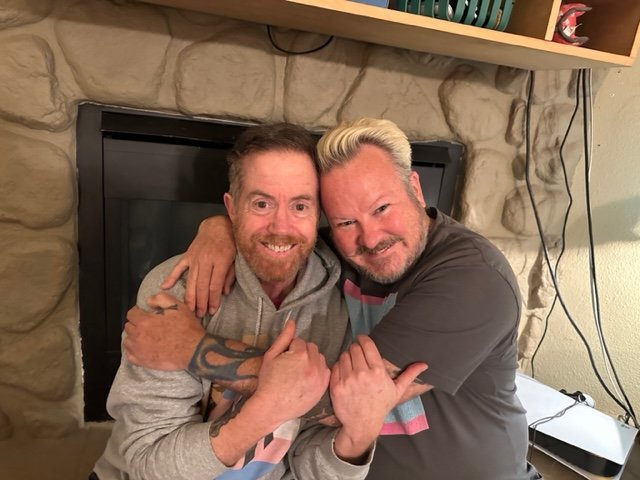
As the season comes to a close and spring begins to unfold, Jackal and Kai sit down for a heartfelt, unfiltered conversation that feels like both a deep exhale and a hopeful beginning. In this episode, they reflect on the journey—of the podcast, of their lives, and of themselves.
From relationships and evolving careers to the ongoing work of anti-racism and allyship, nothing is off the table. They revisit what it felt like to start this show back in 2021, navigating the world as newly transitioning trans men, and gently compare that moment to where they stand now—with more clarity, more grounding, and a deeper sense of purpose. Through it all, they explore what it means to keep showing up during uncertain times, and how to hold onto hope without losing sight of reality.
This episode is also a love letter.
To every guest who trusted us with your stories—thank you. Your honesty, brilliance, and vulnerability shaped this space in ways we could have never done alone.
To the men of trans experience, transmasc, and nonbinary folks who came before us—you built the foundation we stand on.
To those leading the way now, and those who will carry it forward into the future—we see you, we honor you, and we’re rooting for you.
We couldn’t do this without you. Truly.
With immense gratitude and so much love,
Jackal & Kai 🌱
Reflections J&K S6
Jackal: [00:00:00] Hello everyone. Welcome to our new season of Stealth a Transmasculine podcast. I'm Jackal.
Kai: I'm Kai. We're your hosts for the Trans Masculine Podcast. The new season means new questions, and this season focuses on staying connected during these difficult times.
Jackal: Our show focuses on the stories of people who identify as trans-masculine, and who transitioned either socially or medically before or around the year 2005.
The name of our show highlights two important facts that one, for our generation. We were often told to hide our past and live in underground existence. And due to that, our stories are often overlooked.
Kai: We want our audience to know that we ourselves are part of this generation of trans masculine identified people, and that we value the [00:01:00] experiences inside our trans masculine community.
We want people to know that throughout our lives, each of us has had to navigate issues of disclosure, which have impacted us In many ways,
Jackal: the bond we share as persons of trans experience is precious and lifesaving. These are trying times. Throughout the world, there are groups removing protections in place for our trans and non-binary communities, safety is a real concern for us, particularly our trans and non-binary bipoc siblings.
Kai: We offer links to health and safety resources on our website, trans masculine podcast.com. We also have an incredible mentor mentee buddy program that has connected 88 trans men. If you're interested in becoming a mentor, please reach out to our awesome volunteer Clark. Via the mentoring tab on our website.
Please hold each other dear and stay in touch with us. If you're new to our show, welcome and if you're a follower from a previous season, thank you for your continued support. [00:02:00]
Jackal: As humans, we are always changing and transitioning. As elder trans men, we assume many roles. We get married and divorced. We are caretakers, we are parents.
We are professionals, academics, and advocates. We push for human rights and systemic change.
Kai: We invite our listeners to remember that we are a living community. We are healthy, we are contributing, we have experienced loss and success. We are loved, and we welcome you to our stories.
Well jackal. We haven't seen each other in a good month or more.
Jackal: Good month or more. Yeah,
Kai: yeah, and here we are. It's 2026 and we are in spring. And it's really nice to see you. We haven't caught up. I'm sure you have much to share and I know I do too.
Jackal: Let's start with you have you been, what's been going on?
Kai: I'm doing good. [00:03:00] I I started a new job
Jackal: Mm-hmm.
Kai: I got laid off in December, right. And then I, I started my new job in February. So I had two months off and baked a lot of bread and I just have a lot of hobbies. And I've been trying to learn how to play the guitar and I got a keyboard
so since.
Jackal: The Kai Band.
Kai: really? It's not so pretty. I've had a couple of people say we should jam. And I'm like, no, we don't jam yet. You know, like we're, there's no jamming happening here. It's really my, my fifth grade neighbor across the way is practicing the saxophone, and he sounds way better than my piano
Jackal: yeah.
Kai: yeah.
But, but it's really fun. I like it. I really do. I I'm really happy about doing that and it's good, it's kind of a meditative thing and engages different parts of my brain. my job is really good. I'm, I'm working in an organization that is an intensive program that serves primarily like queer, trans [00:04:00] folks, non-binary folks, and also is it's bipoc and queer owned and, the values are what really drew me to it because I really wanna serve our communities, you know, and one of the things that I've been, since we started our podcast when we had Tristan and season two co-hosting and just my own development and learning about what it is to be a white person and white identity development and all this stuff.
Although I've worked and lived among people of color and people of marginalized identities, and this has been a really important growing spurt for me. Yeah, it's been really hard learning and also good learning, learning a lot about history that we weren't taught in school.
Jackal: totally.
Kai: And you know, anti-racism I live in Portland area, so it's very much like the talking points and social justice is everywhere, which is really good. And it also feels sometimes
Jackal: Performative.
Kai: performative and very surface level. So I can say I am going beneath the surface, so it means, like, [00:05:00] one of the things I run into is like, when do I speak up,
Jackal: Mm-hmm.
Kai: right?
If something's happening, because that's been really hard because I am generally an observer. I'm generally someone who has a hard time speaking up in the moment.
Jackal: Mm-hmm.
Kai: In general I think about things and then I also don't wanna step on someone's toes, you know, so I, I'm.
Jackal: white Savior syndrome.
Kai: Well, I'm, I don't know if that's what it is.
I think it's socialization. Really in my family growing up and then growing up as a girl, in the world, I was told that I really shouldn't question things or talk out of turn or, and it was pretty severely punished sometimes, you know, to do that.
So critical thinking, I just didn't, it wasn't in my DNA at the time, I would just kind of internalize and go inside. So this has been a really, , I'm just learning very publicly and, and I like it. I really think it [00:06:00] challenges me in different ways, supervising folks is hard, the job itself is like stuff I've done and then this is a different, different element.
And it's really important because I, I just need to do better. And so that's a huge emphasis of my life right now. Wow. Yeah. I know you've done a lot of anti-racist work that's been a commitment of years for decades. And
Jackal: Decades. Yeah.
Kai: know, and I'm always aligned with it.
It's just like, okay, what does that mean for me?
Jackal: Yeah
Kai: yeah, so that's like a huge emphasis. And it's been occupying a lot of my time and energy and I like it. And I also have had like some hard, hard moments
Jackal: it, it happens even, even after decades of knowing anti-racism work and, and really practicing it. Like, there's still faux pause and there's still all the things. One of the things that I think I have had to learn along the way is grace for newbies, [00:07:00] basically like the new, the people who, their hearts in the right place, they really wanna do it.
And just not having the same amount of like, knowledge and experience that I've had with it. And trying, because one of the things that I think is. That you, you know, and I don't know if you've read White Fragility Robin DeAngelo's book, but she and I were really good friends in, in Seattle, right?
And so it's partly part of that, the white fragility, because white people have the ability to go back in the closet and not, not worry about this anymore, right? But one of the things that I have had to come to terms with as a white ally is giving the white newbies grace to, you know, make mistakes and things like that so that they don't go back in the closet so that they're, you know, that they're actually challenging [00:08:00] themselves, but actually keeping going and keeping engaged because it's so flippant easy for us to just go back and like, oh, it's not my problem kind of thing.
So.
Kai: Yeah, and I, I think that's one of the things that I've also struggled with is just like getting my hand slapped, you know, by white people that are policing. You know what I mean? And I think there's a balance there. It's like, how do you call someone out in a way
Jackal: Mm-hmm.
Kai: needed and important?
Then also not just slap somebody down harder than you need to. You know
Jackal: Right. And also part of it, part of that for me, you know, and this is literally after decades of learning, right, is performative as well. It's like, I want to be the good white person and I'm gonna slap down the bad white person, right? And it's still this dichotomous, I'm better and you're, you know, a newbie kind of thing.
And that's, that's why I say like, it's a lot about grace because yeah, I've had decades of experience, but what [00:09:00] good am I doing to the anti-racist movement by slapping somebody's down who's trying? Right? Like, so like that's, that's kind of where I go with it.
Kai: yeah. It's really it's just an ongoing learning thing, you
Jackal: It is.
Kai: the book I most recently about is called Nice White People.
Jackal: Oh yeah. Uhhuh.
Kai: So, and I've, I've heard I, I, I thought you were friends with Robin D'Angelo. So she's been on some of the podcasts I've been listening to. I listened to a lot of stuff, so there's really, really great stuff out there.
But anyway that's been occupying a big part of my energy. And outside of that we adopted a pug
Jackal: Oh yeah. You told me.
Kai: yeah. So Poutine is the pug, and he has settled in, it's been three months, and he is the sweetest little dude. He
Jackal: Mm-hmm.
Kai: so cute. And he doesn't have any behavior stuff. The, yeah. The weirdest thing that he does is he'll like, move my shoes around into his bed.
He doesn't chew them. It's like the stinkiest [00:10:00] things of my body. Like
Jackal: Yeah.
Kai: find my shirts or my shoes, but he moves them all over the place and he's cuddly he's. Just a great dog. He's, and then, and then lucky the goldendoodle is in heaven. 'cause they're besties now.
'cause honey, the Frenchy terrorized lucky and like, completely, so she's having corrective experiences.
Jackal: Yeah.
Kai: yeah. But other than that, I mean, I've been hanging out with some brothers, doing some like socializing and I'm going hiking with someone tomorrow and yeah.
Things are good. Yeah. How about you tell me, catch me up. What's, what is new with you?
Jackal: So I don't know if I. Had been teaching as well. So I have a 40 hour week job, you know, and that's going well. I got a lot of really intense situations, so I coach students through. A community college graduation, and they start, you know, they're fresh outta high school.
They have this [00:11:00] scholarship, it lasts three years. And I try to get them their degree and what, onto what they want to, whether that's career or transfer to a four year or whatever. But man, these, these dudes have so much trauma in their life. Like, I've had a student. Talk about he just lost his twin brother to a car accident.
Somebody's uncle got murdered. You know, like, I had this young woman, you know, talk about that she had to go to court to testify against her mom's boyfriend who had sexually molested some of the girls in the family. And then she finally confessed to me that she was one of the victims, right? It's just like, holy fuck man.
These kids are trying to get their education and like the, the trauma and the trauma that they have to go through or that they are going through, you know? So it's kind of like being a, a holistic counselor, although I don't have counseling education or, or you know, like experience. I have a lot of empathy and I have a lot of [00:12:00] things that.
They do come and they share. I mean, like, I have the capacity to hold this and that's why they're sharing this with me. Like they have trust in me. Right. But it's intense and like trying to get them to, you know, like how do you deal with the things that are going on in your life and still focus on school and do your homework and, go to the next thing.
It's really fucking intense.
Kai: Are they mostly in their twenties?
Jackal: they're, they're right at fresh outta high school. Right. So like, but yeah, so like from 18 to 21, you know, like they, they leave me when they're about 21.
Kai: Right at the transitional age youth kind of thing. It's really a lot going on developmentally for them
Jackal: Totally. And you know, they're becoming adults, right. And so anyway, it's just been really that part of my job.
It's great, but it's really intense. I got invited to start teaching. Last semester. So last semester I taught sociology, which was really fun. And this semester I'm teaching [00:13:00] anthropology, which isn't as fun as the sociology class was. I'm enjoying it, but there's just issues with the course that I think I need to correct.
I'm gonna teach sociology again in the summer, and I'll teach this course anthropology again in the fall. There's things I wanna restructure about both of them, but but the anthropology is the one that's gonna really need the overhaul while staying in the, within the parameters of what the university wants me to do, right?
So, it's all that kind of stuff, but I love teaching and there was a full-time faculty position for anthropology that got posted a couple months ago, and the chair said, you should apply. And I looked at it and it's like, holy fuck. They pay you pennies for one. I make more at my 40 hour a week job that I have a nice office and a nice window, and I have my eight to five regular, you know, thing.
And like being a teacher, you know, you have to teach X amount of classes and [00:14:00] you know, it's not all in the same campus. And, and I just didn't want to get burnt out because it's like, I, I do love teaching and I love engaging with the students, but for the amount of money they're paying, forget it. You know, like, forget it.
It was not, it was not worth my time.
Kai: When you're teaching a class too, you're gonna have outside work, like outside of your teaching hours. You have to prep and you have to grade, and you have to do all the things too administratively, and you don't get paid for that necessarily. Yeah.
Jackal: No, I mean, if you're faculty, if you're full-time faculty, then it's supposed to be included in that pay. But if they're only paying you this pit, you know, penance, then IT, or pits or whatever it's called, it's it's not. I mean, I mean, at my age, at our age, it's just not worth it. You know?
Like, I, I don't wanna do that and have to build myself up to a certain place. Like that's, I just, I'll just do the adjunct and teach my one course per semester and have fun teaching the kids.
Kai: Mm-hmm. That's great. I'm sure you run into with the [00:15:00] curriculum. I don't know, just like the schooling that we had growing up was not all inclusive and was really just, we were sold a bill of goods,? And anthropology has been, yeah.
Jackal: I, I, I really, I hate anthropology textbooks. Like I,
Kai: aren't you in the anthropology major, or weren't you?
Jackal: I have an interdisciplinary degree. So I have a background in sociology, anthropology, and human geography. It's just geo, it's just geography in general. But my focus is human geography. So it's basically how people interact with space and people, how people move through the world. That kind of, that's how geography interacts with human experience which is something that I would love to teach, but it's actually a different department.
So I'd have to go through a whole other thing because they do have a human geography course and I've heard it's just awful. And I would be like, I am revamping this. Like, let me tell you this is, this is gonna, yeah. 'cause it's super interesting and they make it super [00:16:00] boring and it's like they look at maps and stuff and it's just like,
Kai: So is it
Jackal: look at maps.
Kai: is it like trends in where people move to, whether it's immigration or immigration or they're forced out? I mean, is it It's stuff like that.
Jackal: a, there's a lot of things that it, it can encompass, it can, it can be that if you think back you, it could be hobos, you know, like traveling by train, or the new generation of quote unquote hobos that were called Flintstone kids, , because they always had the nose piercing and then they would do train hopping and things like that.
So it could be
Kai: think you're familiar with those kids.
Jackal: I'm a little bit familiar with those kids.
Kai: My uncle was a hobo.
Jackal: oh really?
Kai: that was his part of his identity. Yeah.
Jackal: Yeah. Yeah. And I mean, that is, that's movement in the world, right? It's it's, and of course, yes, immigration and, and being a refugee, getting forced out, things like that are all part of it. But it's also just like how we relate to space, right?
Kai: Mm
Jackal: For [00:17:00] example, this could be human geography, like us talking through Zoom. How I'm relating, am I looking at myself? Am I looking at the things behind me? Am I looking at you? You know, like how am I relating to the space? I used it to focus on the visa process and how people had to go into the US Embassy with inside their own country, but this US embassy was actually considered US territory, right?
And then they would go in and they would have this glass, bulletproof glass window between them and the person that was going to approve or deny their visa for tourism. And, how that interacted. Like, you know, like who they were inside their own country, but then they got diminished inside this US territory where the us, you know, person has all the power, right?
So, so just things like that. So it can be, it's a number of things. It's me as a teacher standing up in front of the class and [00:18:00] everybody else has like, sat down in the rows and is looking at me to give them the answers. It's like that too is human geography. Like, you know, how we interact in space.
I've sat down, like, why, why did you guys like come in and think that I was the professor? You know? What if I just sat down next to one of the students and started teaching from here? Would you learn any differently kind of thing? Like just, you know.
Kai: That's cool.
Jackal: Yeah. So, yeah. I mean, my brain works all the time.
And speaking of which, like I am in a PhD program, which is, has been good. It's been like, so.
Kai: Why on earth are you doing a PhD program?
Jackal: I love, I mean I love learning and I've always really wanted my PhD and I think I might have talked about my experience. 'cause I was in the PhD program before. I now only have my master's, but I was all but dissertation.
And I, it was such a horrible story. Like, I went, I took a sabbatical year, I went to [00:19:00] register. 'Cause you have to have like one credit per semester. And I went to register and I couldn't register. And so I called the registrar's office and I said, Hey, I, I think maybe I'm a little late or something like I can't register.
Can you open it for me? And they said, oh, you've been removed from the program, you've been kicked out. And I was like, what? Like I took a sabbatical year. They were like, yeah, that was over in summer and this is now fall. And so you missed, you missed
Kai: The window. Mm-hmm.
Jackal: one credit that I needed to.
Register for in summer, because I thought that it was like, you know, fall to fall or whatever,
Kai: Mm-hmm.
Jackal: the academic years begin in the fall. And so that's what my mind was set on. And I said, well, what do I, what can I do? And they said, you can reapply. I was like, fuck you.
So it was a, it was heartbreaking, but I, I moved on and and now I'm in a, a different PhD program. It's really, really accelerated. So we have I've had two semesters now, fall and spring, [00:20:00] but there were four courses included in that. So the first eight weeks was theory. The second eight weeks was a STA stats class.
I just finished a qualitative methods class, and right now I'm in a mixed methods class, so it hasn't been so bad. Excuse me, it hasn't been so bad.
Kai: Do you like research? Do
Jackal: do like
Kai: Yeah.
Jackal: I do. And and since I've already done it, it's not new to me. So like the theory eight weeks was a piece of cake basically, because, they were talking about theory in kind of a really quick and general way.
And I'd already had like a full semester of feminist theory, a full semester of critical race theory, a full semester of queer theory. Like I, you know, like I know this shit, right? Like I've, I've read this stuff like in depth.
Kai: Have they updated it since you had been in those courses? Were there adjustments made?
Jackal: No, I mean, like I said, it's really hard to compare a full [00:21:00] semester or three or four semesters that I've taken with an eight week course. Right. The thing that we needed to do with this was research our own topic and then we had to like, give a lit review and things like that. But, you know, so yeah, that on that side what I'm studying or what I'm focused on is is new-ish.
But you know, I'm able to
Kai: That's intense, Chuck. That's a lot. Well, your day job, your teaching, and you're a student in a rigorous program,
Jackal: And a rigorous program. Yeah. This one, this one, this some, this eight weeks is the most intense for me because like I said, like I'd done the first three kind of already, but mixed methods I've never done before. And on top of that, within these eight weeks, we're supposed to do a policy analysis.
So after I get off the phone with you, I'm gonna be reading a policy and trying to figure out like how to critique it and stuff like that. So it's, it's been really intense, and then I have a podcast with my [00:22:00] friend Kai, and I'm still writing a novel, which is my lip, my hair down, you know,
Kai: How's your, how are your animals?
Jackal: oh, the animals are good.
Good-ish. Mo most of them, three outta four. Three outta four animals agree that the living situation is fine. But Chappa, Pote has a little sneezy thing going on, and, not last night, but the night before, he woke up at like three o'clock in the morning and was like, kind of scratching at his cage and whining, thought he had to go poop or something.
And so I let him out, but it's three o'clock in the morning, I'm tired, right? So I'm like, you go out in the patio and I'll leave the door open for you and you can just come back in. And then he came back in and he was wheezing, nose stuffed like really bad. And that lasted until about midday yesterday.
It kind of cleared up, but like this morning he was sneezing and sneezing and sneezing and then I looked down on the ground and I'm like, what's this red stuff? Is this
Kai: Oh no.
Jackal: Yeah. And he, I mean, I think he [00:23:00] like something stuck up there and he's like, got a little nosebleed thing or whatever. It seems like he's getting better. So hopefully I won't have to take him to the vet, but I'm just gonna keep an eye on it, so,
Kai: Yeah. Yeah, I'm, I've had two dogs that got kennel cough, but it doesn't sound like your dog, like he's been around other, like, exterior dogs too much. That's not what it is.
Jackal: Oh, okay. So kennel cough. What? What is that? Because he does sleep in a kennel himself.
Kai: other dogs. It's usually, it's like a cold or something that dogs will catch from other dogs who have it. It's like a cold, sort of respiratory thing. And so they get sneezy and then they have a lot of snot. Or they could have a lot of snot. And then I've had to put the dogs on antibiotics at that time.
Yeah. So,
Jackal: that's what I'm kind of keeping an eye on because it does seem like he has a doggy head cold. But I don't know if, can they clear up, like, we have our colds and they just clear up on their own kind of thing or, and he can't blow his nose. Like we [00:24:00] can, you know, like there's just all kinds of things to kind of keep an eye on.
It just started yesterday, or in the early morning yesterday. So,
Kai: Poor little guy.
Jackal: I'm gonna give it, I'm gonna give it through the weekend and see if he's better on Monday. But if he's not, then I'll call the vet and see if I can make an appointment.
Kai: I, it's so hard to see them suffer. And also the vets are so expensive.
Jackal: They're very
Kai: you walk in the door and it's like, that'll be, you
Jackal: $150.
Kai: I know. Easy. Easy.
Jackal: just to walk in, you know,
Kai: I know.
Jackal: That's not on top of the medication and everything that they're gonna given the may or may not work. Right. Because he had something similar last year and I took him in and they're like, yeah, put 'em on the steroids and the his antibiotics and blah, blah, blah.
And it actually kind of made it worse. Like, I thought that he was like kind of wheezing and coughing more, and so I stopped using them. But you know, they cost me whatever, 50 bucks. So anyways, so yeah. 50 bucks down the dream, so
Kai: are you getting any social time in,
Jackal: I played [00:25:00] d and d with friends at work so I am doing that.
That's been really fun. We're about to get slaughtered by by str if anybody out there knows, like the curse of straw and the d and d, he's one of the original d and
Kai: you, how long have you been playing d and d like in your life?
Jackal: A year.
Kai: A year. Okay.
Jackal: I never did this as a kid.
Kai: Yeah. Do you remember, did you have friends that played growing up?
Jackal: yes I did. And in high school, actually, we were gonna do, or they did a, a campaign and I was included at the beginning and just made the character and I skipped a day or something and I don't know, I got, I got killed anyways.
And so like, they killed me off and I
Kai: While you were gone, they took you out,
Jackal: they took me, they took me out and I was like, I was probably I was probably not that into it anyways, so, they, they went on and played without me and then I never got back into it because I got killed my first round. So
Kai: popular still. There's a lot of younger people. They had a d and d club at the [00:26:00] middle school where I was working and it was pretty cute 'cause the, the nerdy teachers could share their passion, but also the kids really liked it, you know?
Jackal: it's creative too. It's a lot of creative thinking and,
Kai: Any connection with any trans guys or anybody?
Jackal: I still, no, I mean, men, no, but like I, I do still run the spectrum group at, at the school. So I'm interacting with trans people all the time, trans students all the time. Man, there's this one trans woman that like, kind of annoys me because she's very, very loud.
Like her whole persona is still very kind of male privilege ish,
Kai: mm
Jackal: which, which you know, I struggle with, right. And I've been thinking, trying to think about ways to talk to her about this, right? Because on the one hand, I think that this might be one of the only places that she feels comfortable to be.
Herself and loud and having, [00:27:00] you know, and laughing and things like that. And on the other hand, it's like she takes up so much space. Like she doesn't let anybody else talk. Like she'll have a story and it'll just keep going and like somebody else will even try to interject or share their own story or she'll interrupt when somebody is telling their story and make it about her story.
And I'm, I'm struggling with this actually,
Kai: group facilitation is really challenging.
Jackal: It is, it is, especially when you're not wanting to shame somebody, you know? So we've tried to talk about rules, but she just goes back to her kind of way of being and stuff. But,
Kai: Mm-hmm.
Jackal: yeah. We'll see how I finally handle that because
Kai: We have a situation, it, and similar, but it's someone who like is my, our age. And I think technology's really hard and they're on their phone joining virtually, and they will unmute to when they feel like they wanna jump in. And it's while other people are talking
Jackal: Mm-hmm.
Kai: and there's this immense echo that just [00:28:00] sounds through the space.
And then they just wait. And then they talk and they talk a lot, ? And so how do you, like you said, be really clear that there needs to be space for everyone? And then how are you gonna monitor yourself? What's a good way to interrupt you if you, how can we do that and still have you save face kind of thing?
And also you're attending to all of the group members. And the group dynamics are amazing and it's also really hard 'cause you don't wanna shut anybody down. And that doesn't leave space for other people, right? Like, 'cause they're not gonna speak up.
So that's, that's really tricky.
Jackal: Yeah, yeah. It
Kai: And then you throw in the trans stuff in there too. You don't want to shame a trans woman
Jackal: completely, you know, it's like this is not what, who I wanna be in the world because we've been shamed enough and we have been silenced enough. Right. It's just, it's complicated. It's super complicated.
Kai: It's interesting. I've been in a couple of group spaces. I'm the new person that my job and I've [00:29:00] had the same person in a position of leadership tell me that I, during a virtual group, I shouldn't raise my hand, that I just need to jump in. And they're pretty direct and I can handle direct. And I was like, okay. And the next meeting, I raised my hand because I didn't wanna interrupt people who were talking about their experience in a pretty passionate way. And they're also in a position of authority over me, and they're also people of color and they're also women. So I don't wanna talk over someone. Right. So I raised my hand and the same person got on and said, Kai, I need to tell you just to quit, stop doing that. It's really getting on my nerve, basically,, quit raising your hand. And I was like, you're trying to invite people in the space and you're trying to encourage people to talk.
I just said, I said, I hear you. And I'm also trying to be mindful of the room, and I'm the new person and I don't know who my people are here, so I don't wanna just interrupt.
Jackal: Mm-hmm.
Kai: I'm okay waiting, you know, [00:30:00] if I can interrupt people, I've interrupted you and I've interrupted other people. I can, you know,
Jackal: But I think that, you know, like, yeah, but you're comfortable with me.
Kai: yeah.
Jackal: And you can right. You know, like,
Kai: You're not the boss of me.
Jackal: the bossy You
Kai: Yeah, I know, I know. But also it socialization, like we talked earlier, I, I have been told to be quiet and I have told, like a lot of girls are like, you're not loud enough, or step in more, be more assertive or be this way. And it's like really annoying to me. I don't need, at this point in my life, I don't really want you to tell me how I need to, to talk or not talk. I've had that enough in my life. It's really tricky.
Jackal: Is. It is.
Kai: yeah.
Jackal: Yeah.
Kai: So we're light lighthearted check in Jekyll.
Jackal: Like a little lighter. Well, it's been a while, right? Like half an hour, a half an hour later we're like, yeah, like our lives. Okay, so I am super busy and I'm a little bit stressed, but really ki I have nothing to complain about.
Like, everything in my life is [00:31:00] good and going well and yeah, you know, like the biggest concerns that I have are like the world problems or the, the Trump problems or the, the war problem. You know, like those are the, and, and not to say that those aren't concerning, but my personal life is phenomenal,
Kai: Yeah. As we talk about that, when we think about, you're talking about young people and, one of my one of the things that I've wondered about is just the impact of COVID on us as a civilization, and particularly like, just like within the us, within younger demographics, like age wise. And how that impacted them developmentally, socially, because so many of the kids and young people have social anxiety
Jackal: Mm-hmm.
Kai: and they have difficulty. I do think there's been a lag, because they just weren't allowed opportunities to engage and, and almost learn [00:32:00] rules of engagement, like how to do that.
And now they're faced with so much trouble in the world, and as you mentioned, and how do you build up some way to survive and exist in it and acknowledge that yes, this is happening. And, we've talked about this around trans folks, we've been through something similar and there's highs and lows and we're operating in a really bananas time,
Jackal: Awful.
Kai: I'm so glad that things are going well, and I feel almost like my place in the world, what am I feel immense stress and I feel, and I'm also trying really hard to manage my self care, and that's o those are all okay.
And still be aware and still do stuff and show up the best you can, you know? I'm so glad that you're, you're doing well, and I have nothing to complain about either. I mean, I know this world is unsafe in so many ways and there's so many horrible things, and I'm also just getting by, and [00:33:00] trying to take care of myself, my people, .
And it's really, and I do recognize. That, the way my life is right now is pretty darn lucky. And I guess the word privilege comes in, right?
I think it's gonna get better one of these days.
Jackal: Definitely. I mean, it goes in cycles for sure, and we're in a very dark time right now. Yeah, I just can't help but have gratitude, you know, for everything that I have and everything that I am. Because even like I said at the beginning, like, I have these students who are telling me, sharing with me these really hard things in their personal lives, and it's not just worrying about the war or worrying about being trans or anything like that, but like things that are super impactful to them.
And and I am grateful that I have the space to hold it. I am grateful that they trust me enough to share it with me. I am grateful [00:34:00] that, that I can be there for them.
Kai: Mm-hmm.
Jackal: Well, let's, let's kind of move on.
So we.
Kai: Shift gears.
Jackal: We're shifting gears a little bit. Maybe that was abrupt, but whatever. It's our podcast, we can do what we wanted, you know? But yeah, so we don't have a guest today, which is interesting. You, I know you work your butt off to get guests on the show, but one of the things that I was thinking is maybe to wrap up season six, let's interview each other about our season six questions and see maybe where we go from here for season seven questions.
And what do you think?
Kai: I think that sounds great.
Jackal: Okay, well, our first questions are always like the general how did you learn about trans masculine identities and how did you begin your own transition? And that, that we've talked about that. But then we shift things.
Kai: When we started this podcast in 2021, I.
Jackal: Whoa.
Kai: It's now 2026. We're coming up on five years. Yeah. We interviewed each other [00:35:00] as a practice and you have an interview from season one, you're in there and I'm in there we didn't even ever plan to post them.
Jackal: Mm-hmm.
Kai: it'd be really interesting just to, you know, like how things may have changed over the last five years for us and how we are, and how we deal with disclosure.
Jackal: Yeah, dis disclosure is the big one, I think. And that's kind of the main theme of our podcast as well. So like,
Kai: Absolutely.
Jackal: Yeah. So, let's see. Well, this isn't even part of our questions, but when do you disclose? How do you disclose? How do you choose to not disclose when you have the opportunity, Mr.
Kai,
Kai: Oh my God, that is not an easy question, even though we wrestle with it all the time. Right. And,
Jackal: day, you
Kai: and the answer is always depends. Right? How about we compare it to, we have the questions about when we first started, how do we learn about, what we were [00:36:00] told and now how different it is.
I think even since our interview together, there may be some differences, right? So compared to when I first moved here and I was back from Hawaii and I'd been very low to disclosing for. 15 years maybe. Yeah. My life has changed a lot here in the northwest. I'm in an environment with lots of other trans brothers and trans and non-binary folks.
I have so much connection to community. So in some ways, my level of disclosure is far greater than it ever was, and I feel solid in that, and again, I'm working in a queer organization, we provide services to queer, non-binary trans folks. And I don't even really come out there, I don't disclose much.
It doesn't. Really, it's an asset, I guess, in a way, in that I can connect with other trans and non-binary questioning folks, but [00:37:00] it's just not really something that pops in it's interesting. In my workplace, I think it's helpful as a connection. And my age comes into a lot too.
That's another thing. But out in the world, I've been really out in my jobs, whether or not it's a trans serving or queer serving organization. And so that's a lot different than it has been, and I just don't give a, you know what
Jackal: an explicit cod PO podcast Kai.
Kai: I don't give a fuck.
Yeah. I know, right? Like in terms of regular day-to-day life, I don't have a whole lot of opportunities
how about you jackal?
Jackal: I'll start from last week. Last week in anthropology class, it was the gender and sexuality chapter which I said upfront, annoyed the hell outta me because I think it does sexism a, a disservice to have it combined with L-G-B-T-Q issues, , everything else gets its own full chapter and you get, you know, a good [00:38:00] discussion to be able to do this.
And gender is paired with sexuality, so you have to give you split your time kind of thing. Which I, I, I do, I think that it give, it does sexism a disservice. So I did split it and I did talk about feminism and the four waves of feminism and like, talking about that. And then we talked about sexuality and the interesting thing is I talk about it like the trans men that I know have said X, Y, and Z about, you know, how know knowing about trans masculine identities, we didn't even know trans masculinity was a thing we didn't even know, or, people say that they didn't even know that this could go from female to male.
Because it was like the most visible is, is trans women. But I don't come out,
Kai: Mm-hmm.
Jackal: I don't come out in class, you know, like I let people [00:39:00] assume. And the interesting thing was we had been talking the week before about race. And a student said, well, if race is a social construction, can't you identify as black if you want to.
And I was like, well, let's ask the room. You know, let's ask
Kai: I have thoughts about that. Yeah.
Jackal: and and I said, you know. Can I identify as black, you
Kai: Mm-hmm.
Jackal: person? And everybody was like, no, you can't. And I was like, why?
Kai: Mm-hmm.
Jackal: of thing. And they were telling me the reasons why they thought and dah, dah, dah.
And I was like, yeah, because we have a collective understanding of what it means to be black and what it means to be white. And I don't fit that description. And if I take on that identity, then I am appropriating another culture's identity, right? And that's what we have as a collective agreement in the United States about, about this and identity, racial identity in particular.
So next week, fast forward, we're talking about [00:40:00] gender and sexuality. And I asked the room, who is mostly younger people? I'd say most of 'em are under 25. There's a couple of people that might be in their late thirties or something like that, but not many. And I said, can I identify as a woman? And every single one of them said, yes.
Kai: That's interesting.
Jackal: Because for them in their now collective idea of what gender is and gender fluidity and your ability to identify however you want, it is not okay to, for me, as a white person, to identify as black. But it, it is okay as me as a visual man to identify as a female.
Kai: Hmm. What do you think of that?
Jackal: I think it was super interesting. And I talked about, like I said, I'm 60 and back in my day, like there's no way, like me with a beard and a mustache and everything, dah, dah, dah. And I say, I'm a woman. The feminists in the room are gonna say, fuck you. [00:41:00] You know, like, no way.
There's no way that this is gonna be collectively agreed upon. But, but their generation has shifted that. They don't have to think the same way I do. They don't have to have the same messages that I do. And they collectively agreed that I could identify as a female, but I'm not coming out as trans to them either.
So it's very interesting to me because
Kai: Will you come out or have you disclosed?
Jackal: no, I, no, and no, I won't.
Kai: Okay. Interesting.
Jackal: I, I won't, I don't think it's necessary, and I actually think it's distracted a little bit. Some of our guests have talked about in their therapy sessions or in their like, you know, dah, dah, dah.
They don't feel like they wanna come out because they think it would distract or detract from what they're doing, especially with men. Right. For me that's that's part of it. I think that it'll distract the students to be, I [00:42:00] mean, like we're, I'm teaching anthropology, I'm not teaching about jackal's history.
Right. So I think it inform, like my identity definitely informs how I teach things, but I'm not, I mean, I'm not black. I'm not a person of color and I still teach race and racism, you know, in a certain way. Right. So I think I can do it in a certain way about gender and sexuality. But the other thing is, and this is really interesting, I've had two, two experiences recently.
One is Joshua came to visit me over Christmas and we got back together.
Kai: Mm-hmm.
Jackal: and so not that my transgender ness comes up, you know, we're having sex, right? So it comes up a little bit. But what I realized was that a lot of times I don't relate to myself as a transgender man. I just relate to myself as a man. You know, he sees me as a man. I see myself as a man. And so, like, coming [00:43:00] out feels awkward sometimes because it's like you know, like what? What am I do? Why am I doing it? You know, like, what's it for? What's the purpose? I, I did come out to my PhD cohort because it was important because, they had started in a certain way and we had been talking about things and it happened because like they started with the, you have to say your pronouns, which I react to, right?
Like, I, if you say, you state your name and your pronouns kind of thing, and you kinda leave it open for people to not state their pronouns, I'm okay with that. But if you say you have to state your pronouns, I'm like, fuck you, you have no idea who's in the room. That's not okay with me.
Because I don't want to erase that portion of my life. I don't want you to just think of me as a cisgender man, just because I relate to myself as he him, like I don't,
Kai: Mm-hmm.
Jackal: But it's very, very specific. It's very situational, like you talk about, right? Like it, it, you
Kai: people do, you can [00:44:00] use your appearance, your cis passings appearance as a, a way to help educate, you know, and use that. Ability to do that, which not all of us do, and it's not a necessary goal if you are trans or non-binary.
Right. But I think, that privilege of being able to do that, like we can exist in the world appearing a certain way, which can help us keep safe and also help us do the work. Right. So I think, it could take away potentially from the subject if you disclose something like you tell people you're trans.
Are you ever concerned about how people may view you as a trans man in a professional setting?
Jackal: No. I think the, I don't give a fuck statement that you made earlier kind of applies in that thing, like, because when I was in Mexico, and I don't remember if I said this on air or not but I was literally told by my boss to not come out
Kai: Yeah.
Jackal: I said, you can't tell me [00:45:00] that you can't, you cannot decide for me when I come out and when I
Kai: Yeah.
Jackal: For me that was like, whoa, I was pissed. And I was like, that's crossing a line that you don't have the right to. It's kind of like when you're saying like, I don't need people to tell me how and when to talk, you
Kai: Mm-hmm.
Jackal: Like, I've had that in my life. And that's a boundary that I'm not willing to give up. Like, forget you, you know, like, forget you.
Kai: Mm-hmm.
Jackal: you can't tell me just because you're uncomfortable with me coming out as trans, that I can't come out as trans anymore. That's your issue, that's your shit. And you need to deal with that, that that's not on me.
You
Kai: I can that's been a shift for me and how I used to really think, I think even when we interviewed each other early on, it was that people would reduce me to a transness, just the transness, put me in some sort of box and rethink and recalculate, and it would be minimizing who I am and I, I don't really care anymore. And I think that's also like just being way [00:46:00] more comfortable in my skin and it is a them problem.
Jackal: Yeah, it is a them problem for
Kai: Yeah.
Jackal: The other thing that came up recently for me is I do peer counseling with a friend, actually a friend from Seattle still lives in Seattle. , And I was mentioning that we in this discussion that I had with this young man whose twin brother died,
Kai: Mm.
Jackal: that he didn't want.
To do counseling. Like, I was like, you know, this is a big thing for you. You know, you're, I'm sure your whole family's going through it, but literally you, this is your twin, right, that we're talking about. And and he said, no, I don't want to go through counseling. I think I should handle it myself. And it was so, so male, and I, I didn't push him on it. I said, I hear you, and if you change your mind in 15 minutes tomorrow, next week, next semester, I'm here for you.
Kai: Mm-hmm. Mm-hmm.
Jackal: about this. Right.
Kai: Mm-hmm.
Jackal: [00:47:00] Because, you know, and so my friend asked me, isn't it interesting that you now as a man, like how does it feel for you as a man to be able to encourage men to share their feelings, kind of based on your socialization as a female kind of thing. And I was like, I don't know if Jason talked about this, but I know that it's something that Jason had mentioned like early on, it's like, actually I was so angry as a female.
I was so radical as a female. I was so like, super punk rock, super anarchistic, super, , like, fuck you. Like I would fight at a drop of a hat transitioning, calmed me down,
Kai: Hmm.
Jackal: It's not to say that I wasn't necessarily empathetic, but I had a lot more rage and and, yeah. And so I had a lot more arrogance, you know, I wasn't as humble
Kai: You are debunking a lot of myths about us and fears people have if they, you
Jackal: [00:48:00] yeah, right. Like, you know, like, oh, you're gonna start testosterone, you're gonna be a rageaholic kind of thing, or whatever. And it's like, it's so not true. For me at least, I
Kai: Why do you think it helped?
Jackal: I'm gonna steal Jason's words or words I don't even want, might be misquoting him. As an afab person, transgender dysphoria was kind of an illness. Right? And so you're trapped in this situation. And I didn't even know, like literally, okay, so when we talk about when did you first learn about trans identities, it's like, I am not one of those persons who say I have always related to myself as a boy, as a man because I, I didn't even have the concept.
It's like, if you can imagine not having a word for salt, right? And you don't know that salt exists until you taste it for the first time, right? I didn't know that being transgender for me, was a possibility until I learned about it, right? So I did not relate to myself as [00:49:00] male until I learned that it was a possibility.
So I didn't learn, I didn't associate my arrogance, my rage, my, anything like that with being. Boyish, I didn't,
Kai: Mm-hmm.
Jackal: and then I transitioned and it was like getting the medicine I needed to heal what was wrong kind of thing. And I don't wanna say that being female was wrong, it was just wrong for me.
But but that's kind of the way I relate to it. I don't know if you, what you think.
Kai: I think it's really interesting. I think I always knew something was not quite where I needed it to be. I always felt like a boy and I felt a lot of, I was angry as well, I was just walking around pissed off, and I didn't understand that some of that was because I wasn't living how I wanted to be living, because like you, I didn't know that that was a possibility.
And I also think just my experience of being a. A [00:50:00] female and in my body and being treated the way I was, and the way that I was socialized and experience I had, I felt so unhappy and pissed, I wasn't able to articulate why, , I just walked around, stomping around in my boots, I was a very sweet person.
I mean, the core hasn't changed, but I also think transitioning really helped take the edge off. And I, I experienced a lot of sorrow when I transitioned. I had some really challenging times. I went through a period of depression. On the one hand, I was experiencing a lot of disconnection from people in my communities and then my family, and not all of my family members in case they're listening, but I think it was just a transition for both of us and it was really painful. And at the same time, I had this new group of brothers, I'm so lucky to have y'all, you
Jackal: Totally, completely That.
Kai: One of the things that you just kinda reminded me of is I [00:51:00] love seeing trans masc folks, I'll just speak about trans masc folks right now, I guess across the spectrum of gender.
I love seeing that. I'm in Portland. Okay. So Portland is its own special flower, and there are so many gender expressions out here, and it's such a utopia, I don't hear the same angst, the same degree of dysphoria, gender dysphoria in the same way.
You know what I mean? People are showing up how they're showing up. There's not a prescribed way of being trans. If you're trans mask, you don't have to have top surgery. You don't have to stop wearing makeup or dresses or whatever it is, or dating so and so.
I just am so impressed by the ease with which people navigate that.
Jackal: yeah, yeah. Yeah. It's interesting. I don't live in a utopia for sure, here in Colorado, but there is a lot of gender expression. And [00:52:00] like I said, across the board, the students in the room said that I could identify as a female if I wanted to.
Kai: Mm-hmm.
Jackal: And I don't look female like at all.
I have a receding hairline and I have a curly mustache, and I got a beard, and I, you know, have the dad, the dad bod, you know,
Kai: And the sexy. The sexy voice. The man voice. Yes.
Jackal: voice and yeah. But but when I asked. A couple weeks ago, I guess it was in the Spectrum group, I was like, let's do kind of an affirmation like what do you, what, what part of your body,
Kai: Hmm
Jackal: or what part of you do you love the most?
You know, right now? And some people said something like their hands because it's, it's something that they can kind of control maybe a little bit or their hair. It was hard for some of them, like, I don't know, I don't think [00:53:00] I like anything yet kind of thing.
But you know, like just doing that kind of affirmation, like it did feel a little bit easier. It's so easy to say what our dysphorias are.
Kai: Mm.
Jackal: And I think it's affirming to remember what our positives are like, whether it be the sound of our voice or, you know, like my curly mustache or whatever it is, you know, and it might sound superficial to other people who aren't trans or non-binary, but it is so fucking important, you know, because we look in the mirror for so long and don't identify with who we see back, and then we have to figure out a way through medical transition, non-medical transition, whatever it is that that who we want to, creates the reflection we wanna see,
Kai: Mm. Mm-hmm. Mm-hmm.
Jackal: Yeah. So, Yeah. Anyways, it's been, I [00:54:00] mean, it's been interesting. I I kind of walk in the world. Like everyone knows, but consciously know that not everyone knows. And not everyone, you know, everyone sees me as just a guy,
Kai: Mm-hmm.
Jackal: And even those that might know, forget,
Kai: Yeah.
Jackal: Like couple people at work know and and talk about, and one person in particular has mentioned like, oh yeah, but you're male privilege you're a guy.
And I was like, I haven't always been a guy. she already knew, right? And I was like, yeah, it's, you know, definitely I definitely walk in the world with white male privilege right now, but when I was female it was intense. I've had a lot of experience with sexism, especially because I think, you know, like.
Kind of opposite of you, even though you stomped around in your boots. I embraced fem fatal slash riot girl, so I was like, you know, [00:55:00] this cute hardcore punk. And I was like, I will take you on. I'll fucking kick your ass.
Kai: What's interesting is the way that I express femininity or like that may have been leaning more un masculine side, it attracted a lot of unwanted attention, in my desire to not attract attention. You know what I mean? Like the way that you presented back then probably drew attention, you know?
I, a mohawk often will too no matter what the decade. I could have the idea of me conforming to traditional feminine attire of the day, in the eighties, nineties, seventies, whatever it is. As much as I tried, I just could, couldn't bear it, you know?
I do think about makeup, like I never learned how to do it. I was talking to somebody about makeup, a trans masc person the other day, and they haven't had much experience with it either, but they're getting into clowning and they're doing their painting their faces.
And I love, that's what I love about RuPaul's [00:56:00] Drag Race is watching the girls paint. And just like the beauty in that. Did you ever get a sense like of did you use makeup to accentuate parts of your face?
Jackal: Sure. Yeah, because I had two older sisters, right? And so, like, as a young girl, a teenager, they were all about teaching me how to like, make up my face and painting my face for me and dah, dah, dah. And so I did learn that and I learned how to be cute. Like I was, I was cute, man. Like, I, I mean it just like, let's be real.
Like I was fucking cute, even with even bald, you know? Like I had a good face and I could accentuate that with I think lipstick was the last thing to go. I would just wear sunglasses so I didn't have to do any eye makeup and then I would just, you know, do lipstick and
Kai: Did you ever wear sunglasses inside?
Jackal: Probably, I don't know.
I can't remember. That's a long time ago, Mr. Kai. That's a long time ago.
Kai: I can't [00:57:00] ever see. I'm always impressed by people that wear them all the time. Yeah.
Jackal: I did get both wanted and unwanted attention because I was wearing a fucking bra thing that was just, you know, like out, like that was what, I didn't even wear a shirt. I wearing a bra and that was fucking it.
Kai: Mm-hmm.
Jackal: And people would be like, oh yeah, da da da.
And I'm like, I'm not doing this for you. Fuck off. I would be really bad. It was really bad. I was super tough girl.
Kai: Mm-hmm.
Jackal: And I literally didn't give a fuck. I would punch somebody in the face, like just for saying the wrong thing to me. Like
Kai: do you think as a guy you get way less comments, fewer comments about your appearance and your
Jackal: Oh, I mean, yes, I get way less, but actually I get a lot of comments on my mustache and my hair. People are like, did you do something new with your hair? I really like it. Oh, you have such a good mo. I have people stop me on the street and say , oh, I love your mustache kinda thing.
So I mean, they're not saying, wow, you're gorgeous, kind of [00:58:00] thing. And they're not sexualizing me. Like that's the difference, right? Like, I got sexualized a lot when I was a girl and I don't get that as much, you know? But but yeah, I guess I still pass as attractive, you know, like, so
Kai: you, do you miss it? Do you miss the attention,
Jackal: no.
Kai: like about your appearance or your attractiveness? No.
Jackal: No, I actually don't. I mean, I know that, and I, like in the, the work that I've done with anti-racism, we've also done antis sexism and a lot of the older women talk about the grief that they feel of not being sexualized anymore. Like they, they fought against it when they were young and feminist and dah, dah, dah.
And now that they're older feminists and they're just not seen as attractive anymore, or not seen that they like it really because it becomes so much part of your identity that losing it is, is, is hard, is a grieving process. And I think for [00:59:00] me. in the beginning, but it's, I mean, it's so many decades ago now that I, I, I don't remember.
I honor the girl that I was, but I literally cannot imagine myself as a riot girl at, at 60 years old. What would I be if I had not transitioned like that? That's what like, you know, like, I just think, thank God for the ability to transition because I. I don't know if I would've survived. I would've just been so fucking angry and all the time, you know, like I, we joke about, like, I still like, people don't think I'm 60.
I look, I mean, you know, I can pass for 40 or maybe even 35 or whatever. And and I think if I had stayed a woman, I would look so much older. Like, I would've aged so much because I would've just been carrying the weight of anger and fighting and [01:00:00] resistance like all the time. Right. I'm just so thankful for this, for this privilege to have, and not just male privilege.
I'm talking about the privilege of being able to transition in the way that I wanted to.
Kai: Mm-hmm.
Jackal: Yeah.
Kai: Yeah, I like that there's more flexibility now, as I said, and I have mixed reports, mixed feelings about the comments, about looks, because. I never took part in like makeup or skincare routines or pedicures or manicures or things like that.
So I liked that people of various genders are doing that, you know? So I think I could up my game there and I, as much as it enraged me sometimes to be called out for my looks or commented, especially about like my hair or whatever it was. You know, and if, when I was a girl, people used to say, oh, you got your haircut, or you did this or that.
And now it's very infrequent, you know? And occasionally it'll be about clothing or things like that. And working in a gay environment [01:01:00] is different too. They'll be like, oh, nice, whatever. But it's interesting I think there's part of me that I'm really dealing with age right now, we've lived half our lives as trans men, right?
Like transition, post-transition, so halfway through, right? And being older now, I'm not in a place where I can retire anytime soon. Like. Gonna be working forever. And I'm working with people that I'm older than their parents and I'm also like really concerned about, like, there's part of me that doesn't give a shit, , I'm just gonna be who I am. I feel so much more secure. And then there's part of me that doesn't want anybody to know how old I am at all, because I'm really concerned about ageism and I think I just need to work this out. It's not anything I can change,
Jackal: Yeah. Yeah, yeah,
Kai: you know, I really can't.
Jackal: Yeah. But it's interesting, especially for you, right, because I think about this myself, and I got a job a couple years ago and part of me not [01:02:00] looking my age is helpful, in Mexico, you put your birth, date of birth and your photo on your resume, right?
And interviewing or you having had two or three or four jobs within the past couple years, like at least since I've known you, moving from Hawaii back to the states and dah, dah, dah, and all these things, it's. Stressful at our age, wondering if we're gonna get hired even though we have the qualifications and the experience based on ageism.
You know? 'cause it's not something that you can tell and be like, they discriminated on against me because of my age kind of thing. And so I hear you when you ask me like, why am I doing a PhD program? It's like part of me is like if I have my PhD and I go back to Mexico, or I go or stay here or whatever, like it is a way for me to kind of secure job security at my age,
Kai: Right.
Jackal: right?
Because it's like. You're 60, but you have your [01:03:00] PhD in, education and leadership. You have what we're looking for kind of thing, rather than being 60 and having a bachelor's degree and like being afraid of like quitting your job, even if it's toxic because you might not be able to find another one, you know?
So yeah, that's a real thing, Kai, there's some real hardcore reasons for that, that I understand.
Kai: I'm deep in career, so I'm not new at this. I am in a much different place than newer folks who are worried. I'm financially I'm comfortable for the first time. I feel like I don't have to worry.
I'm wondering how would people perceive me if they found out I was older than their, I'm as old as their grandparent maybe?
Jackal: Yeah,
Kai: I think I am. I think there's somebody that brought it up and I was like, holy fucking shit.
I'm like, old, are I?
Jackal: Elizabeth is turning eight, Elizabeth is 18 and graduating from high school, and I say my grandbaby is graduating from high school, like, you know, she's 18. Like for the kids that I am next year who are coming into college that are 18, I [01:04:00] could be their grandpa. I have a, a granddaughter that, that That's age,
Kai: Yeah. I'm torn 'cause I love it. Embracing like the curmudgeon old man, you know, Back in, the old days, you kids, , that, that kind of stuff, and I, I actually really liked that. And I also, I think. Like, you have a very young, you're young at heart. And, I am too.
And I think that you can't help but notice it. And I think what keeps me young, and I hear it with you, is like curiosity and ongoing learning and wanting to, don't know, you're of service to people and I really think that helps a lot with my spirit. It helps a lot.
I'm really fortunate to have my health, physical health, you know, for the most
Jackal: Hallelujah brother. Hallelujah. Lemme
Kai: Yeah, in the last five years, how many. People our age in our communities are caring for older parents
Jackal: Yeah.
Kai: or dealing with, loss of parents and, since we've started working together, right.
There's just a [01:05:00] lot of transitions that have happened , and passings and that's a generational thing. A lot of us are really in it, a lot of our communities are making decisions about where they're gonna live and how they're gonna live because maybe they're moving home, where they're not where their parents are.
They're taking care of their parents who don't acknowledge their gender and misgender them. I just feel like lucky in so many ways. And I realize that's a difference than when I moved here, you know? So I feel good about that.
So like, I. Political climate. Right. And
Jackal: I don't wanna talk about that. No. Ah,
Kai: no, no. Talk us through what, like, when you think about like, let's just, let's just talk about it. So when we transitioned, we were basically told to go stealth. To go underground. Many of us. That was common. And now we're more visible even though trans men are not as visible trans masc folks.
Okay. And there's a lot of benefits and a lot of work that have gone into helping us be able to [01:06:00] live according to our values and all that stuff. And our, the people who came before us have helped bring us here. There are laws in place to protect us or there have been. Right.
Jackal: there, there were at some point,
Kai: right. Talk to us like how do you get through it Jackal day to day?
And then also what sort of. Counsel, would you provide people who maybe haven't lived as long as us that, that may not be able to see past this?
Jackal: well, I'm not in Portland, right? So I'm not in the utopia area. But I am in Colorado, and Colorado does have pretty liberal laws about things, so it's not so bad here.
Kai: Mm-hmm.
Jackal: But I think about p places like Kansas that just denied, revoked people's,
Kai: Driver's like, like ID and shit like that? Yeah.
Jackal: their state IDs, you know? And I think it's flippant and [01:07:00] shallow to say move, right? That's not everybody's reality. That's not everybody's desire. They might have been born and raised in a place and, they have ties. It's a tough question. Like, this is a really tough question, right? Because I think one, I think, I guess I, I have to go back to. This too will change.
Kai: Mm.
Jackal: So it will get better. And I know that that's maybe flippant to say right now too, but what I wanna say on top of that is do what you need to do to survive the now because protect yourself. You know, be careful and we'll get through this. Like we, we've always been here and we are not going away. And just because [01:08:00] people want to deny our existence doesn't mean we stop existing.
So just be careful. Protect yourself. Do what you need to do to survive the now. And.
Kai: do you, how do you get through the day? Like, just knowing this, I know you have a very full life and all that, , how do you manage , let's just name the media is controlled by a small group of people and they get your algorithm, and it can be almost impossible to log on to any news site or social media site without seeing and hearing politicians and
Jackal: I avo, I, I completely avoid doom scrolling. , I get my media, my news from the news you know, not Fox News, as best media as I can. And I don't doom scroll like I do. I totally avoid doom scrolling. Like if I'm listening, if I'm watching TikTok videos, it's some, you know, cock do dancing to, you know, you know, turning on the Alexa,
[01:09:00] Alexa play music,
Kai: Bacon pancakes. Bacon pancakes. Bacon, bacon pancakes. Have you seen that one?
Jackal: no Half and I half. But yeah, like that's, those are the ones, you know, like,
Kai: Mm-hmm.
Jackal: so. Yeah, I, I don't doom scroll and I, I really don't have a good answer for you, Kai one, because I am cis passings,
Kai: Mm-hmm.
Jackal: you know, so the impact is really different for me on the daily, if I would lived in Kansas for example, and I turned, and I got stopped by the police and I showed them my id, they would not think to check if my gender was, what it was at birth.
It wouldn't, they wouldn't, right. Like my invisibility protects me in a certain way, and so I really can't relate except when students tell me, or when people tell me stories of their [01:10:00] personal impact, right? So that's why I, I hesitate to give advice that is not my personal experience. The other thing is
Kai: the things you're doing, like many of the things you're doing, you have a very full life, so you're not carving time out to do that. You're, you are very deep in career. You have extra things on top of that. You're a student, you're doing other things.
You're gaming. You're connecting with folks who share interests, so your time is really occupied.
Jackal: My time is occupied. But I also, the other thing I wanted to say that I can't relate to is kind of doom scrolling. I didn't grow up with the type of technology that younger people are growing up with today. And so even the concept of doom scrolling is, I, I mean, maybe I would done this, I probably would've done this as a, as an angry riot girl, [01:11:00] AFAB person.
But now I'm like, my time is, like you said, my time is occupied, but my time is also too precious to spend in, in trauma drama. You know, like I, that's not where I want to spend my time. You know? Like I will watch the media when, so that I can learn about the stupid stuff that's going in, you know, happening between the US and Iran or, in Kansas or whatever.
It's not like I'm clueless, but I'm not. I'm not doom scrolling. I'm not. I don't, I, I can't relate to it even, and I don't know if it's realistic to tell younger people don't, you know, don't doom scroll kind of thing, because I, I don't know what that means for them culturally.
How do you get through, how do you be hopeful for younger people? What's your message?
Kai: think because we have lived, because I've lived through dark times and cycles and [01:12:00] history and I've learned about history and political movements, and Tristan studied political movements. He was great season two. I know it's gonna pass, and I'm not pretending that this isn't a terrible time and there aren't really awful things happening.
And I also know that it's, it's just way more overt than it used to be. You know what I mean? It's still like the world is, our country based in capitalism is still benefiting the people. It's, it's exactly how the forefathers intended it to be. And, and I am aware of that and I just try to find connection our community members, to people who I love and things like that. And again, I'm not pretend I do go sometimes down the rabbit hole. I recognize that if I go on news sites and liberal leaning, left leaning, it's really easy just to click, click, click, click, click.
And then when you realize the just absurdity of all the corruption and just horrid bad behavior that's [01:13:00] happening, I stay aware enough and I read news and I try to find quote unquote neutral sites? I try to have a fuller life as best I can, you know, it doesn't mean that I don't get sucked in sometimes, but I, I hear it a lot from the people who mostly younger people whose lives have been impacted by COVID and who are now, really feeling threatened ? I don't know if it's a advice to folks, but please just take care of yourselves as best you can, whatever that is for you.
Jackal: we can. Yeah.
Kai: and if you're somebody who's maybe less inclined to reach out to other people and you think that it would be helpful to connect with other people, maybe give it a shot,
Jackal: Mm-hmm.
Kai: you know, whatever
Jackal: us an email.
Kai: Yeah, yeah, yeah. Big love to everybody out there. Thanks for supporting our show.
Thanks for listening to us ramble. Jackal, we're coming up on we're wrapping up season six.
Jackal: yeah.
Kai: I wanna thank the guests and we're gonna move on to [01:14:00] season seven and
Jackal: If you guys have any questions that you want us to ask our guests, please let us know.
Kai: We don't do a great job at talking to folks regularly on the regular Jackal. I'm just gonna admit
Jackal: and we do big love, big, big shout out to everybody who has been our supporters and stuff. And you take care of yourself
Kai: Thank you to our guests from the beginning till now. Thank you to our volunteers. Mikelina's recent excerpts been just amazing, so check those out. Adam has been fantastic.
Jackal: Yeah. Throughout the years,
Kai: Clark has been amazing with the mentor program, the buddy program.
Jackal: Yeah. And if you wanna join the Buddy program, join the, there's a link on our website for intergenerational connectedness. And yeah, please. We're not just pairing people anymore. We're also offering a quarterly, buddy group meetup that through
Kai: that going?
Jackal: it's going really well.
We're not just inviting the pair people who are paired, we're [01:15:00] inviting everybody who's on the list. So in case you need connection please, feel free to, to sign up for that.
Kai: What can they expect when they log on? Do you all have like chats? Do you have a topic? Is it like four people or is it a hundred people?
Jackal: yeah, it's a small group. Like we've had between, I think the largest was like six or eight.
And yeah, we kind of do it by topic in February. We did, love and self-love and lovability and worthy of love and things like that. So, that was, that. The next one will be coming up probably soon-ish. And I'm not sure what we're gonna be talking about, whether it be like, summer fun or, how to stay connected or, or things like that.
Kai: It's a nice way to end is just to remember that we are lovable.
Jackal: Yeah.
Kai: Yeah. So we love everybody out there. Thanks for your support.
Jackal: Yeah. Take care.
Good job today, jackal. Good job to you, Kai. We want to thank our listeners and especially our guests. This [01:16:00] show would be nothing without our guests who share their insight, expertise, and heartfelt stories. We absolutely adore you and are forever grateful to you.
Kai: Stealth captures the living history of men of trans experience.
We recognize that language has its limitations. The words we use to describe ourselves and our community evolve over time and will not represent everyone's experience. We also want you to know that the health and wellbeing of our community is our number one priority.
Jackal: We want to give a shout out to parents who are supporting their gender non-conforming kids.
We support you and love you for supporting your kids. We want to put our podcast in the spotlight. Thanks for not trolling us, but really is this just another form of trans mask and visibility?
Kai: We offer links to health and safety resources on our website. We monitor our social media platforms. We respond to feedback from our audience, and we will be accountable when we screw up.
Jackal: We want you to know that we are just two [01:17:00] guys doing this in our spare time and two old farts to boot. The opinions expressed are our own and those of our guests. We do not represent any entity outside of this podcast.
Kai: Remember, if you're interested in sharing your story, we would love to hear from you.
Also, if you're interested in volunteering, please let us know. Your feedback and support are essential to our show's success. Help us get the word out about our podcast. Tell your friends, share on social media, and rate us on your favorite streaming platform. Be sure to check out our website, transmasculine podcast.com.
Jackal: Thank you for joining us Until next time.