Elijah
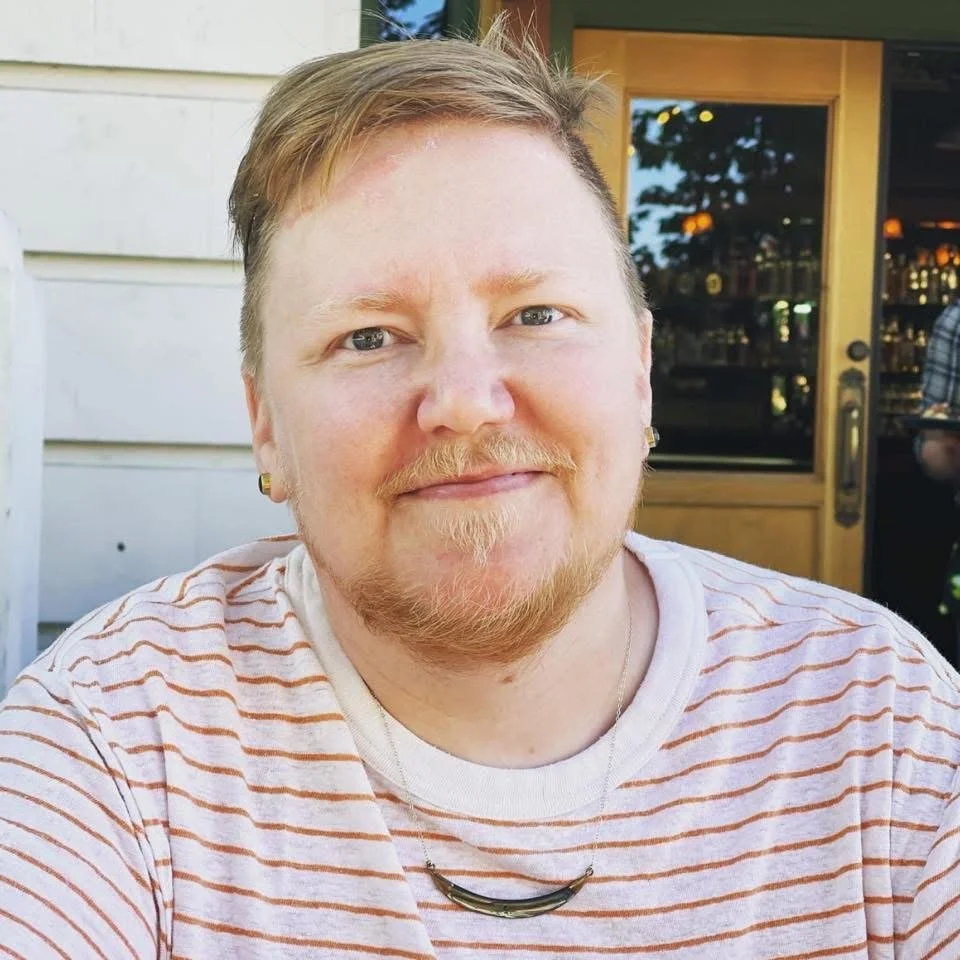
Elijah was born and raised in rural coastal Alaska where he found boyhood playing in the woods, fishing on the rivers and sea, and joining every sport he could. As an adult, he still tries to play in the PNW woods and beaches as often as he can, always with his kid running ahead of him. When not in the woods, you can find him organizing retreats for trans people, making huge pots of soup, and in the garden with his spouse. Being a dad is his favorite phase of life.
Elijah Interview
Jackal: [00:00:00] Hello everyone. Welcome to our new season of Stealth a Transmasculine podcast. I'm Jackal.
Kai: I'm Kai. We're your hosts for the Trans Masculine Podcast. The new season means new questions, and this season focuses on staying connected during these difficult times.
Jackal: Our show focuses on the stories of people who identify as transmasculine and who transitioned either socially or medically before or around the year 2005.
The name of our show highlights two important facts that one, for our generation. We were often told to hide our past and live in underground existence. And due to that, our stories are often overlooked.
Kai: We want our audience to know that we ourselves are part of this generation of trans masculine identified people, and that we value the [00:01:00] experiences inside our trans masculine community.
We want people to know that throughout our lives, each of us has had to navigate issues of disclosure, which have impacted us In many ways, the bond we share as persons of trans experience is precious and lifesaving.
Jackal: These are trying times. Throughout the world, there are groups removing protections in place for our trans and non-binary communities, safety is a real concern for us, particularly our trans and non-binary bipoc siblings.
Kai: We offer links to health and safety resources on our website, trans masculine podcast.com. We also have an incredible mentor mentee buddy program that has connected 88 trans men. If you're interested in becoming a mentor, please reach out to our awesome volunteer Clark. Via the mentoring tab on our website.
Please hold each other dear and stay in touch with us. If you're new to our show, welcome and if you're a follower from a previous season, thank you for your continued support.[00:02:00]
Jackal: As humans, we are always changing and transitioning. As elder trans men, we assume many roles. We get married and divorced. We are caretakers, we are parents.
We are professionals, academics, and advocates. We push for human rights and systemic change. We invite our listeners to remember that we are a living community. We are healthy, we are contributing, we have experienced loss and success. We are loved, and we welcome you to our stories.
Kai: All right, jackal. So happy New Year.
Jackal: Um
Year. Happy 2026.
Kai: happy 2026 and everybody was extremely anxious to get away from 2025. Um, how were your winter holidays and the new year?
Jackal: And they were really good actually. I, um, so our birthdays are around that time anyway, so I celebrated my birthday with a couple of friends who came over for board games, and that
was
fun. And, um,
birthday.
happy birthday to you, [00:03:00]
Thank you
I don't know if people know this, but I, I moved to Colorado recently and was really, um, I have family here, but it's like family is like five hours away driving here right.
Because you know, all these states are so big and, um, so I was humming and hawing about going to see them for Christmas, but I would've had to drive over. Wolf's Creek Pass, which is this huge mountain pass that's like 7% grade, like incline. Yeah. And it's like winter and I'm not sure if it's gonna snow and if it does, if it, even if it doesn't snow here, like is it snowy there and it's like windy and no, I was like super sketched.
So I didn't do that. Um, which I kind of regret not doing because the weather was excellent, And it probably would've been fine over the pass or whatever. And so. Anyway, but I didn't. But then my, um, ex now current boyfriend came to visit me from, uh, Mexico. And [00:04:00] um, yeah, so he arrived on the 26th and we hung out, did a bunch of touristy things that I hadn't done 'cause I didn't really have a car hadn't had a car. And so, um, now that I have a car I get to do them too. So we did them together. Um, and then New Year's Eve, we just hung out in, in the house. Um, and then new,
Kai: up till midnight?
Alex: we did stay up till
Kai: Okay. All right.
Jackal: And, uh, yeah. And then, uh, January 1st was actually my favorite day of his time here.
We just made a puzzle, like a 750 piece puzzle and just hung out in the house and, you know, had a really nice sweet day together. We had done a bunch of touristy things like the 27th, 28th, 29th, well, one of those days we watched football, which was not touristy, but it was what Jackal wanted to do.
So, um, and, uh, yeah.
And so
Kai: American football? Not, not soccer,
Alex: Yeah.
yeah
American [00:05:00] football. And I asked him yesterday, we had a, a zoom time together and asked him what his favorite day was, and he said that same, that same day, you know, so it was a really sweet day together.
what about you?
Kai: Did you guys approach the puzzle in the same way?
Jackal: um, you know, I. Um, yeah, I guess so. I mean, I don't know, um, because I think he asked me, right, like he asked me at the beginning like, how, you know, I would start out kind of thing I. I kind of forgot how I do puzzles, and so I was like, you know, like let's do the border, is what I said. Right?
Like
let's start with the border.
And he's like, okay. And so we started trying to do the border, but what I forgot was that before starting with the border, I would separate out. All the pieces that were flat compared to the ones, and I would put the ones that were not flat to the side. Well, because we didn't do that, we were just kind of like doing it at the same time, like [00:06:00] finding the pieces go at the border.
So it ended up being kind of a hodgepodge of both. Putting the border together first and doing pieces,
it's funny because he told me later that he got frustrated, right? 'Cause he couldn't find a piece or he couldn't find a piece, you know,
Mm-hmm.
would, wouldn't fit somewhere or whatever.
But he kept going, it was really fun. And, and I, I, I loved it. It
Kai: That's cool. I, I think that speaks well just to be able to collaborate, you know, in doing one of those things. I do a lot of puzzles. I like puzzles
Uhhuh
and I always remind myself to step away 'cause you can't see things and then your perspective changes when you come back.
Or your brain will actually be working as you separate from.
Jackal: Yeah.
Kai: I do a lot of word puzzles and then I come back and it's, I can see it, , it's pretty cool. That's a great, that's a really nice memory. And now you're back at work and reestablishing your routine and all that stuff.
Jackal: Oh yeah. And I'm actually, this semester I'm gonna teach anthropology. Uh, I just found out like this week like that I was doing that. So I found, [00:07:00] I found out on Tuesday that I was gonna be teaching, starting this Wednesday.
Kai: Holy smokes.
Jackal: I know, and, the. Syllabus was due on Friday. So like Tuesday I found out Friday was, I was supposed to turn in the syllabus. I didn't know I was supposed to turn in the syllabus on Friday. I thought I didn't find that out until Thursday when we had a little meeting. And um, yeah. So I was like, okay, I have all weekend, whatever, and it's a long weekend, so fine. they're like, no, you need to turn it in on Friday. I was like,
shit. But I've taught it before, like several times, so it, it's not, it wasn't that hard.
It wasn't
as as
I, I, I had anticipated and, and,
uh I feel
I feel, ready, so it's
Kai: that's great. That's great. That's exciting.
Jackal: What about you
Kai: I had a really good birthday, um, and New Year's, we stayed up till mid past midnight, which incredible.
I know,
right
Uh, but we do like a secret elf exchange every year. And so we had, um, an out of town guest come in. [00:08:00] The usual suspects were here. And that was really sweet. And I got laid off in December and there's been a bunch of back and forth and they actually called us back to work, um, two days before. So it was like Saturday and then the school started Monday and I had already been interviewing and accepted a job elsewhere. So I said, sorry, I didn't wanna deal with, uh.
Back and
Chaos. Yeah, the back and forth, still going on and it's not an easy decision in that I love the kids so much and I feel kind of bad because I didn't go back and my colleagues did.
But I just, that uncertainty, it just really stressed me out. I'm still getting pinged, when there's an update to the court case, 'cause it's still being contested and they're back and forth and I just grew really. Tired and stressed about it. So I accepted a, a new job and it doesn't start until mid-February, so another month.
So I'm trying to take advantage of like, be really mindful of this new year, right. And new [00:09:00] beginnings and what is it that I want the year to look like and starting out with today and then like week and then this month I have a whole month when do you have a month off? Right? I'm trying to be thoughtful about that and setting some. I guess I call it like intentions. I know that sounds woo woo, for how I wanna spend the time and really enjoy it, . So I'm doing good. I'm doing good. I'm happy to be back and we've had some really good guests this past season and we have more folks coming and we're really excited today
Jackal: Yeah, that's interesting though. Before we cut out, I want you, I wanna ask because it's interesting because, I, I had a longstanding eight year relationship, uh, with this guy.
And we broke up, actually we broke up several times and then got back, got back together, and, um. Now we're very long distance and before he got here we're, we're thinking about getting back together. And then he [00:10:00] got here we said yes and we decided it was worth it and we were gonna try and da da da,
Kai: Mm-hmm.
Jackal: and talking about intentionality, you know, like, I'm thinking about that in for myself, right?
What does that mean? What does it look like? How am I intentional about this relationship and what do I need? To change or what I need, like that kind of New Year's resolution thing. And because it was eight years and because it was back and forth, kind of like what you're talking about with your job.
Um, trying to combat my own insecurities, you know, and that longevity piece. Right. And I hear some of that in, in yours, although in a different. Vein with work.
Mm-hmm.
Um, so I'm just wondering what you're thinking about kind of in your intentionality. What are you trying to focus on for yourself as far as where you just kind of let go of stress or where you let you
know, where you embrace whatever's happening
Kai: Mm-hmm. I've encountered a lot of humility lately just my [00:11:00] humanness . I'm fine health wise, but I had a little health thing come up in December and I'm fine, but it really reminded me, that I really needed to pay attention to what I put in my body in terms of nutrition and, there's less wiggle room as I get older about how I nourish my body, you know?
So I'm trying to be better at that and I'm thinking about all the time I. This is existential what I'm thinking about. There's a shorter time remaining for us than there is behind us, right at this age. And I've reached the halfway mark of being Kai Life, right? So I'm halfway through my life.
I've been Kai and halfway. I wasn't Kai, like the name and my transition. So that's a big milestone and I think how I spend my time is, is something that, you know, I, I, I can spend it on my phone and doom scroll or get online and just waste a bunch of time. Um, I don't wanna do that as much,, I wanna be more thoughtful about how I spend my time. I think that's what I'm thinking about most. And then I really do benefit from [00:12:00] moving my body. So these dog things, these, that's helping me get out a lot more.
Jackal: Yeah, yeah,
Kai: So how about you? What are you thinking about?
Like, relationship wise? Yeah, I definitely wanna be a better partner and prioritize, date nights and things like that. 'cause it's so easy just to fall into a, a routine that's kind
of
right. Mm-hmm.
side by side play, you know? So how about you?
Jackal: Um, so, you know, I've got a lot of things going on, right? I started a PhD program and um, I'm teaching and I have a new partner again. Um, so I think my thing is really trying to focus on the. Um, negative messages that circle around in my head.
You know that I'm not good enough, can't, because you know what you talk about doom scrolling and that wasting time. The whatever it is, procrastination pieces. When I get into my own doom head is what I do like, that's how I escape from my doom ness I just like play the games or [00:13:00] whatever, right.
Which is totally not productive and it actually makes my messages worse because I'm not doing the productive things that doing. Right. So I'm trying to be intentional about like when the, the doom messages or the negative Nelly messages are, are circling around in my brain. And instead of doing the, oh, I'm gonna go outside and smoke a cigarette and play on my phone, be like, okay, let me go and whatever, take a walk or, one of my textbooks or, you know, or, I don't know what I'm going to do, but being intentional about the time that I'm doing instead of listening to those messages. 'cause those messages can get really fatal really fast
Kai: Yeah, that's intense. And procrastination is one of those things that I'm really always curious about. Um, have you ever heard of this thing called the procrastination dopamine loop? basically, when you procrastinate, it gives you like a little dopamine hit because you get immediate relief. It removes that stress right away when you [00:14:00] avoid something. Um, but then if you scroll on social media or something like that, you feel rewarded, it's a dopamine hit, right? It's a short term boost. but then that pressure can build up until you reach this point where you actually have to act, take action, you know? So it reinforces itself when you avoid something and then you get instant gratification by whatever it is that you do. Like, I usually clean my house,
Jackal: Uh. Yeah, we call it procrast Procrast Cleaning.
Kai: That's really good. Yeah, I really do that. And so I keep reinforcing it the more I avoid. I think you're right. I can feel bad about myself too. Like I should be doing something. And one thing, you have a lot of things on your plate. You have a full-time job, you're a full-time, student. You're teaching, you have a life at home, you have a
I got
a podcast with you.
A pocket. That's
right
Yeah, I know. You're juggling a lot and it makes sense where you just wanna check out, I felt this way, particularly in grad school. I always have something to do. I should be reading this thing, or I should be writing this thing, or I should be all the should stuff, you know? And yeah, I [00:15:00] sound like a therapist, but it's like, I
just
I just would tell myself, it'll be here tomorrow. . My inbox will be here tomorrow.
Like, I'm for now, I need to sleep 'cause I'm no good. My brain's toast
I, find it relatable to get down on myself sometimes when I'm not doing something,
Jackal: I agree with that.
Kai: Yeah. Because you have a lot going on. You're very busy.
Jackal: I am. And even if you're not a person who's super busy, like the jackal is busy, you know, you too deserve out there to forgive yourselves, to, give yourself a break . And, even you, Kai, having a month off, you can get down on yourself and I hope you don't. I that you find your, your path and get the exciting things up and running and take care of your body and your health.
Thanks, Jackal. I'm working on it. Happy New Year, brother.
Shawn Aaron: Hey, this is Sean Aaron. He, him, his. And I'm here to tell you about them. Boys podcast. I'm the host of them boys podcast, and as a black queer trans man, the podcast amplifies the voices of other trans men of color as we share our transition stories. The podcast not [00:16:00] only amplifies the voices of trans men of color, but it raises awareness and conversations around our lived experiences.
You can listen to the podcast by going to them boys.org/podcast. That's D-E-M-B-O-I s.org/podcast. I hope to have you join us on the next episode.
Kai: Today's interview is with Elijah. Elijah was born and raised in rural coastal Alaska, where he found boyhood playing in the woods, fishing on the rivers and sea, and joining every sport he could. As an adult, he still tries to play in the Pacific Northwest, woods and beaches as often as he can, always with his kid running ahead of him.
When not in the woods you can find himorganizing retreats for trans people, making huge pots of soup and in the garden with his [00:17:00] spouse. Being a dad is his favorite phase of life. Elijah's trans anniversary is 2004, the same as Sly. So go check out our website to see what momentous events happen in that year.
Jackal: So welcome back to Stealth, the Transmasculine podcast. We're here with Elijah. How you doing today, Elijah?
Elijah: I am good. How are you all doing?
Jackal: Good, thank you. Uh, so we always ask, how did you get to be on our show? Like, where do we know you from? How did this happen?
Elijah: Well, I met you guys at, camp Lost Boys, which was my first time attending. and, and Kai, I met you on the beach, that lovely beach. And then Jackal, I don't think we officially met, but we were in one of the affinity groups and, I just heard you guys talking about the podcast and I was interested.
Jackal: Cool. That's great. Awesome.
Kai: Yeah, it's really good to see you and thank you for being open to being on our show. we definitely are interested in talking to a variety of voices and we know that you were a younger [00:18:00] person when you transitioned, so we're really excited to have you on the show. Back in the day, if you think back in the time machine, like how did you find out about trans masculine identities, Elijah?
Elijah: Yeah. You know, I grew up, in rural Alaska and. I didn't have the language, well, many of us didn't, but there was really just no representation in like this tiny little town in Valdez Alaska. So I just, had no idea that this was a thing until I moved to San Francisco and met my first trans, well as a trans man couple.
and I, my first reaction was, I don't, I don't think you can do that. and then the next reaction was like, I want to do that.
Jackal: That's funny.
Elijah: but it took, it took well, a few more years for that to actually happen. But like, it, it started the whole, the percolating in my brain being like, okay, this is something that I really aligned with.
Kai: Which part did you want to do? Did you want to do them or did you wanna like mirror them or,
Elijah: both. Kind of both. Yeah. but [00:19:00] I, you know, I was really interested. I did wanna do it. I didn't wanna do it. I was really afraid. I didn't think that my parents would understand or anyone I knew would understand. And so I just pushed it away for a really long time, and made, you know, remained friends with these people for a long time.
And then as things moved on, I was finally able to like start opening up the idea that maybe I could do it.
Kai: Yeah. How did you end up in San Francisco and how did you run across a couple of trans boys?
Elijah: well, I, well, I ran away from home like so many of us do. And I, I had this family take me in for a long time and they lived in the Bay Area and so that's sort of how I met a lot of these folks. And then, eventually a whole like crowd of us moved to Seattle together and it actually took me meeting a lot more trans men to be like, okay, this is.
This is happening, people are doing this more than just the two people I know and like, maybe I can actually do this and have support.
Kai: What was the time era, if you had to
Elijah: It was in 2000 when I met, when I first met these guys, and it was 2004 when I started my transition.
Kai: Mm-hmm. [00:20:00] Mm-hmm.
Elijah: even that was like, I sort of had to get, I had a really good friend of mine who was just like, we're gonna just give you a name
Kai: Mm.
Elijah: and um, and if you don't like it, you can tell us we can stop.
And he just named me Elijah. And that was it.
Kai: oh, that's really sweet. That's, so talk us through you. You move away, you find a place to stay in San Francisco and then you, you get connected to transmasc folks and you think, oh, that's really intriguing. And then you, like, you're, you're sort of, uh, talking about that we recruit and we are all transgendering.
Elijah: You know, the funny thing is this person actually was not out as trans yet. This person was still identifying as a lesbian and clearly I think was maybe some projecting some of his own stuff at this point. but yeah, and
Kai: Walk us through the steps. It's like, so you're in Seattle and, and, and.
Elijah: we're in Seattle and I, you know, and still telling myself I'm never gonna do this.
Like, I'm, I cannot do this. Like, no one's gonna understand. And then I start opening up the idea to [00:21:00] it, and I start thinking about names and, and finally my, I tell my friend that I'm thinking about trying a new name. Oh, and I also had had very long hair, and I had cut it all off.
Kai: Mm
Elijah: Wow, this is, I look just like my brother.
And I remember the hairdresser being like, no, no, no, you look like a girl. And I was like, no, no, no. I like this. You like, this is, this is good. And like just seeing myself for the first time, like recognizing myself in, in the mirror was, uh, that was like the moment that I was like, I think that this is actually what I need to be doing.
And so,
Kai: Can I ask a question about, about your hair? Because I think your hair is red.
Elijah: Yeah, it's like,
Kai: I, as a former redhead and as a former person assigned female at birth, there's such fed ization, like some weird shit that happens. Like they sexualize redheaded women a lot and like just creepy shit did.
I mean, and cutting your hair off is such a symbolic thing. Like talk to us a little bit about maybe. Maybe what it was like to cut your hair off or what it was like to be, you know, have long [00:22:00] hair and be perceived as female.
Elijah: Yeah, yeah. People were very attached to my hair in a way that I was not. I just didn't know what to do with it, so I just grew it out and just didn't do anything with it. And then. The first time I went to go, I mean, it was very long. I think it was down my butt at this point. I went to go cut it all off and the first person wouldn't do it.
Like she cut it, like, kind of gave me a bob, and I was like, that's not, that's not what I'm going for.
Jackal: Mm-hmm.
Elijah: So then I was pretty, like, I hated it and my friend took me to another person who was like, this person will take care of you. And that person gave me like, my first like, boys cut. although even she was like, no, no, you don't look like your brother.
And I was like, no, I do. And I, I like it.
Jackal: Mm-hmm.
Elijah: yeah. But It just felt so good to finally have this hair. Like I'd always looked at myself in the mirror and not been able to see myself, and this was the first time I was like, oh, this is, I think this is me.
Jackal: Wow.
Kai: Hmm.
Elijah: Yeah.
Jackal: I am curious, Elijah, did you have to see a therapist in Seattle at this time? Like, Kai and I transitioned like a little bit earlier, [00:23:00] so, you know, like in that. 10 year timeframe where we're like really attached to the, uh, the Harry Benjamin standards of care. Did you have to go through that as well?
Did you have to see a therapist? How long did you like start hormones right away? Like what was the process in 2004 when you were in Seattle?
Elijah: So that was still true for many people. Um, I, being me, I, uh, found my shortcuts in that. Um, I found a doctor, I was in San Francisco. So I changed my name in, in May and within a few months I found a doc trans doctor in San Francisco who was willing to gimme hormones without, without having to see a therapist.
And so I, hitchhiked to San Francisco and.
Jackal: Mm-hmm.
Elijah: Got my first shot of T like in his office and then they gave me my pre prescription and that was it. So that was, I was pretty lucky 'cause that was not the case. It was still very much the case where people were going to therapy and having to like prove themselves and having the real life test.
But I had found this doctor who, he [00:24:00] himself was trans and he was doing more informed consent.
Jackal: Cool. So how do you think your social standings race, class, uh, abilities, um, impacted your ability to transition, your fears, your desires about transitioning, anything like that?
Elijah: Yeah, that's a great question. I think, you know, I was in college at the time, at the time, and I'm white and I think that being in college actually gave me a lot more access, um, to, to. People like me, but also gimme more access to information that maybe I would not have had if I was, didn't have the privilege to be in college at the time. And, um, also having funding for college that also helped me use some of that funding for going to get my testosterone and end up using some of that money to have chest surgery and just having a lot more access.
Jackal: Yeah. Cool. so our show is called Stealth and so we [00:25:00] always ask people, what does stealth mean to you?
Elijah: Yeah. well, when I was stealth for a little while, it, for me, it meant that I had two lives and I had like my work life. Or no one knew that I was trans. I had friends from that work life that no one knew I was trans. And then I had my other life of friends that, you know, knew me from before, or they knew me within a, a queer context.
So it was like these two separate lives and rarely did the two meet.
Jackal: Mm-hmm.
Elijah: And I was like very clear with, you know, my friends to not tell the other friends. And yeah, and that was really hard.
Jackal: Yeah.
Kai: How did you come to that decision? Like talk to us a little bit about
Elijah: Yeah, I think, you know, the messaging back then was that like the safest thing to do is just to kind of blend in and not tell people. And definitely there was a lot of like internalized transphobia going on during that time. And for me, and I think others too, that we were just supposed to be like straight presenting and.
We need to fit in. And I was really afraid that I would [00:26:00] lose my job and I don't, I don't know. Now looking back, I don't know if that was true. If I would've, I had lost a job being for being trans before, so very much stuck my brain. But this job I had, I was a barista of like seven years at this same location, and I was worried that I would get fired if they found out.
And yeah. And so I spent that whole time, stealth and like no one I worked with knew except a couple trans people who had also started working there. And then after I left was when I was like, I don't want to do this again. I want people to, I wanted to like build relationships where people know who I am fully.
Kai: What was it like going to work and having, having had a period of time where I was very non to, to low disclosing and um, I just remember how it was for me. What was it like for you to go and live those separate, separate lives and.
Elijah: It was, yeah, it was hard. I mean, in some ways like, you know, I really loved my work. I had like a great community of people there, and it was strange how many people there. [00:27:00] Or perceiving me. Sometimes they, they thought I was straight. Sometimes I thought I was a gay man, but there was like never a thought that I was trans having to like, encounter people saying really fucked up things about trans people in front of me and having to like, like navigate how I was gonna respond and I would respond as if I was a cis person, um, defending trans people.
And in some ways I'm like, that is really helpful. And then other ways I was like, I felt very lonely.
Kai: Mm-hmm. Yeah. And, and I think one, deciding how and when to respond to comments like that with our, with regard to our own safety, like personal safety. So thank you for talking about that. I just know that that it's a source of comfort for some of us to have. People not know our private health information and our histories.
And then in, in others. For others, it's, it can be extremely stressful, you know? And, um, and so I really appreciate you sharing that with us.
We're talking about 2025. And, uh, right now in the United States, [00:28:00] there are many anti-trans pieces of legislations and discussions and misinformation being sent out. As part of our conversation, um, you know, back in the day, you're describing really well that we were told to live stealth and not, not open up about who we are.
And, giving the current political climate how do you think about disclosure now versus back then?
Elijah: Yeah, I am. Obviously, I've been thinking about this a lot 'cause so much is going on even here in Washington. We're, we're encountering, I don't know if you've encountered any of these protest or the petition gatherers. yeah. you know, I, I feel like, like the cat, it's out of the bag for me in many ways and I don't want to go back.
And also it's like this is actually the first time that I've felt scared in 20 plus years of like. Of being trans in the US where before I felt like, you know, there was like some unknowns. I was [00:29:00] nervous. I was told to be stealth but I didn't actually, I didn't think there, there weren't the same consequences.
People were not actively hating us in the same way. Now, You know, I'm very open with, I have a, I have a kid and I'm very open with my kid about her story and, and that, that I'm trans and she is welcome to tell people, but now I'm like, she's in public school now and how does this affect her and us? And yeah, it's very different.
And trying to figure out these new relationships that I'm building with her, with her classmates', families. They all wanna be friends and they don't all know I may send them this podcast.
Kai: Yeah. And then also you're within a school district and a region and, and while we're a sanctuary state in Washington, you're right, there are, um, at the Walmart yesterday, there were women collecting petitions that were for a piece of legislation that is anti-trans and anti-trans inclusion in sports at Walmart and saying, protect the women and protect our girls.
Jackal: I didn't know they played sports [00:30:00] at Walmart.
Elijah: They actually, they were at the state fair this year and I, it was the last day of the fair and I took my kid, it was just like, this is the two of us. And I was like, I just want one fun day with my kid.
Kai: Mm
Elijah: And they were outside the fair, and I was like, we'll just ignore them. Went inside, we like had a few rides and then we sat down for some ice cream and they came into the fair and I saw them like making their rounds.
People were signing and I was just like feeling more and more dysregulated, just like, I can't, I need to keep it together. I'm having a fun night with my kid. We're having some ice cream. And then they came up to us and my response was not great, but I think it was VA valid for the moment. this person handed me, there was, there was two petitions and the first one I looked at. And it was about, parental rights in the school and like adjusting this bill, which I, I actually knew a little bit, bit about because I'd helped lobby for it last year. So I pointed out that this was actually, um, this was taking rights away from trans kids and he said, oh, no, no, no, that's the other one.
And flipped it over [00:31:00] and showed me
Jackal: My God.
Elijah: and that is
Jackal: my God.
Elijah: it. I don't know exactly what I said, but I ripped up the petition and I
Jackal: Oh my. Yay.
Elijah: And I wish I could tell you that everyone around us, uh, cheered, but they did not. They,
Jackal: I'm cheering for
Elijah: thank you. Because at the moment I was like, the people around me were like, oh my God, that's not okay.
And I was like, this is not okay. Like this is not okay. Thank like, my, my biggest concern was like I didn't want my kid to be scared and she was not. She just was confused. And then she yelled out my dad's trans, and I was like, okay, that's. It's not the time to thank you. I was like, let's go on a train ride.
We gotta get outta here.
Kai: Yeah. It,
Elijah: yeah, and I was like so upset and like really trying to keep it together because I wanted to have a fun night with her. And thankfully about five minutes later, some trans friends of mine when their and their kiddo walked up and I saw them also looking little like, what just happened?
And I went, went up to them and told 'em what happened to me and they were like, oh my God, we just had the same experience except that we used a Sharpie and we just like blocked out all the, the petition sign signatures. And I was like, [00:32:00] oh, great. Thank you. Let's go on the Ferris wheel.
Jackal: Wow. Wow.
Kai: would want the biggest trans hug in the world. You know, just like, come on in, you know? Wow. It
Elijah: hug and like regulate me in that moment and be able to like parent, because I was like, I can't right now. I'm feeling pretty awful.
Kai: Yeah. And there's so much going on because you don't want to frighten your child. You're actually protecting the kid right from them, that just sounds so stressful. And I'm, um, and, you know, fear, you talked about this, like knowing that. There's a level of uncertainty and possible risk at being who we are.
But then you're talking about how that sort of moved on into a place of fear here, you know, considering what's happening in the world and all that. And how do you, how do you deal with that right now? How do you do, how do you manage, manage it?
Elijah: I don't know, honestly, I'm trying to do a lot of things to myself to like take care of my body. I'm cooking a lot of good food. I'm going to the gym. I'm reading a lot of books again, which is really good for [00:33:00] very regulating for myself. But honestly, every day just feels so hard.
it's just like new things every day. And for, you know, the fair. I remember just thinking to myself, I just wanted one day
Jackal: Mm-hmm.
Elijah: where I don't get reminded how much you fucking hate us.
Kai: Yeah.
Elijah: That's like one nice day with my kid. Yeah, and I had to my kid about a little bit afterwards just being like, you know, we haven't told you what's going on.
And I, you know, she's four and a half, so I'm not giving many details, but I'm explaining a little bit that some things are really hard right now.
Kai: yeah.
Jackal: Yeah. All of these things like just, I mean, they lead in perfectly to our next questions, right? Of. It's so clear, like how important it is for us to stay connected, um, and receive kind of that validation and support that we need because of the, the trauma drama that's like getting thrown at us.
Um, so this season we're focusing on disclosure and connections. And as a man of trans [00:34:00] experience, I think we share a special bond that really nourishes us. And you mentioned going to Camp BL boys for the first time. How connected are you to other men of trans experience locally?
You said that you bumped into some trans friends at this, um, at this state fair. Um, but just, just in general, like how does that nurture you? What do you think about your connections to other men of trans experience?
Elijah: Yeah, actually that's, that actually connects to the last, I should have mentioned this too, is that, this year I've really committed to spending much more time with trans men and I have started, um, hosting retreats every few months, with trans men locally. Well, some of come from the east coast too, but I've really prioritized spending more time with trans people in general and, A lot of trans men that I've known for a long time, but a lot of us kind of, um, fell away after a while. And so we've been reconnecting and I'm finding those relationships so important right now. I have. Lots of people in my life who love me and [00:35:00] support me, and they're cis and there's only so much that they can actually understand and spending time at Camp Lost Boys, or at a retreat or just a hike with a good friend.
It's so important right now just to stay connected and feel seen and like there's just so much language that we don't actually have to use with each other to know that we're going through it.
Kai: We've talked about just putting a lot of faith in the youth in the world and how, um, perspective and generations are just a lot different. I think that the younger generation of folks is so much more balanced and.
Kind. And recognizing that's a generalization, but Ocasio-Cortez, so Alexandria Ocasio-Cortez, who's the, representative in New York, um, she was, uh, on Instagram and posting the other day about how, the climate of fear. That the Republican party and MAGA are fostering is, they're doing it on purpose and it's [00:36:00] okay to be afraid, but they don't have the power that they want you to believe. They don't have the power, the infrastructure, the support that they're trying to make you believe. And it was just extremely hopeful for her to just say, keep up the fight, keep showing up. Things like that. We're gonna get through this and we're gonna be okay. And she's such a level headed and passionate person and, and just the message was very direct and not sugarcoating things, but also just saying they don't have what they're trying to report. I just wanted to say that.
Jackal: Yeah. Thanks Kai. And so this. Kind of sidetracks, but how connected do you feel to people that you knew pre-transition? You said you grew up in Alaska of all places. Are you still connected with any of those people you went to high school with?
Elijah: I actually have the same two best friends from childhood and, yeah, they're, they're lovely. And, um, I've known them both since I was five [00:37:00] and there was like a little stumbling block for like a moment, but that was like 20 years ago. They are still my closest people. They've known me my whole life and I feel, you know, in some, in similar ways, like, you know, I said there's like the shared language or things that we don't have to necessarily say out loud with when I'm with other trans people.
That's true with these people too, who have known me for so long. I just feel like they, like no one can know me as well as they do.
Jackal: Mm-hmm.
Elijah: And they're very open and supportive and they're still in our tiny little town and they're fighting for trans rights in our tiny little town. So I feel really fortunate to have that.
And I have several friends from before. Um, but those are like the, the closest for sure.
Jackal: Yeah. Neat. You're talking about your daughter and she's four and a half and she's going into school and like all of these, uh, different scenarios that you might have, new connections where you might be disclosed on by your lovely daughter or need to disclose, how do you navigate those? [00:38:00] What are you gonna be
Elijah: Yeah. I'm still figuring it out. Like she has this best friend that she met in preschool last year, and they're in a, a new school together in the same class again. And, her. Their family is really lovely. they invite us. The things all the time. Um, we spend a lot of time together. Their, their family is Mormon, which I did not know until I was in the middle of dinner.
and they, you know, actually it has, knowing them has expanded my own views and like being more open. Um, and they are not what I expected at all. And I, I think they might know I'm trans. I don't know. They still, they seem open and loving and I've seen other trans people show up to their events and I, I don't know, but I haven't told one because I, I don't know how to even begin the conversation.
And, and actually they had, they had a potluck the day that the Charlie Kirk shooting had happened. And I did not go 'cause I was just too afraid of what might come up there
Jackal: mm-hmm.
Elijah: I don't wanna jeopardize her friendship. [00:39:00] And also, yeah. It's just so difficult to be like, how are, how are we gonna do this now?
Jackal: Yeah, completely.
Elijah: and we've met some other friends through her school, like lovely people and I haven't disclosed Yeah. But I haven't had to like, deal with that in so long that we mostly have run around in queer circles or like very affirming families I know would be fine with, and now I don't know.
Jackal: Right. That's so, that's so interesting. That uncertainty that we're like getting thrown back into.
Kai: And I just think you're tiptoeing around it, it's like around, it's in the world. I, I also think we're not really on people's radar, like transmasc, people men of trans experience, but you're thinking about like your daughter's relationship with her friend, and then is it contingent on you being.
Non disclosing so that you can maintain that, it's really, really stressful and, and I also really appreciate how we can sometimes not share things and potentially miss [00:40:00] out on more connection with people when we don't disclose, you know, and how we, 'cause you're right, I think people who may have certain spiritual beliefs or.
Political leanings. They may be some of our best allies, which doesn't always line up or it's not something we think, but we don't know,
Elijah: I don't know. I do wear a lot of trans shirts at pickup, so like they know. They know generally what my belief systems are. I just don't know. They know that I'm actually trans
Kai: Thank you for sharing that. So Elijah, you sound like you're surrounded by very loving people. Um, you have front and childhood friends and I know you have some local transmasc connections and you put on retreats, um, which sound amazing.
I am, wondering who else in the world supports you now?
Elijah: Yeah. Local trans friends. And I'm a nanny. Well, I'm a nanny turned caregiver. a disabled child that I've known her whole life. [00:41:00] She's turned 12 and her family has just been amazing. I, I think they're straight, I don't know actually how both parents identify, but my, they show up in the world as a straight couple and they have been just like amazing the whole way through.
The first time Trump was, was, elected, they sat me down and said, just so you know, if you need to escape, like we will help pay for you to leave. So, and that was, you know, 2016. And we had no idea how much worse they could get. And I, I don't see myself leaving the country, um, for a number of reasons.
But, I know that they have my back and I feel like very loved and supported in this job where they like pay me extraordinarily well. And I think really try to make sure that I am comfortable and feel safe. yeah. So that, that is one. And then, I have so many good trans friends and like good allies, a lot of queer families in the area.
Kai: How do you support each other? Because like you, I have trans friends and [00:42:00] some of us are more scared than others and more hopeful than others. And like, what are some of the suggestions you have for folks to support each other?
Elijah: yeah, I think, no, these retreats, they've been very like low key. I think what, what I have done is I have just put it out there on Facebook. Hey cis friends, do you want to help some trans people out? what I'm doing is like renting an Airbnb or maybe you have a lake house or something that we can use for a weekend.
We just need a place to be together, and connect and like disconnect from our phones and just be. With one another. And one way you can help is, you know, give us some money or provide a space or maybe provide food. And and that has worked really well so far. And so, the people who come to these retreats, they don't have to pay anything.
We just show up. There's no programming. I'm gonna cook food and we're gonna hang out and you can do whatever you wanna do. And hopefully there's a hot tub there. That's like the, one of the most, we having a hot tub is like maybe the most important part of this, the situation.[00:43:00]
And so I think offering things like that, to trans people can be really helpful. Um, in other ways you can offer, you know, to take someone to change their name or get their documents in order, like just having someone there by your side. You know, I've had friends offered to bring me food when they know things are really rough and unfortunately, like I, or fortunately, uh, how I de-stress is cooked.
So I'm like, can you just bring me ingredients? You
Jackal: Mm. Mm-hmm.
Elijah: there's just like so many ways that we can help. It don't even have to do with money. It can just be like showing up to walk someone's dog or offering childcare so they can go for a walk. that's sort of what I've been doing. And I feel like for me it's been really reciprocal.
Like I'll offer to go walk someone's dog and then they'll also offer to hang out with my kid for a couple of hours and we're just like making space for each other to have some downtime.
Jackal: Wow, that's really amazing.
Kai: Can we talk just briefly about camp y'all?
Elijah: Oh my gosh.
Kai: Okay. So, Elijah, like what was it like for you to not be in charge and [00:44:00] to attend this camp full of 180 plus trans men of trans experience?
Elijah: it was sort of disorienting, you know. I'm really used to being a helper, and I think that, that, that actually was part of the message at camp is like so many of us are used to being the helpers and like having to do things and like, not having to, but like, we show up to help each other. And then there was a space that was made for us to just be there.
And I, at first I was like, I don't quite know what to do here. And I had showed up for the regular friend of mine who's been going through a rough time and I think part of that was like, I do have something to do. I can help support my friend who needs this help right now.
Uh, but the other parts I was like. You don't need me to cook, you don't want me to clean up anything like what's happening. and. I didn't attend very much of the programming. I took, I, I went to a couple of things mostly I just spent time in the woods with friends, meeting new people. and the thing I think they did really well, which was like such a simple thing in some ways, is that they just fed us on a schedule, like really good food.
And it felt like I was so taken care of. Like someone was taking care of me for three, four days. [00:45:00] All I had to do was show up and eat. They were helping me take care of my body in a way that's like, can be very hard during this time.
Kai: Mm-hmm.
Elijah: And then just connecting with men from all walks of life.
Like I was one of the bunk houses, which by the way, I realize I'm too old to sleep on a top bunk in an open air tree house. It was. Charming and I cannot do that again next year. I need to have a different space. but in, you know, because I was in the bunkhouse, it was people all across the age spectrum.
I was maybe the second oldest in that bunkhouse, and then the rest were pretty young guys. And so it was, you know, nice to connect with younger folks and yeah, and just see so many men being vulnerable and tender with each other was really special.
Kai: Thank you. Thank you so much. As we wrap up this portion of the interview, are there things that you'd like to share or things that you think we may not have asked that you'd like to share more about?
Elijah: Oh, I don't know. I think we covered quite a bit. I'm sure I'll think [00:46:00] of something later, but,
Jackal: You're welcome For a follow-up interview.
Elijah: okay.
Jackal: And now it's time for adventures and disclosure with Kai and Jackal.
So you have a disclosure story for us today?
Kai: In fact I do. So oftentimes I reflect back and there's things that pop in my head and I think, oh, I need to do that. I need to get in touch with this person or something, you know? And when I was 15 in high school, a freshman I had a nickname. My nickname was Red. Then my nickname was also a freshman, people knew my name assigned to birth, but I usually went by a nickname.
I went by red or freshman. And um, during that time I had a coach, and this coach was named Mr. C, coach C, and he was. Someone who was lifesaving for me. I mean, he gave us jobs, [00:47:00] he coached us to be athletes and better athletes. He taught me a love of running. I had to run laps 'cause I got in trouble a lot.
He loved to run.
Jackal: imagine that 'cause you seem like such a goody two shoes.
Kai: No, I, no. And he, and he also just was a really good guy. I mean in addition to jobs, he just taught us about, um. I think he was a good role model of masculinity. He was a little odd, a little quirky. He was short, he, expressed himself and his emotions and he just did right.
He coached girls high school, you know, and he was really, really important to me. And he was somebody I stayed connected with from age 15. We, he gave us jobs during the summer, in the spring and, um, up until I was like 21 or 22. And, and then I moved away and I lost contact with him. And as I transitioned, I thought, wow, I, I really didn't, didn't think about [00:48:00] contacting people from my past, especially my high school.
I did not have a good experience in high school and, aside from the sports, so I decided that I was finally gonna write him a letter, send him a card. I've been thinking about it for years and I was like, I better fucking do it. 'cause I don't know how long he's gonna be around.
So I just Googled him and I found the address that I recognized and I sent him a letter and I just said, okay, how do I do this? Right? And I just said, Hey, back in the day you knew me as red or freshmen and I just wanted to write this letter to thank you so much because of these things.
And I said, I transitioned in the mid nineties and one of the things I said was going to this school in this place was really difficult for me, you know? And then I said, I transitioned the rah, and then I'm living a really good life and I'm well loved, and I know you are, and you were such a big part of my formative years kind of thing.
So I just thanked him. It felt really. Really nice and I don't expect anything in return. And he who knows he may rip up the card [00:49:00] or not, but how many times do people actually go back and thank you for something, or express appreciation in general, but. Hopefully he will see it from it.
Is that just, I loved him. He was so important at a time when home was horrible, school was horrible. I was not treated well. That was the thing that, um, he was just an important person for me and a mentor and a really good role model of masculinity. That's my disclosure story.
Jackal: That's a beautiful story. It just reiterates what a sweetheart you are. I hope you get a letter back from him, but you know, that's not the point,
Kai: even, yeah, I don't even know if he is able to read, you
Jackal: Right. You
Kai: I dunno. I mean he's probably, well, I mean, I don't wanna be sound ageist. I mean, we're already old, but he's older than me by 20 years so hopefully Yeah, hopefully it'll find him. Well, yeah, yeah. Hopefully it'll find him well and maybe it's something that will touch his heart, you know?
'cause he had a big heart. So that's my story.
Jackal: that's a beautiful story. Thanks, [00:50:00] Kai.
Kai: Jacqueline and I wanna remind our listeners that we have a member section. And thanks to everyone who has subscribed, our member section offers bonus questions and personal stories by our volunteers, Adam, and our newest edition Mikelina. A Bipoc Trans Mask sibling Exploring Adventures in Transition.
Jackal: Subscribing to our podcast helps keep us up and running. Or if you just wanna support us by giving a donation, we sincerely appreciate it. It's only $4 a month to become a member, so go to transmasculine podcast.com and sign up. We don't wanna be gatekeepers. So if you feel that you can't afford $4 per month, please reach out to us via email, transmasculine podcast@gmail.com considering buying a T-shirt while you're there.
Or if you wanna be cool, like Mikelina and Adam, we especially need a volunteer [00:51:00] to handle our social media.
Kai: Good job today, jackal.
Jackal: Good job to you, Kai. We want to thank our listeners and especially our guests. This show would be nothing without our guests who share their insight, expertise, and heartfelt stories. We absolutely adore you and are forever grateful to you.
Kai: Stealth captures the living history of men of trans experience.
We recognize that language has its limitations. The words we use to describe ourselves and our community evolve over time and will not represent everyone's experience. We also want you to know that the health and wellbeing of our community is our number one priority.
Jackal: We want to give a shout out to parents who are supporting their gender non-conforming kids. We support you and love you for supporting your kids. We want to put our podcast in the spotlight. Thanks for not trolling us, but really is this just another form of trans mask and visibility?[00:52:00]
Kai: We offer links to health and safety resources on our website. We monitor our social media platforms. We respond to feedback from our audience, and we will be accountable when we screw up.
Jackal: We want you to know that we are just two guys doing this in our spare time and two old farts to boot. The opinions expressed are our own and those of our guests. We do not represent any entity outside of this podcast.
Kai: Remember, if you're interested in sharing your story, we would love to hear from you. Also, if you're interested in volunteering, please let us know. Your feedback and support are essential to our show's success. Help us get the word out about our podcast. Tell your friends, share on social media, and rate us on your favorite streaming platform. Be sure to check out our website, transmasculine podcast.com.
Jackal: Thank you for joining us. Until next [00:53:00] time.